
About Quentin Roosevelt
Lived 1897 – 1918 (aged 20). Quentin Roosevelt was an American military officer and fighter pilot.
Quentin Roosevelt I (November 19, 1897 – July 14, 1918) was the youngest son of President Theodore Roosevelt and Edith Roosevelt. Inspired by his father and siblings, he joined the United States Army Air Service where he became a pursuit pilot during World War I and shot down one German aircraft. He was killed in aerial combat over France on Bastille Day (July 14), 1918. He is the only child of a U.S. president to have been killed in action.
Early life Childhood
Quentin Roosevelt and Roswell Pinckney, members of the "White House Gang" of young playmates. Theodore Roosevelt was an honorary member.
Quentin was born in Washington, D.C., on November 19, 1897, the youngest child of Theodore Roosevelt's household, which included half-sister Alice, sister Ethel, and brothers Ted (Theodore III), Kermit, and Archie.
He grew up in the White House, which his father entered as president in 1901. An outgoing and mischievous boy, he treated it as his playground. His behavior prompted his mother, Edith, to label him a "fine bad little boy". Among his many adventures with the "White House Gang" (a name assigned by T.R. to Quentin and his friends), he carved a baseball diamond on the White House lawn without permission, defaced official presidential portraits with spitballs, and threw snowballs from the roof at unsuspecting Secret Service guards. with his friend Charlie Taft, son of Secretary of War and future President William Howard Taft. On another occasion the Secret Service, alarmed by smoke behind the White House, found Quentin baking potatoes in a makeshift brick chimney.
Quentin was known for his quick wit. When a reporter asked the eight-year-old about his father in 1905, he replied, "Yes, I see him sometimes; but I know nothing of his family life."
When his brother Archie was sick in bed with measles, Quentin and his brother Kermit brought the pony Algonquin up to Archie's room in the White House elevator to cheer him up.
Education Quentin started his education at Force Elementary School and then attended the Episcopal High School in Alexandria, Virginia. Later he was a student at the Evans School for Boys and Groton School.
When at home he would buy a broken-down motorcycle or a ramshackle automobile and tinker with it until it ran. He entered Harvard College in the fall of 1915, where he pursued studies in mathematics and mechanics.
Quentin was posthumously awarded an A.B. (War Degree) by Harvard, Class of 1919.
Personal life
Quentin was engaged to Flora Payne Whitney, a daughter of Harry Payne Whitney and the sculptor Gertrude Vanderbilt Whitney. The match met reservations on both sides: Theodore Roosevelt disapproved of the Whitneys' inherited fortune and life of leisure, while the Whitneys had hoped Flora would marry a man of greater means than the modestly wealthy Roosevelts.
In a February 1917 letter, Quentin voiced his growing support for American entry into the war: "We are a pretty sordid lot, aren't we, to want to sit looking on while England and France fight our battles and pan gold into our pockets?"
While training as a pilot in France, Quentin and Flora hoped to marry before he went to the front. A wartime rule barring the sisters of servicemen from the war zone kept Flora in the United States, as her brother was also in the service. Theodore Roosevelt, who had grown fond of Flora, called the ruling "idiotic" and "wicked" in a letter of July 6, 1918, regretting that the couple was denied what he called their "white hours".
The two never married. Quentin was killed in action eight days later, on July 14, 1918. Answering a letter of condolence, Theodore described his son's fiancée as "a very beautiful girl, of very fine and high character".
Military service
All four of Theodore Roosevelt's sons received military training before the United States entered World War I, reflecting their father's advocacy of preparedness. The outbreak of war in Europe in 1914 heightened concern about the nation's military readiness. The month before, Congress had authorized an Aviation Section in the Signal Corps, formally recognized in law by the act of July 18, 1914.
In 1915, Major General Leonard Wood, a friend of Theodore Roosevelt since their Rough Rider days, was the driving force behind a summer training camp at Plattsburg, New York, where college men and men of business paid their own way to learn military rudiments. Quentin and two of his brothers were among the volunteers.
Quentin's plane (a Nieuport 28) was shot down in aerial combat over Chamery, a hamlet of Coulonges-en-Tardenois (now Coulonges-Cohan). He was killed by two machine gun bullets which struck him in the head. The German military buried him with full battlefield honors. However, this was met with shock in Germany, which still held Theodore Roosevelt in high respect and was impressed that a former president's son died on active duty. According to his service record, the site was at Marne Grave #1 Isolated Commune #102, Coulongue Aisne. The French government posthumously awarded him the Croix de Guerre with Palm.
Final combat flight and death Three German pilots have been credited with Quentin Roosevelt's shootdown at various times, and all three may have taken part in the dogfight in which he was killed. The National Museum of the United States Air Force credits Leutnant Karl Thom of Jasta 21, one of the leading German flying aces of the war. Leutnant Christian Donhauser of Jasta 17 publicly claimed to have shot down and killed Roosevelt.
Kermit also included an intercepted German communiqué of 14 July 1918 describing the engagement, which stated that Roosevelt had shown "conspicuous bravery" before being shot in the head. A later German bulletin further confirmed the death of "the son of former President of the United States." German reports credited a non-commissioned officer named Greper with the victory. The German press, including the Kölnische Zeitung, reported on the encounter, describing Roosevelt as having died "the death of a hero" and noting that he was buried with military honors by German aviators. A wooden cross placed by the Germans bore the inscription:
Broken propeller blades and the remains of his aircraft were placed near the grave. American engineers later marked the site with a cross inscribed:
The French also placed an oaken enclosure with an inscription:
In 1955, eleven years after the establishment of the World War II American Cemetery at Colleville-sur-Mer, Roosevelt's remains were reinterred there beside his eldest brother, Theodore Roosevelt Jr., who had died in 1944 after leading troops during the Normandy landings and was posthumously awarded the Medal of Honor. Quentin’s original gravestone was moved to Sagamore Hill as a cenotaph,
The public primary school in Coulonges-Cohan, the commune where his plane crashed, is named the École Quentin Roosevelt.
Quentin Roosevelt II (1919–1948), the third and youngest son of Theodore Roosevelt Jr., was named after Quentin, and also died in a plane crash.
At the "Aux Morts des Armées de Champagne" monument and Navarin ossuary near Sainte-Marie-à-Py, one of the three soldier figures in Maxime Real del Sarte's sculptural group (unveiled 1924) is a portrait of Quentin Roosevelt.
The French village of Sancy-les-Cheminots in Aisne, destroyed during the war and rebuilt largely through donations from French railway workers (cheminots), remembers Quentin Roosevelt with a stele in its Jardin du Souvenir (Garden of Remembrance).
The community of Quentin, Pennsylvania, in Lebanon County, formerly named Bismarck, was renamed for Quentin Roosevelt after his death.
The airfield at Garden City, New York, formerly Hazelhurst Field and now the site of the Roosevelt Field shopping mall, was renamed in Quentin Roosevelt's honor in 1918. A Quentin Roosevelt Boulevard adjoins the site.
Naval Air Station North Island in San Diego, California, has a Quentin Roosevelt Boulevard.
A French Navy aviso, built at the Arsenal de Rochefort as Flamant and renamed Quentin Roosevelt after his death in 1918, was seized by the Royal Navy in July 1940 and served as an anti-submarine training ship before being returned to France in 1945.
Don’t just read it —
keep it.
Full-length biographies made to live with: read them, listen on the way to work, watch them tonight.
- E-book
- Audio
- Video
Instant download · yours to keep · every purchase keeps this site free
Important facts
People in Quentin Roosevelt's life
Named in this biography and alive at the same time
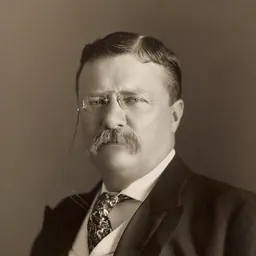






Related people
Same field, nearest in time


Contemporaries
People whose lives overlapped Quentin Roosevelt's


Frequently asked questions
Who was Quentin Roosevelt?
son of Theodore Roosevelt (1897–1918)
When was Quentin Roosevelt born?
Quentin Roosevelt was born on 19 November 1897 in Washington, D.C..
When did Quentin Roosevelt die?
Quentin Roosevelt died on 14 July 1918 in Coulonges-Cohan.
What was Quentin Roosevelt's occupation?
Quentin Roosevelt was a military officer and fighter pilot.
What nationality was Quentin Roosevelt?
Quentin Roosevelt was American.
Sources & further reading
· Wikipedia: Quentin Roosevelt
Cite this page
APA: Biography.guide. (2026). Quentin Roosevelt. https://biography.guide/quentin-roosevelt/
MLA: "Quentin Roosevelt." Biography.guide, https://biography.guide/quentin-roosevelt/.
Chicago: "Quentin Roosevelt." Biography.guide. https://biography.guide/quentin-roosevelt/.
Data last updated: 2026-09-20 · Spot an error? Report a correction.
Page generated 2026-09-27 05:27 UTC