
About Qu Yuan
Lived 343 BC – 278 BC (aged 64–65). Qu Yuan was a Chinese poet, writer and politician.
Qu Yuan ( – 278 BC) The first systematic biography appears in Sima Qian's Records of the Grand Historian, although it contains contradictory details.
Qu Yuan is the central figure associated with the Chu Ci anthology. "The Lament" is generally accepted as his work, while the attribution of many other poems has been disputed. Later tradition associates his death by drowning in the Miluo River with customs of the Dragon Boat Festival.
Life The only surviving source of information on Qu Yuan's life is Sima Qian's biography of him in Shiji, although the biography is circumstantial and probably influenced greatly by Sima's own identification with Qu. Sima wrote that Qu was a member of the Chu royal clan and served as an official under King Huai of Chu (reigned 328–299 BC).
During the early days of King Huai's reign, Qu Yuan was serving the State of Chu as its Left Minister. However, King Huai exiled Qu Yuan to the region north of the Han River, because corrupt ministers slandered him and influenced the king. He tried to resume relations between Chu and Qi, which King Huai had broken under the false pretense of King Hui of Qin to cede territory near Shangyu.
During King Qingxiang's reign, Prime Minister Zilan slandered Qu Yuan.
Legacy
Qu Yuan is regarded as the first author of verse in China to have his name associated to his work, since prior to that time, poetic works were not attributed to any specific authors. He is considered to have initiated the so-called sao style of verse, which is named after his work Li Sao, in which he abandoned the classic four-character verses used in poems of Shi Jing and adopted verses with varying lengths. This resulted in poems with more rhythm and latitude in expression. Qu Yuan is also regarded as one of the most prominent figures of Romanticism in Chinese classical literature, and his masterpieces influenced some of the great Romanticist poets in the Tang dynasty. During the Han dynasty, Qu Yuan became established as a heroic example of model behaviour for a scholar-official denied public recognition suitable to their worth.
Chu Ci
Chu was located in what is now the Yangzi River area of central China. At this time, Chu represented the southern fringe of the Chinese cultural area, having been at times an ally, opponent, or subunit of the Shang and Zhou kingdoms. However, the Chu culture also retained certain characteristics of local traditions such as shamanism, the influence of which can be seen in the Chu Ci.
The Chu Ci was compiled and annotated by Wang Yi (died AD 158), and is the source of transmission of these poems and any reliable information about them to subsequent times; thus, the role which Qu Yuan had in the authoring, editing, or retouching of these works remains unclear. The Chu Ci poems are important as being direct precursors of the fu style of Han dynasty literature. The Chu Ci, as a preservation of early literature, has provided invaluable data for linguistic research into the history of the Chinese language, from Chen Di on.
Religion Following his suicide, Qu Yuan was sometimes revered as a water god, including by Taiwanese Taoists, who number him among the Kings of the Water Immortals.
Patriotism
Qu Yuan began to be treated in a nationalist way as "China's first patriotic poet" during World War II. Wen Yiduo—a socialist poet and scholar later executed by the Chinese Nationalist Party—wrote in his Mythology & Poetry that, "although Qu Yuan did not write about the life of the people or voice their sufferings, he may truthfully be said to have acted as the leader of a people's revolution and to have struck a blow to avenge them. Qu Yuan is the only person in the whole of Chinese history who is fully entitled to be called 'the people's poet'." Guo Moruo's 1942 play Qu Yuan gave him similar treatment, drawing parallels to Hamlet and King Lear. and the Dragon Boat Festival elevated to a national public holiday in 2008. It has, however, come at the expense of more the critical scholarly appraisals of Qu Yuan's historicity and alleged body of work that had developed during the late Qing and early Republic. China's interplanetary exploration program, Tianwen (Heavenly Questions) is named after the poem. The first mission to Mars, Tianwen-1, was launched on July 23, 2020, and reached Mars on February 10, 2021. On Mar 14, 2021, the lander and rover successfully landed on the surface of Mars.
Don’t just read it —
keep it.
Full-length biographies made to live with: read them, listen on the way to work, watch them tonight.
- E-book
- Audio
- Video
Instant download · yours to keep · every purchase keeps this site free
Important facts
People in Qu Yuan's life
Named in this biography and alive at the same time

Related people
Same field, nearest in time


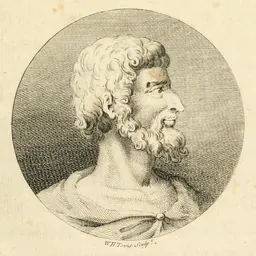

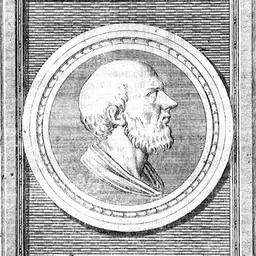
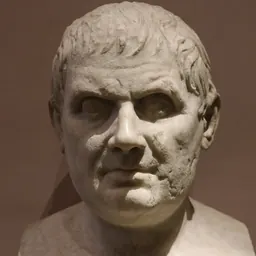
Contemporaries
People whose lives overlapped Qu Yuan's
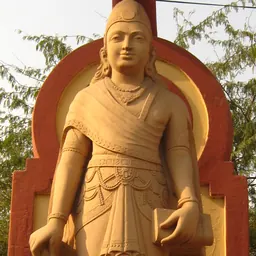

Frequently asked questions
Who was Qu Yuan?
Chinese poet and politician (c.340–278 BC)
When was Qu Yuan born?
Qu Yuan was born in 343 BC in Zigui County.
When did Qu Yuan die?
Qu Yuan died in 278 BC in Miluo Jiang.
What was Qu Yuan's occupation?
Qu Yuan was a poet, writer and politician.
What nationality was Qu Yuan?
Qu Yuan was Chinese.
Sources & further reading
Cite this page
APA: Biography.guide. (2026). Qu Yuan. https://biography.guide/qu-yuan/
MLA: "Qu Yuan." Biography.guide, https://biography.guide/qu-yuan/.
Chicago: "Qu Yuan." Biography.guide. https://biography.guide/qu-yuan/.
Data last updated: 2026-09-20 · Spot an error? Report a correction.
Page generated 2026-09-27 05:28 UTC