
About Qasim Shesho
Born 1953. Qasim Shesho is an Iraqi military personnel.
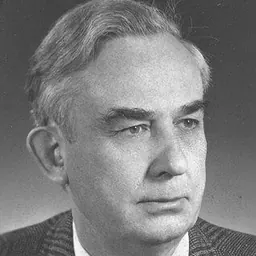
Qasim Shesho (Kurdish: Qasim Şeşo; born 1953) is a Yazidi military commander in Sinjar (Şingal), northern Iraq. He commands a Yazidi Peshmerga force affiliated with the Kurdistan Democratic Party (KDP) and is widely known by the honorific "the Lion of Sinjar" or "Old Tiger of Mount Sinjar" for organizing local resistance against the Islamic State (IS) at the Sharfadin temple in August 2014, during the Yazidi genocide. He is the uncle of fellow Yazidi commander Haydar Shesho.
Personal life Qasim Shesho was born 1953 in the village of Rashid near Sharfadin temple in the Sinjar district of Nineveh Governorate, Iraq. The family holds the traditional tribal status of agha (chieftain), and land around the present-day Şerfedîn shrine is still considered to belong to the Sheshos; Qasim, as head of the family, has reportedly distributed land there to displaced Yazidis returning to the area.
Shesho has been a member of the Kurdistan Democratic Party and an honored Peshmerga commander since the 1970s. After the collapse of the Kurdish uprising against the Ba'athist government in 1975, he led the Yazidi-Kurdish resistance in Sinjar from a hideout across the border in Syria. Several of his sons also lived in the Ostwestfalen-Lippe region of Germany, and two of them served for a time as soldiers in the German Bundeswehr.
His nephew Haydar Shesho is likewise a well-known Yazidi militia commander. At the onset of the August 2014 Sinjar massacre, together with his uncle Qasim Shesho and several cousins, Haydar Shesho returned to Iraq to help protect his Yazidi homeland.
2014 Sinjar massacre and defense of Sharfadin temple On 3 August 2014, IS fighters attacked Sinjar, and the roughly 10,000-strong Peshmerga garrison stationed in the district withdrew, leaving the Yazidi population largely undefended. The Peshmerga leadership fled before civilians did, according to Qasim Shesho's own account, and a Kurdish official confirmed to the Washington Post that the withdrawal had been organized. In the weeks preceding the assault, Shesho, together with his nephew Haider Shesho and other Yazidi representatives, formally requested that Serbest Bapir, chairman of the KDP's Shingal branch, allow the establishment of a Yazidi volunteer force to defend the district. They had repeatedly asked KDP officials for permission and weapons to form an independent Yazidi defense force, warning that up to 3,500 Yazidi men stood ready; the request was refused, with local KDP officials reportedly citing the presence of roughly 11,000 Peshmerga already stationed in the district. Peshmerga commander Aziz Waysi later said Kurdish security forces had also confiscated weapons from would-be Yazidi volunteers, citing a need to prevent the emergence of "disorganized forces" outside the regional command structure, a rationale that has been disputed by Yazidi leaders, who have suggested the real concern was that an armed and independent Yazidi force would be difficult for the KDP to control. The Sheshos proceeded to organize fighters regardless.
IS fighters overran Sinjar, triggering what the United Nations and other bodies have characterized as a genocide against the Yazidi religious minority. Thousands of Yazidis were killed, and thousands of women and children were abducted and enslaved, while Kurdish Peshmerga forces stationed in the district withdrew in the face of the IS advance. Around 200,000 Yazidis fled into the Sinjar mountain range, where many were besieged for months.
On that morning after the Peshmerga garrison withdrew, Haydar Shesho left Semel near Dohuk that morning, reaching Sinjar around five hours later and entering from the north before IS forces had cut off that approach. Qasim Shesho, then based at his home near the Şerfedîn shrine, refused to leave. On 4 August, the first IS vehicle reached the shrine; its occupants, not expecting armed resistance, had already kidnapped 67 people fleeing nearby villages. Shesho's men killed one of the fighters, prompting the rest to flee and abandon their captives. Despite repeated appeals, Peshmerga reinforcements did not arrive; Haydar Shesho later said the defenders waited seventy-three days for help. During one nighttime bombardment, Qasim Shesho reportedly stepped out of cover holding a glass of whiskey and told his men to relax, since the incoming fire could not reach them.
Peshmerga reinforcements reached the shrine on 19 December 2014; by that point, Islamic State fighters withdrew from the area without further combat. Northern Sinjar and Sinjar city were finally retaken by Kurdish forces with the help of US-led airstrikes in late December.
Shesho's continued presence at Şerfedîn constitutes the Kurdistan Democratic Party's last remaining foothold in Sinjar, following the Iraqi government's takeover of most of the district after the 2017 Kurdish independence referendum. His relocation to the qāʿa has been a point of contention with the Bahri family, the shrine's traditional religious custodians, who regard the move, from a non-political communal building to Shesho's private and military headquarters, as improper, given that he had lived in Sinjar City before the genocide.
In late August and early September 2014, both the PKK-affiliated People's Protection Units (YPG) and Kurdistan Region Peshmerga sought to raise their respective flags at the Şerfedîn shrine. Shesho refused both, declaring that no party flag, including a Yazidi one, would ever be raised at the pilgrimage site, and that Yazidi unity took priority over factional recognition. The Yazidi outlet Êzîdîpress reported the dispute at the time, and the episode has since been cited by KDP-aligned Yazidis as evidence that Shesho positioned himself above party politics, even though he had at most briefly suspended his own KDP membership after the genocide began.
Shesho has repeatedly criticized the Kurdistan Regional Government for failing to adequately arm Yazidi forces under his command, arguing this stemmed from Erbil's fear of an independently strong Yazidi military. Speaking to the German outlet taz in 2015, he said his men received only enough weapons to defend themselves, not to mount offensives against IS, while one of his sons suggested the Kurdistan Regional Government withheld arms because "they fear we are too strong and will build an independent army."
He has also periodically confirmed continuing friction with YBŞ over disarmament demands; in 2025, he stated publicly that YBŞ fighters had refused to surrender their weapons despite PKK leader Abdullah Öcalan's announcement of the group's disarmament. The Peshmerga Commander in Sinjar, Qasim Shesho, confirmed that Sinjar Protection Units fighters affiliated with the PKK had refused to give up their weapons, despite Öcalan's disarmament announcement, noting that they receive support from certain Iraqi forces.
In early 2025, a group of several hundred officers and fighters from Shesho's own brigade publicly resigned, citing grievances over pay and administrative treatment by the KRG and appealing to be incorporated into federal Iraqi security forces; Shesho downplayed the significance of the resignations, saying the resigning officers and soldiers represented only about 200 members of the brigade.
Allegations of revenge attacks on Arab civilians Yazidi militia fighters, including men reportedly operating alongside Qasim Shesho, were accused of carrying out revenge attacks on Arab civilians in the villages of Jiri and Sibaya, near Sinjar, on 25 January 2015. According to Amnesty International, which investigated the incident, 21 Arab villagers, about half of them elderly, disabled, or children, were allegedly killed in what appeared to be execution-style shootings, and around 40 more were reportedly abducted, with 17 still missing as of Amnesty's June 2015 report. Homes in both villages were also looted and burned.
Amnesty interviewed roughly 30 witnesses and concluded the killings did not occur during an armed clash, contradicting a local Asayish (KRG security) commander's claim that Peshmerga had come under fire and "some Arabs were killed" in a resulting firefight; that same official also alleged that most residents belonged to the Jahaysh (Jhaish) tribe and were IS-linked. Amnesty said it could not independently verify either the accusations against the villagers or their denials.
The backlash was rapid and extensive. The Iraqi human rights organization Patrikor reported documenting 3,750 instances of hate speech directed at Yazidis within 24 hours of the video's spread. On 5 August 2024, the Council of Scholars, Da'wah and Guidance and the Third Branch of the Kurdistan Islamic Union issued a joint statement condemning the remarks as a threat to social peace and calling on both the Yazidi Spiritual Council and Iraqi legal authorities to take action against Shesho. The Ministry of Endowments and Religious Affairs and the Union of Muslim Scholars in Kurdistan issued a similar joint condemnation on 6 August, asserting their right to pursue legal action.
The Presidency of the Kurdistan Region issued its own statement on 9 August, condemning insults to any religion while cautioning against collective blame of Yazidis.
On 8 August 2024, the Nineveh Investigation Court issued an arrest warrant for Shesho on charges of "insulting the Prophet Muhammad and inciting war between religions," under Article 195 of the Iraqi Penal Code, which criminalizes public insults to religion. The warrant reportedly did not name the complainant who had filed the case.
On the same day the arrest warrant was issued, a delegation from the Yazidi Spiritual Council, led by the Yazidi supreme spiritual leader Baba Sheikh, visited the Union of Muslim Scholars of the Kurdistan Region, where both sides affirmed a shared commitment to coexistence and mutual respect between religions.
Shesho responded publicly with a clarifying statement, saying that "some media outlets circulated a short segment of my speech, taking a single sentence out of context to falsely claim that I spoke inappropriately about the Prophet Mohammad," and stating, "There was no insult to the Prophet of Islam in my statement." He maintained that his remarks had referred to the recurring historical persecution of Yazidis rather than to the Muhammed personally and noted "Our prohibits insulting prophets and religious individuals from all religions, sects, and beliefs,” emphasizing that Yazidism even forbids disrespecting inanimate objects revered by others". His nephew, Haydar Shesho, separately told the Kurdish outlet Rudaw that he believed his uncle's comments about the Prophet had been misinterpreted, saying the matter had "been exaggerated... despite our clarifications."
Reputation Qasim Shesho is one of the very few living people to be the subject of a stran, a traditional heroic song preserving communal history, titled "The War of the House of Shesho" (Şerê Mala Şeşo). It commemorates his decades-long feud with a rival Yazidi tribal leader, Qasim Sumer, who aligned with Saddam Hussein's government while Shesho backed the Kurdish Peshmerga. The dispute reportedly originated as a personal conflict over a woman before acquiring its later political character, and lasted roughly forty years until the two men reconciled through a traditional tribal mediation (sulh) in 2010.
Shesho is also remembered as a legendary Peshmerga fighter whose decades-long resistance against Saddam Hussein's forces forms a central part of his reputation in Sinjar. His later defense of the Sharfadin shrine against the Islamic State added extended this reputation, linking his tribal and political identity to a sacred site and to the shrine's holy patron being Sharfadin himself.
Anthropologist Benjamin Raßbach traces Shesho's reputation as the "Lion of Sinjar" through three overlapping phases: an original inner-Yazidi tribal rivalry with Qasim Sumer; his subsequent identification with the Kurdish nationalist struggle as a Peshmerga commander; and, after 2014, a religious dimension linked to the "Miracle of Şerfedîn" narrative surrounding the shrine's defense against the Islamic State.
Don’t just read it —
keep it.
Full-length biographies made to live with: read them, listen on the way to work, watch them tonight.
- E-book
- Audio
- Video
Instant download · yours to keep · every purchase keeps this site free
Important facts
People in Qasim Shesho's life
Named in this biography and alive at the same time


Related people
Same field, nearest in time


Contemporaries
People whose lives overlapped Qasim Shesho's


Frequently asked questions
Who is Qasim Shesho?
yazidi military commander
When was Qasim Shesho born?
Qasim Shesho was born in 1953.
What is Qasim Shesho's occupation?
Qasim Shesho is a military personnel.
What nationality is Qasim Shesho?
Qasim Shesho is Iraqi.
Sources & further reading
Cite this page
APA: Biography.guide. (2026). Qasim Shesho. https://biography.guide/qasim-shesho/
MLA: "Qasim Shesho." Biography.guide, https://biography.guide/qasim-shesho/.
Chicago: "Qasim Shesho." Biography.guide. https://biography.guide/qasim-shesho/.
Data last updated: 2026-09-20 · Spot an error? Report a correction.
Page generated 2026-09-27 05:20 UTC