About Qa'a
Lived 2950 BC – 2890 BC (aged 59–60). Qa'a was an Egyptian statesperson and ruler.
Identity
Manetho calls Qa'a Biénechês and gives him a reign of 26 years according to the version preserved by Sextus Julius Africanus. Other versions of copies of Manetho's epitomes give other hellenized names such as Óubiênthis for versions by Eusebius and Víbenthis by Armenian versions of Eusebius.
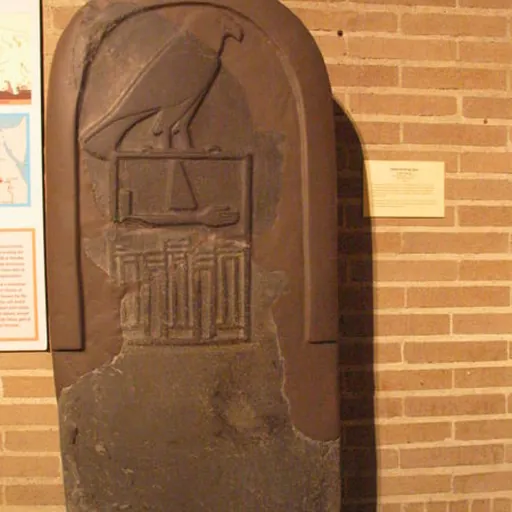
End of reign Abydos ivory tablet from the tomb of King Qa'a. Asiatic prisoner. Despite Qa'a's long and prosperous reign, evidence shows that after his death, a dynastic war between different royal houses began over the newly empty throne. In the tomb of the high official Merka, a stone vessel with the name of a king Sneferka was found. It is unclear whether "Sneferka" was an alternate name of Qa'a or if he was a separate, ephemeral ruler. Egyptologists such as Wolfgang Helck and Toby Wilkinson point to a further mysterious ruler named "Horus Bird", whose name was found on vessel fragments dating to the end of the first dynasty. It is postulated that Sneferka and Horus Bird fought for power and that Hotepsekhemwy ended the fight and finally ascended the throne of Egypt, thus starting the Second Dynasty. Strong clues to that theory are traces of grave robberies and arsons found in the royal tombs of Abydos. Clay seals of Hotepsekhemwy found in Qa'a's tomb suggest that he restored the tomb or buried Qa'a, maybe in an attempt to legitimize his rule. A long reign is supported by the large size of this ruler's burial site at Abydos. This tomb was excavated by German archaeologists in 1993 and proved to contain 26 satellite (i.e. sacrificial) burials. The beautiful tomb stela of Qa'a is now on display at the University of Pennsylvania Museum of Archaeology and Anthropology.
A number of year labels have also been discovered dating to his reign at the First Dynasty burial site of Umm el-Qa'ab in Abydos. Qa'a is believed to have ruled Egypt around 2916 BCE. A necropolis sealing was found that lists all eight of the kings of what scholars now call the First Dynasty in the correct order, starting with Narmer.
High Officials The tomb of one of Qa'a's state officials at Saqqara—a certain nobleman named Merka—contained a stele with many titles. There is a second Sed festival attested. This fact plus the high quality of a number of royal steles depicting the king implies that Qa'a's reign was a fairly stable and prosperous period of time.
Succession
A seal impression bearing Hotepsekhemwy's name was found near the entrance of the tomb of Qa'a (Tomb Q) by the German Archaeological Institute in the mid-1990s. The discovery of the seal impression has been interpreted as evidence that Qa'a was buried, and therefore succeeded, by Hotepsekhemwy, the founder of the second dynasty of Egypt, as Manetho states.
A dish inscribed with the name and titles of Qa'a was discovered in the tomb of second dynasty pharaoh Seth-Peribsen (Tomb P of Petrie).
Don’t just read it —
keep it.
Full-length biographies made to live with: read them, listen on the way to work, watch them tonight.
- E-book
- Audio
- Video
Instant download · yours to keep · every purchase keeps this site free
Important facts
Related people
Same field, nearest in time


Contemporaries
People whose lives overlapped Qa'a's

Frequently asked questions
Who was Qa'a?
Egyptian ruler
When was Qa'a born?
Qa'a was born in 2950 BC.
When did Qa'a die?
Qa'a died in 2890 BC.
What was Qa'a's occupation?
Qa'a was a statesperson and ruler.
What nationality was Qa'a?
Qa'a was Egyptian.
Sources & further reading
Cite this page
APA: Biography.guide. (2026). Qa'a. https://biography.guide/qa-a/
MLA: "Qa'a." Biography.guide, https://biography.guide/qa-a/.
Chicago: "Qa'a." Biography.guide. https://biography.guide/qa-a/.
Data last updated: 2026-09-23 · Spot an error? Report a correction.
Portrait: Wikimedia Commons · author & licence
Page generated 2026-09-27 05:06 UTC