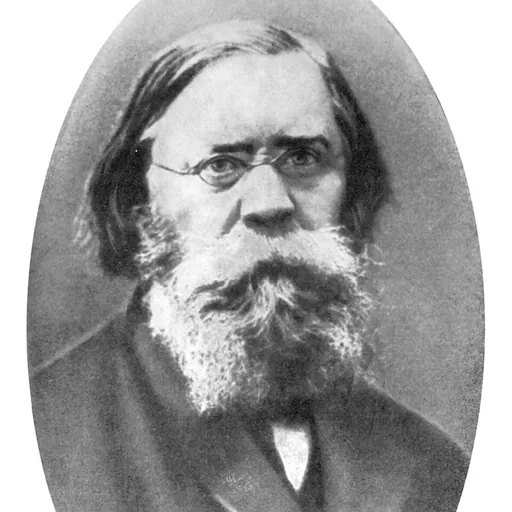
About Pyotr Lavrov
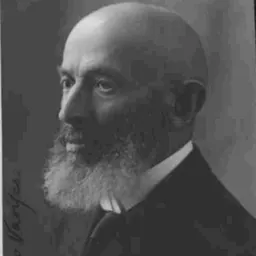
Lived 1823 – 1900 (aged 76). Pyotr Lavrov was a Russian and French philosopher, historian, sociologist, anthropologist, mathematician and communard.
Pyotr Lavrovich Lavrov (14 June [ O.S. 2 June] 1823 – 6 February [O.S. 25 January] 1900) was a prominent Russian political theorist of Narodism, philosopher, publicist, revolutionary, sociologist, and historian.
Biography Lavrov was born in into a military family of hereditary nobles. His father was a retired artillery officer of the Imperial Russian Army and his mother was from a Russified Swedish merchant family. He entered a military academy and graduated in 1842 as an army officer. He became well-versed in natural science, history, logic, philosophy, and psychology. He also taught mathematics for two decades, being a professor at the Artillery College in St. Petersberg.
Lavrov joined the revolutionary movement as a radical in 1862. He was arrested following Dmitry Karakozov's failed attempt to assassinate Alexander II. Letters and poems which were considered compromising had been found at his house and he was imprisoned in the military prison at St. Petersberg for nine months. No charge of being involved in the conspiracy was laid against him, but he was found guilty of having published subversive ideas and having shown sympathy with men of criminal tendencies. While in Paris, Lavrov fully committed himself to the revolutionary socialist movement. He became a member of the Ternes section of the International Workingmen's Association in 1870. He was also present at the start of the 1871 Paris Commune, and soon went abroad to generate international support.
Lavrov arrived in Zürich in November 1872, and became a rival of Mikhail Bakunin in the "Russian Colony". In Zürich he lived in the Frauenfeld house near the university. Lavrov tended more toward reform than revolution, or at least he saw reform as salutary. He preached against the conspiratorial ideology of Peter Tkachev and others like him. Lavrov believed that while a coup d'état would be easy in Russia, the creation of a socialist society needed to involve the Russian masses. All those impacts were in some way synthesized in Lavrov's idea of solidarity as the key issue of sociological research. Lavrov defined sociology as a science dealing with forms of social solidarity, which he subdivided into three major types: 1) unconscious solidarity of custom; 2) purely emotional solidarity, based on impulses not controlled by critical reflection; and 3) "conscious historical solidarity" resulting from a common effort to attain a consciously selected and rationally justified goal. The latter represented the highest and the most significant type of human solidarity. It developed later than the first two types and proclaimed the conversion of a static "culture" into a dynamic "civilization". To sum it up, social solidarity in Lavrov's view is "the consciousness that personal interest coincides with social interest, that personal dignity is maintained only by upholding the dignity of all who share in this solidarity". Otherwise it is a mere community of habits, interests, affects, or convictions. Thus solidarity is an essential premise of the existence of society. Solidary interaction distinguishes society from a simple gathering of individuals, the latter phenomenon constituting no sociological object. Moreover, the condition of individuals being conscious creatures excludes from the field of sociology forms of solidarity or solidary interaction performed by unconscious organisms, or, in other words, marks the borderline between social and biological phenomena.
Don’t just read it —
keep it.
Full-length biographies made to live with: read them, listen on the way to work, watch them tonight.
- E-book
- Audio
- Video
Instant download · yours to keep · every purchase keeps this site free
Important facts
People in Pyotr Lavrov's life
Named in this biography and alive at the same time
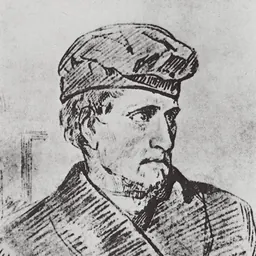

Related people
Same field, nearest in time
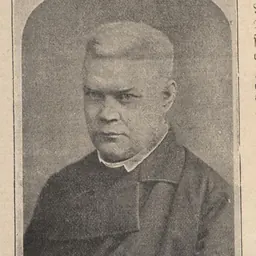

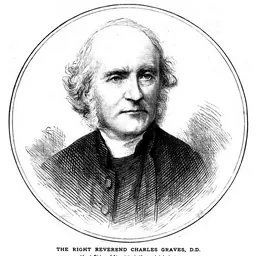


Contemporaries
People whose lives overlapped Pyotr Lavrov's




Frequently asked questions
Who was Pyotr Lavrov?
Russian academic (1823–1900)
When was Pyotr Lavrov born?
Pyotr Lavrov was born on 2 June 1823 in Melekhovo.
When did Pyotr Lavrov die?
Pyotr Lavrov died on 25 January 1900 in Paris.
What was Pyotr Lavrov's occupation?
Pyotr Lavrov was a philosopher, historian, sociologist, anthropologist, mathematician and communard.
What nationality was Pyotr Lavrov?
Pyotr Lavrov was Russian and French.
Sources & further reading
Cite this page
APA: Biography.guide. (2026). Pyotr Lavrov. https://biography.guide/pyotr-lavrov/
MLA: "Pyotr Lavrov." Biography.guide, https://biography.guide/pyotr-lavrov/.
Chicago: "Pyotr Lavrov." Biography.guide. https://biography.guide/pyotr-lavrov/.
Data last updated: 2026-09-23 · Spot an error? Report a correction.
Portrait: Wikimedia Commons · author & licence
Page generated 2026-09-27 05:07 UTC