
About Purandara Dasa
Lived 1470 – 1564 (aged 93–94). Purandara Dasa was an Indian composer, philosopher and poet.
Purandara Dasa (IAST: Purandara Dāsa; (1470 – 1564) was a composer, singer and a Haridasa philosopher from present-day Karnataka, India. He was a follower of Madhvacharya's Dvaita philosophy. He was one of the chief founding proponents that shaped modern Carnatic music. In honor of his contributions to Carnatic music, he is referred to as the Pitamaha (lit. "grandsire") of Carnatic music. He formulated the basic lessons of teaching Carnatic music by structuring graded exercises known as Svaravalis and Alankaras in Purandara gada,18 km far from pune present-day Maharashtra state. According to others opinion, his native town was Purandaraghatta in Karnataka, In 2018, a five-member committee set up by the Government of Karnataka to ascertain the birthplace of Purandara Dasa has submitted its report asserting Tirthahalli as the likeliest candidate. The committee included veteran singer and musicologist RK Padmanabha, scholars Aralumallige Parthasarathi, AV Navada, Veeranna Rajora, and former minister Leeladevi Navada. It is now ascertained that Purandharadasa was born in Araga, Vijayanagara Empire (Modern Day Thirthahalli, Shivamogga District, Karnataka, India), Karnataka
Dating Dasa's died in 1564 according to his son Madhvapati. But his year of birth is unknown. Several dates have been proposed. B. N. K. Sharma said Dasa was born in 1484 and in later reprints changed this to 1494. But many scholars, authors and historians have different opinions on this. Authors Guy L. Beck of University of South Carolina and William Joseph Jackson of Oxford University gave dates as 1480-1564 CE. Prominent scholar Amaresh Datta, the chief editor of the Encyclopaedia of Indian Literature published by Sahitya Akademi in this book he gave Purandara Dasa dates as 1480–1564. But based on the historical event of Purandara Dasa meeting Annamacharya and the keerthanas (spiritual songs) that they have sung together on Sri Venkateshwara Swamy at Tirumala, which were recorded by Annamacharya's grandson Tallapaka Chinanna, Tirumala Tirupati Devasthanams gave year of birth of Purandara as 1470.
Dates based on his meeting Annamacharya Most of the authors or scholars have not taken the historical event of Purandara Dasa meeting Annamacharya and both singing sankeerthanas (devotional songs) on Sri Venkateshwara Swamy at Tirumala into consideration while decided the dates. Based on the manuscripts found, which were written by Tallapaka Chinanna, the grandson of Annamacharya Tirumala Tirupati Devasthanams gave its analysis. Based on these manuscripts, Purandara Dasa met Annamacharya after taking Haridasa initiation from Vyasatirtha in Hampi when he was 30 years old and Annamacharya was in his 90's. After meeting both Purandara Dasa and Annamacharya sang songs in front of Sri Venkateshwara Swamy in Tirumala temple. Based on these historical recorded events the scholars of Tirumala Tirupati Devasthanams did analysis and finally declared that Purandara Dasa met Annamacharya in the year 1500 and the year of birth of Purandara Dasa as 1470.
Father of Carnatic music Dasa systematized the method of teaching Carnatic music which is followed to the present day. He introduced the raga Mayamalavagowla as the basic scale for music instruction and fashioned a series of graded lessons such as , , , , , , , , and kritis. He also composed several lakshya and lakshana geetas, many of which are sung to this day. His sooladis are regarded as musical masterpieces and are the standard for raga lakshana. Scholars attribute the standardization of entirely to Purandara Dasa.
Dasa was a vaggeyakara (composer-performer), a lakshanakara (musicologist), and the founder of musical pedagogy. Musicologists call him the Sangeeta Pitamaha of Karnataka (Carnatic) music.
Social reforms Purandara Dasa tried to reform existing social practices and preached through devotional songs in the local Kannada language. Most of his keertanas deal with social reform and pinpoint the defects in society.
Casteism Purandara Dasa fought the evils of casteism through his songs. In his song aavakulavaadarenu aavanadarenu aatma bhavavariyada mele he wonders what is the use if one does not understand the spirit of humanism whatever caste or status one might be accredited to.
Dasa is said to have composed his song, ‘Aadisidaleshoda jagadoddharana’ on infant Sri Krishna at the Aprameyaswamy temple in Doddamallur, where a small mantapa outside the temple is named after him.
A statue of Dasa has been erected at the foothills of Tirumala in Alipiri. cert hall, called 'Purandara Mantapa', has been erected on the premises of the Trust.
On 14 January 1964 India issued a stamp in honour of Dasa on the 400th anniversary of his death.
Movies
Three biographical films, in the Kannada language, have been made on the life and compositions of Purandara Dasa. Purandaradasa (1937) Navakoti Narayana (1964) Sri Purandara Dasaru (1967) Film director and playwright Girish Karnad made a documentary film titled Kanaka-Purandara (English, 1988) on the two medieval Bhakti poets of Karnataka.
Collections of his lyrics Gaja Vadana Beduve Gowri Thanaya A popular Purandara Dasa composition in Carnatic Raagam Hamsadhwani
Don’t just read it —
keep it.
Full-length biographies made to live with: read them, listen on the way to work, watch them tonight.
- E-book
- Audio
- Video
Instant download · yours to keep · every purchase keeps this site free
Important facts
Related people
Same field, nearest in time
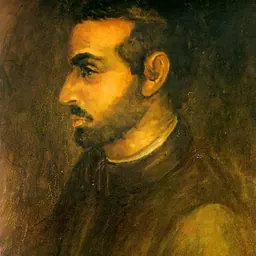
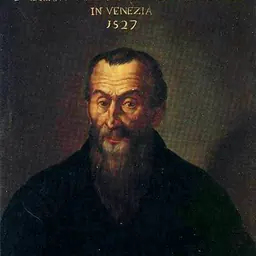


Contemporaries
People whose lives overlapped Purandara Dasa's


Frequently asked questions
Who was Purandara Dasa?
Indian musician
When was Purandara Dasa born?
Purandara Dasa was born in 1470 in Thirthahalli.
When did Purandara Dasa die?
Purandara Dasa died in 1564 in Hampi.
What was Purandara Dasa's occupation?
Purandara Dasa was a composer, philosopher and poet.
What nationality was Purandara Dasa?
Purandara Dasa was Indian.
Sources & further reading
Cite this page
APA: Biography.guide. (2026). Purandara Dasa. https://biography.guide/purandara-dasa/
MLA: "Purandara Dasa." Biography.guide, https://biography.guide/purandara-dasa/.
Chicago: "Purandara Dasa." Biography.guide. https://biography.guide/purandara-dasa/.
Data last updated: 2026-09-20 · Spot an error? Report a correction.
Page generated 2026-09-27 05:34 UTC