
About Pryor Lea
Lived 1794 – 1879 (aged 85). Pryor Lea was an American politician and lawyer.
Early life Lea was born in what is now Grainger County, Tennessee, but was then part of Knox County, the son of Major Lea and Lavinia (Jarnagin) Lea. He attended the former Greeneville College (now Tusculum College), after which he studied law. He fought in the Creek War as a major under Andrew Jackson in 1813, and clerked for the Tennessee House of Representatives in 1816. He married Maria Kennedy on October 6, 1818. They had four children, Abraham, Julia, Centhia, and James Kennedy. His second marriage was to Minerva Heard, and his third was to Mary Perkins.
Lea was appointed to the Board of Trustees of East Tennessee College (the forerunner of the University of Tennessee) in 1821, and later served as the board's secretary. That same year, he was appointed United States Attorney for Eastern Tennessee.
Congress
A supporter of Andrew Jackson, Lea was elected to the U.S. House of Representatives in 1827, defeating fiery anti-Jacksonite Thomas D. Arnold by a vote of 3,688 to 3,316. He again defeated Arnold in a hotly contested election in 1829, winning 4,713 votes to Arnold's 4,496. Arnold charged Lea with voter fraud, but the House Committee on Elections found no evidence of irregularities, and Lea was allowed to take his seat. He served in the Twentieth and Twenty-first congresses, from March 4, 1827, to March 4, 1831. He was narrowly defeated by Arnold for a third term in 1831, 4,935 votes to 4,702. He voted in favor of the Indian Removal Act of 1830, describing the House debate on the bill as "one of the severest struggles that I have ever witnessed in Congress." He frequently clashed with fellow Tennessee congressman Davy Crockett, with Crockett calling Lea a "poltroon, a scoundrel, and a puppy," and warning they would fight if they ever crossed paths.
In 1830 he gave a speech on a bill to construct a "National Road" from Buffalo, New York to New Orleans.
Later life
During the mid-1830s, Lea developed an interest in railroad construction, which many East Tennesseans viewed as a solution to the region's isolation. He was secretary of an 1836 Knoxville convention that mapped out the proposed Louisville, Cincinnati and Charleston Railroad.
Lea was a founding trustee of the University of Mississippi.
Both Albert and Pryor Lea supported the Knights of the Golden Circle, a secret society which planned to invade Mexico and Central America and establish a massive slave empire around the Gulf of Mexico. They pitched the society's plan to Governor Sam Houston in 1860, but Houston rejected the plan, and ordered the Texas Rangers to break up the Knights' assemblies.
Lea was a delegate to the Texas Secession Convention, which met in Austin in January 1861 to adopt an Ordinance of Secession, leading to eventual Texas membership in the Confederacy. He was elected to the Texas Senate later that year, serving a single term.
Don’t just read it —
keep it.
Full-length biographies made to live with: read them, listen on the way to work, watch them tonight.
- E-book
- Audio
- Video
Instant download · yours to keep · every purchase keeps this site free
Important facts
People in Pryor Lea's life
Named in this biography and alive at the same time
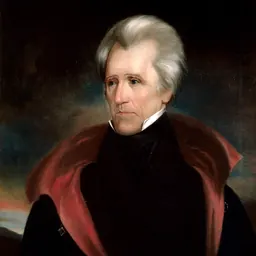

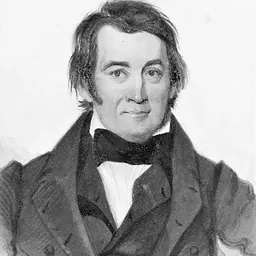

Related people
Same field, nearest in time

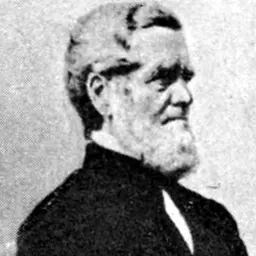


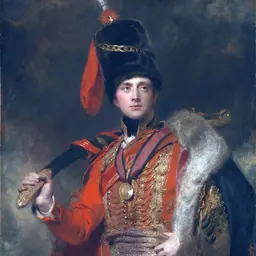
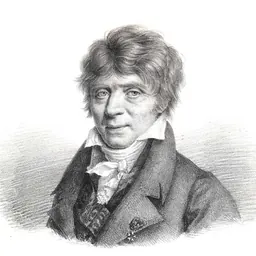
Contemporaries
People whose lives overlapped Pryor Lea's





Frequently asked questions
Who was Pryor Lea?
American politician (1794-1879)
When was Pryor Lea born?
Pryor Lea was born on 31 August 1794 in Knox County.
When did Pryor Lea die?
Pryor Lea died on 14 September 1879 in Goliad.
What was Pryor Lea's occupation?
Pryor Lea was a politician and lawyer.
What nationality was Pryor Lea?
Pryor Lea was American.
Sources & further reading
Cite this page
APA: Biography.guide. (2026). Pryor Lea. https://biography.guide/pryor-lea/
MLA: "Pryor Lea." Biography.guide, https://biography.guide/pryor-lea/.
Chicago: "Pryor Lea." Biography.guide. https://biography.guide/pryor-lea/.
Data last updated: 2026-09-20 · Spot an error? Report a correction.
Page generated 2026-09-27 05:02 UTC