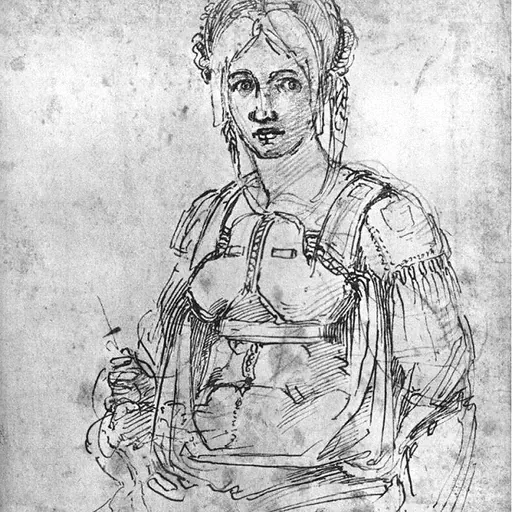
About Properzia de' Rossi
Lived 1490 – 1530 (aged 39–40). Properzia de' Rossi was an Italian sculptor, artist, engraver, draftsperson, musician and singer.
Properzia de' Rossi (c. 1490 – 1530) was a female Italian Renaissance sculptor and one of only four women to receive a biography in Vasari's Lives of the Artists.
Biography Properzia de' Rossi was born in Bologna; she was the daughter of Giovanni Martino Rossi da Modena, a notary. Unusually for early modern female artists, she was not the daughter of an artist. She appears to have studied painting, music, dance, poetry, and classical literature. She is also said to have studied with a sculptor at the University of Bologna. Vasari stated she was expert in "household matters" as well as many sciences and played and sang "better than any other woman of her city." The subject of these small "friezes" was often religious, with one of the most famous being a Passion of Christ with Apostles and Crucifixion in a peach stone. Vasari also noted she copied in pen and ink drawings by Raphael. The second bas-relief panel is believed to be the Visit of the Queen of Sheba to Solomon. Vasari stated that she never worked for the Cathedral again, which is supported by her absence from their records after 1526.
Legal issues De' Rossi's life has been described as transgressive. She was buried in the Della Morte hospital as expressed in her will. In her life, Vasari gives examples of ancient women from the Classical tradition who achieved extraordinary things, and contemporary female writers, and then states "Nor have they been too proud to set themselves with their little hands, so tender and so white, as if to wrest from us the palm of supremacy, to manual labours, braving the roughness of marble and the unkindly chisels, in order to attain to their desire and thereby win fame", going on to describe de' Rossi's achievements. Vasari does claim that de' Rossi was able to depict Joseph and Potiphar's wife so successfully because she was madly in love with a "handsome young man" who cared little for her, and that in carving this piece she was able to get over her passion. De' Rossi functioned for Hemans as a female artist who transcends the role of muse, liberating herself from traditional gender constraints through the act of self-creation.
In 1830, the Accademia delli Belli Arti of Bologna celebrated De' Rossi among other early modern women artists, noting her unique role as a sculptor and defending her against Vasari's construction of her as a woman who couldn't cope with the extremes of unrequited passion.
Don’t just read it —
keep it.
Full-length biographies made to live with: read them, listen on the way to work, watch them tonight.
- E-book
- Audio
- Video
Instant download · yours to keep · every purchase keeps this site free
Important facts
People in Properzia de' Rossi's life
Named in this biography and alive at the same time

Related people
Same field, nearest in time


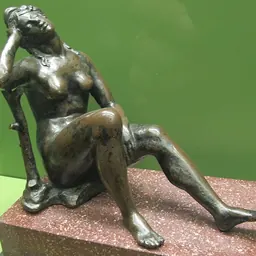
Contemporaries
People whose lives overlapped Properzia de' Rossi's
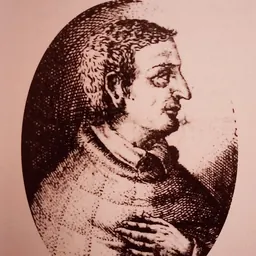
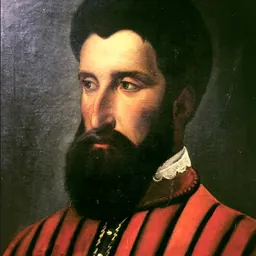
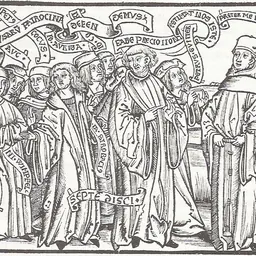


Frequently asked questions
Who was Properzia de' Rossi?
Sculptor from Italy
When was Properzia de' Rossi born?
Properzia de' Rossi was born in 1490 in Bologna.
When did Properzia de' Rossi die?
Properzia de' Rossi died in 1530 in Bologna.
What was Properzia de' Rossi's occupation?
Properzia de' Rossi was a sculptor, artist, engraver, draftsperson, musician and singer.
What nationality was Properzia de' Rossi?
Properzia de' Rossi was Italian.
Sources & further reading
· Wikipedia: Properzia de' Rossi
· DBpedia: Properzia de' Rossi
Cite this page
APA: Biography.guide. (2026). Properzia de' Rossi. https://biography.guide/properzia-de-rossi/
MLA: "Properzia de' Rossi." Biography.guide, https://biography.guide/properzia-de-rossi/.
Chicago: "Properzia de' Rossi." Biography.guide. https://biography.guide/properzia-de-rossi/.
Data last updated: 2026-09-22 · Spot an error? Report a correction.
Portrait: Wikimedia Commons · author & licence
Page generated 2026-09-27 05:01 UTC