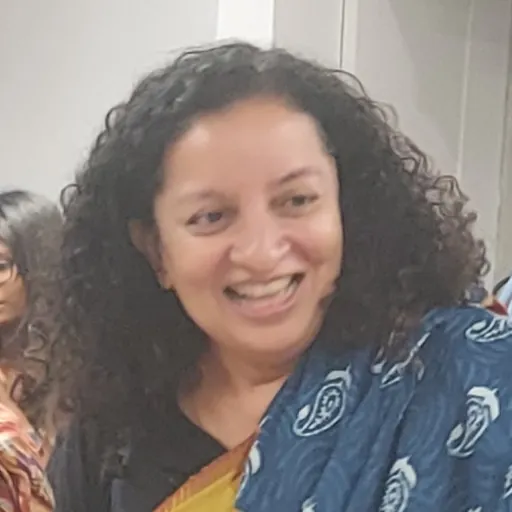
About Priya Ramani
Priya Ramani was an Indian journalist, editor and writer.
Priya Ramani is an Indian journalist, writer, and editor. In October 2018, during the Me Too movement in India, Ramani alleged sexual harassment against now-former Minister of State for External Affairs M.J. Akbar, and in February 2021, Ramani was acquitted in the criminal defamation case Akbar had filed against her. In October 2020, Ramani co-created the India Love Project on Instagram.
Career
Ramani began working at The Asian Age in 1994, then Reuters, Elle, India Today, Cosmopolitan magazine and Mint Lounge. Ramani has also written for Livemint, Indian Express, and Vogue India. Ramani led Mint Lounge for eight years. and including a description of sexual harassment during a job interview in a Mumbai hotel room when she was 23 years old. In the article, Ramani did not name the person who interviewed her.
Criminal defamation case
Filing
M.J. Akbar filed a criminal defamation case against Ramani on 15 October 2018, and resigned as Minister of State for External Affairs on 17 October 2018; at the time, The New York Times described Akbar as "the most prominent figure so far to be felled by the #MeToo movement sweeping the world's largest democracy." Bhawana Bisht, writing for SheThePeople.TV, described the case against Ramani as an example of a SLAPP lawsuit and "a way to drag the women to court and intimidate them until they withdraw." Ramani pleaded not guilty,
Court process
In January 2019, Ramani was summoned to court, and in February, granted bail on a personal bond of Rs 10,000. Senior Advocate Rebecca Mammen John represented Ramani, and in September 2020, John told the court, "A true imputation made in the public good is not defamation... it is not defamation to make an imputation on the character of another when it is made in good faith for the protection of his or other's interest." John also said, "Priya Ramani's alleged defamatory tweets and the Vogue article were her truth. I am saying this is my (Ramani's) truth... it is the truth, is in good faith, touching public good." John also argued that Ramani's allegation of sexual harassment was supported by other women who made similar allegations against Akbar, including journalist Ghazala Wahab. John concluded with a reference to a Ruth Bader Ginsburg quote and said that the #MeToo Movement began to correct a "structural wrong."
In November 2020, Senior Advocate Geeta Luthra submitted to the court on behalf of Akbar that Ramani made the statements out of vengeance, not the public good, and Ramani failed to produce evidence of her allegations and failed to apologize for the statements. On 21 November 2020, the court asked Ramani and Akbar to consider a settlement of the case. On 24 November 2020, John informed the court on behalf of Ramani that there was no chance of a settlement. Due to a transfer of judges, the matter would now be heard again before the new judge. On 14 December, Ramani submitted to the court through John that "#MeToo came to India in 2018. It wasn't a crime to speak up on the #MeToo platform. These are acts of extreme courage that require celebration. These are not acts for which one should face defamation."
On 18 December 2020, Ramani alleged in court through John that Akbar did not approach the court with clean hands. Over 20 women have alleged sexual harassment by Akbar while they were working as journalists under him, and John told the court that Ramani was not the first to tweet against Akbar: "Several women had tweeted. Ghazala Wahab tweeted two days before. Shunali Khullar Shroff and Prerna Singh Bhindra tweeted before her."
On 22 December 2020, Luthra told the court, "People on responsible position like journalists should not make such allegations on social media. They should come to court instead." On 24 December, in court, Akbar denied meeting Ramani in the hotel where she alleged the sexual harassment happened. On 4 January 2021, Luthra stated in court that "without any investigation or basis," Ramani referred to Akbar as "media's biggest sexual predator" in a tweet about Akbar's resignation. On 18 January, in response to Ramani's point about the other allegations made against Akbar, Luthra told the court, "Harm is done by the man who instigates and ignites the flame first." On 21 January, Luthra told the court that Ramani's deletion of her own Twitter account before cross-examination was deliberate and intended "to subserve the cause of justice."
Ramani's counsel Rebecca John began final arguments on 27 January 2021, stating Akbar's arguments do not make sense based on a plain reading of Ramani's Vogue article, and that the testimony of Ghazala Wahab, who has accused Akbar of sexual assault, as well as a Firstpost article introduced by Akbar's legal team that provided details of allegations against Akbar, were relevant support for Ramani's reference to Akbar as a 'predator.' On 1 February, John continued to address Luthra's arguments, including about Ramani's Twitter account, noting it had only been deactivated, not deleted, and Akbar had never filed a request and the court had not required reactivation of the accourt. During the final argument, John submitted to the court, "Mr. Akbar went after Ms. Ramani as she was a soft target and did not go after other women because he was afraid." In the ruling, Judge Ravindra Kumar Pandey wrote, "Despite how well respected some persons are in the society, they in their personal lives, could show extreme cruelty to the females," and "The time has come for our society to understand the sexual abuse and sexual harassment and its implications on victims." Pandey continued, "The woman cannot be punished for raising (her) voice against the sex abuse on the pretext of criminal complaint of defamation, as the right of reputation cannot be protected at the cost of the right of life and dignity of woman as guaranteed in the Indian Constitution."
After the verdict, Ramani stated it "feels great to have your truth validated before court," and "It feels amazing, truly does. I feel vindicated on behalf of all the women who have ever spoken out against sexual harassment at work place. It was me, the victim, who had to stand up in the court as an accused. I thank everyone who stood by me, especially my witnesses Ghazala Wahab and Niloufer Venkatraman, who came to the court and testified on my behalf," and she thanked her lawyer Rebecca Mammen John and her legal team. Sowmya Rajendran described Ramani as a "trailblazer", and wrote "because of her courage, there will be many more women who come after her, who will believe in their right to speak and be heard, too."
Appeal On 11 August 2021, Akbar filed an appeal with the Delhi High Court, challenging the verdict. On 13 January 2022, the Delhi High Court accepted the case for review.
India Love Project
On 28 October 2020, Ramani, her husband Samar Halarnkar, and their friend Niloufer Venkatraman created the India Love Project (ILP) on Instagram, as "a celebration of interfaith/inter-caste love and togetherness in these divisive, hate-filled times" where people are invited to people to submit personal or family stories about love transcending religious and communal identities.
ILP began in response to backlash against an advertising campaign that featured an interfaith couple, and has expanded to help couples find legal and counseling assistance. Ramani said the idea for ILP started with the increasing controversy over religious conversion laws (also known as "love jihad" laws).
Education Ramani studied psychology at St Xavier's College in Mumbai and journalism at Temple University in Philadelphia.
Personal life Ramani is married to journalist Samar Halarnkar.
Don’t just read it —
keep it.
Full-length biographies made to live with: read them, listen on the way to work, watch them tonight.
- E-book
- Audio
- Video
Instant download · yours to keep · every purchase keeps this site free
Important facts
Family & relationships
Related people
Same field, nearest in time




Frequently asked questions
Who was Priya Ramani?
Indian journalist
What was Priya Ramani's occupation?
Priya Ramani was a journalist, editor and writer.
What nationality was Priya Ramani?
Priya Ramani was Indian.
Sources & further reading
Cite this page
APA: Biography.guide. (2026). Priya Ramani. https://biography.guide/priya-ramani/
MLA: "Priya Ramani." Biography.guide, https://biography.guide/priya-ramani/.
Chicago: "Priya Ramani." Biography.guide. https://biography.guide/priya-ramani/.
Data last updated: 2026-09-22 · Spot an error? Report a correction.
Portrait: Wikimedia Commons · author & licence
Page generated 2026-09-27 04:59 UTC