
About Prince Napoléon-Jérôme, Prince Napoléon
Lived 1822 – 1891 (aged 68). Prince Napoléon-Jérôme, Prince Napoléon was a French politician and diplomat.
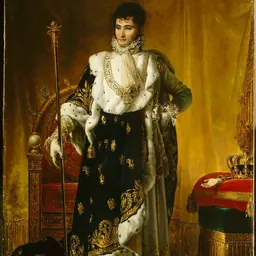
Prince Napoléon Joseph Charles Paul Bonaparte (9 September 1822 – 17 March 1891), usually called Napoléon-Jérôme Bonaparte or Jérôme Bonaparte, was the second son of Jérôme, King of Westphalia, youngest brother of Napoleon I, and his second wife Catharina of Württemberg. Following the death of his cousin Louis-Napoléon, Prince Imperial in 1879, he claimed headship of the House of Bonaparte until his death in 1891. An outspoken liberal however, he was passed over as heir in his cousin's final will, which instead chose his elder son Victor, who was favored by most Bonapartists. From the 1880s onwards, he was one of the stronger supporters of General Georges Boulanger, together with other monarchist forces.
As well as bearing the title of Prince Napoléon, given to him by his cousin Emperor Napoleon III in 1852, he was also 2nd Prince of Montfort, 1st Count of Meudon and Count of Moncalieri, following his marriage with Maria Clotilde of Savoy in 1859. His popular nickname, Plon-Plon, stemmed from his difficulty in pronouncing his own name while still a child, although other notable historians and contemporary letters by his nephew Colonel Jérôme Bonaparte claim it was because he ran in cowardice during battle when the bombs fell. Another nickname, "Craint-Plomb" ("Afraid-of-Lead",) was given to him by the army due to his absence from the Battle of Solferino.
Biography
Born at Trieste in the Austrian Empire (today Italy), and known as "Prince Napoléon", "Prince Napoléon-Jérôme," or by the sobriquet of "Plon-Plon", he was a close advisor to his first cousin, Napoleon III of France, and in particular was seen as a leading advocate of French intervention in Italy on behalf of Camillo Benso, Count of Cavour and the Italian nationalists. Until Napoleon III produced an heir apparent, the Bonaparte family were at odds for who should be the heir presumptive, a matter complicated by Jérôme Bonaparte's first marriage to American Elizabeth Patterson Bonaparte, with whom he had a son, Jérôme Napoléon Bonaparte. A meeting of the Bonaparte family, presided over by Napoleon III, determined that Jérôme Napoléon Bonaparte and his descendants would be excluded from the line of succession, making Prince Napoléon the heir presumptive.
An anti-clerical liberal, he led that faction at court and tried to influence the Emperor to anti-clerical policies, against the contrary influence of the Emperor's wife, the Empress Eugénie, a devout Catholic and a conservative, and the patroness of those who wanted French troops to protect the Pope's sovereignty in Rome. The Emperor was to navigate between the two influences throughout his reign.
When his cousin Louis-Napoléon became president in 1848, Napoléon-Jérôme was appointed Minister Plenipotentiary to Spain. He later served as general of a division in the Crimean War, as Governor of Algeria, and as a corps commander in the French Army of Italy in 1859. His residency in Paris, the Maison pompéienne, was renowned for its neo-Pompeian architecture.
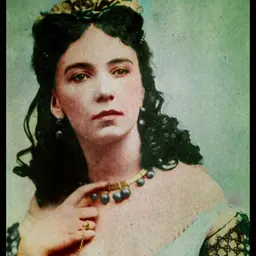
His cousin Louis-Napoléon became Emperor Napoléon III in 1852. As part of Napoléon III's policy of alliance with Piedmont-Sardinia, in 1859 Napoléon-Jérôme married Princess Maria Clotilde of Savoy, daughter of Victor Emmanuel II of Italy. This did not prevent a nine-year relationship with the courtesan Cora Pearl. In 1865, after a public political dispute with Napoléon III, he resigned from his government posts, including the presidency of the 1867 Paris Exposition, and left for his Villa Prangins in Switzerland. In 1866, he sold the Maison pompéienne.
When Louis-Napoléon, Prince Imperial died in 1879, Prince Napoléon-Jérôme became, genealogically, the most senior member of the Bonaparte family,
Prince Napoléon-Jérôme, upon being banished from France by the 1886 law exiling heads of the nation's former ruling dynasties, settled at Prangins on the shores of Lake Geneva, in Vaud, Switzerland where, during the Second Empire, he had acquired a piece of property. NameBirthDeathNotes Victor, Prince Napoléon 1862 1926 married Princess Clémentine of Belgium, a daughter of Leopold II of Belgium. Louis Bonaparte 1864 1932 Russian Lieutenant General and Governor of Erivan Maria Letizia Bonaparte 1866 1926 who in 1888 became the second wife of her maternal uncle Prince Amedeo, Duke of Aosta (1845–1890), who had, from 1870 until 1873, reigned as King of Spain.
Honours French Empire: Grand Cross of the Legion of Honour, 3 January 1853 Grand Cordon of the Order of Leopold, 1 January 1854 Honorary Grand Cross of the Bath (military), 5 September 1855 Sweden-Norway: Grand Cross of St. Olav, 3 September 1856 Knight of the Seraphim, 12 September 1856 Knight of the Elephant, 24 September 1856
Ancestry
Gallery
Don’t just read it —
keep it.
Full-length biographies made to live with: read them, listen on the way to work, watch them tonight.
- E-book
- Audio
- Video
Instant download · yours to keep · every purchase keeps this site free
Important facts
People in Prince Napoléon-Jérôme, Prince Napoléon's life
Named in this biography and alive at the same time




Related people
Same field, nearest in time



Contemporaries
People whose lives overlapped Prince Napoléon-Jérôme, Prince Napoléon's




Frequently asked questions
Who was Prince Napoléon-Jérôme, Prince Napoléon?
Napoleon's nephew (1822–1891)
When was Prince Napoléon-Jérôme, Prince Napoléon born?
Prince Napoléon-Jérôme, Prince Napoléon was born on 9 September 1822 in Trieste.
When did Prince Napoléon-Jérôme, Prince Napoléon die?
Prince Napoléon-Jérôme, Prince Napoléon died on 17 March 1891 in Rome.
What was Prince Napoléon-Jérôme, Prince Napoléon's occupation?
Prince Napoléon-Jérôme, Prince Napoléon was a politician and diplomat.
What nationality was Prince Napoléon-Jérôme, Prince Napoléon?
Prince Napoléon-Jérôme, Prince Napoléon was French.
Sources & further reading
· Wikipedia: Prince Napoléon-Jérôme, Prince Napoléon
· DBpedia: Prince Napoléon-Jérôme Bonaparte
Cite this page
APA: Biography.guide. (2026). Prince Napoléon-Jérôme, Prince Napoléon. https://biography.guide/prince-napoleon-jerome-prince-napoleon/
MLA: "Prince Napoléon-Jérôme, Prince Napoléon." Biography.guide, https://biography.guide/prince-napoleon-jerome-prince-napoleon/.
Chicago: "Prince Napoléon-Jérôme, Prince Napoléon." Biography.guide. https://biography.guide/prince-napoleon-jerome-prince-napoleon/.
Data last updated: 2026-09-20 · Spot an error? Report a correction.
Page generated 2026-09-27 05:20 UTC