
About Powhatan Beaty
Lived 1837 – 1916 (aged 79). Powhatan Beaty was an American actor and stage actor.
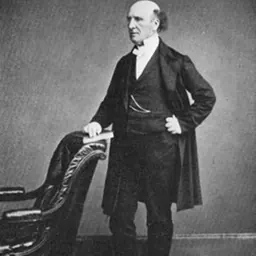
Powhatan Beaty (October 8, 1837 – December 6, 1916) was an African American soldier and actor. During the American Civil War, he served in the Union Army's 5th United States Colored Infantry Regiment throughout the Richmond–Petersburg Campaign. He received America's highest military decoration, the Medal of Honor, for taking command of his company at the Battle of Chaffin's Farm, after all officers had been killed or wounded.
Following the war, he became an orator and actor, appearing in amateur theater productions in his home of Cincinnati, Ohio. His most well-known stage performance was an 1884 appearance at Ford's Opera House on 9th Street in Washington, D.C., opposite Henrietta Vinton Davis.
Early life Beaty was born into slavery on October 8, 1837, in Richmond, Virginia. He moved to Cincinnati, Ohio, in 1849, where he received an education. He gained his freedom sometime on or before April 19, 1861; the exact date is unknown and may have been before his move to Ohio. On September 2, the men of Cincinnati were organized into work units to build fortifications around the city.
Although Cincinnati's African Americans were initially pressed into service at bayonet point, after the appointment of William Dickson as commander of the black troops their treatment improved significantly. Dickson promised that they would be treated fairly and kept together as a distinct unit, to be called the Black Brigade. He then allowed them to return home to prepare for military service, with orders to report the next morning for duty. About four hundred men were released that day, September 4, and the next morning about seven hundred reported for duty. Among those men was Beaty, who served in Company Number 1 of the Brigade's 3rd Regiment. Despite the danger of Confederate attack, the unarmed unit was assigned to build defenses near the Licking River in Kentucky, far in advance of the Union lines.
United States Colored Troops service
By June 1863, Ohio had not yet fielded an African American combat unit, but Ohio blacks were being recruited for service in the regiments of other states. Beaty enlisted from Cincinnati on June 7, 1863 He joined as a private but was promoted to sergeant only two days later.
By the Battle of Chaffin's Farm on September 29, 1864, Beaty had risen to the rank of first sergeant in Company G. His regiment was among a division of black troops assigned to attack the center of the Confederate defenses at New Market Heights. The defenses consisted of two lines of abatis and one line of palisades manned by Brigadier General John Gregg's Texas Brigade. The attack was met with intense Confederate fire and was turned back after reaching a line of abatis. During the retreat, Company G's color bearer was killed; Beaty returned through about 600 yards of enemy fire to retrieve the flag and return it to the company lines. The regiment had suffered severe casualties in the failed charge. Of Company G's eight officers and eighty-three enlisted men who entered the battle, only sixteen enlisted men, including Beaty, survived the attack unwounded.
Beaty continued to distinguish himself in the 5th Regiment's further engagements. His actions during the Battle of Fair Oaks & Darbytown Road in October 1864 earned him a mention in the general orders to the Army of the Potomac. The regimental commander, Colonel Giles Shurtleff, twice recommended him for a promotion to commissioned officer. Nothing came of Colonel Shurtleff's requests, however Beaty did receive a brevet promotion to lieutenant. By the time he was mustered out of the Army he had participated in thirteen battles and numerous skirmishes. The privately run play was well received, but Beaty did not engage in self-promotion and it never moved into public theaters. and Robert Montgomery Bird's The Gladiator, in which Beaty took the role of Spartacus. The culmination of the festival was a performance of selected scenes from Macbeth, with Beaty playing the title role and Davis as Lady Macbeth. Newspapers in both the black and white communities of Cincinnati praised the performances of the two actors, with the Commercial stating that Beaty "threw himself into his part with masterly energy and power".
The successful festival led to Beaty being invited to play as a principal actor in a Washington, D.C., Shakespearean production organized by Davis. A company including Davis, Beaty, and amateur actors from the D.C. area performed Richard III almost in entirety, three scenes from Macbeth, and one scene from Ingomar, the Barbarian. Davis, the premier black Shakespearean actress of the time, was the star of the show and Beaty played opposite her as Macbeth, King Henry VI, and Ingomar. The May 7, 1884, production was played in Ford's Opera House to a full house of more than 1,100 people; among them was Frederick Douglass. There was some heckling during the play, primarily from some of the white attendees, however a reviewer from The Washington Post reported that "the earnestness and intelligence of several of the leading performers were such as to command the respect of those most disposed to find cause for laughter in everything that was said or done". Washington newspapers praised the principal actors, but noted that the inexperience of some of the supporting cast was evident. Reviewers for African American newspapers were especially pleased to see such a production in an important venue like Ford's Theater. The New York Globe wrote of the performance "hus leap by leap the colored man and woman encroach upon the ground so long held sacred by their white brother and sister".
Beaty continued to tour with Davis and performed a show in Philadelphia before returning to Cincinnati. He helped form his city's Literary and Dramatic Club and, in 1888, became the organization's drama director.
He lived out the rest of his life in Cincinnati and died at age seventy-nine on December 6, 1916; he was buried at Union Baptist Cemetery.
Medal of Honor citation Citation:
Took command of his company, all the officers having been killed or wounded, and gallantly led it.
Don’t just read it —
keep it.
Full-length biographies made to live with: read them, listen on the way to work, watch them tonight.
- E-book
- Audio
- Video
Instant download · yours to keep · every purchase keeps this site free
Important facts
People in Powhatan Beaty's life
Named in this biography and alive at the same time





Related people
Same field, nearest in time

Contemporaries
People whose lives overlapped Powhatan Beaty's



Frequently asked questions
Who was Powhatan Beaty?
United States Army Medal of Honor recipient (1837-1916)
When was Powhatan Beaty born?
Powhatan Beaty was born on 8 October 1837 in Richmond.
When did Powhatan Beaty die?
Powhatan Beaty died on 6 December 1916 in Cincinnati.
What was Powhatan Beaty's occupation?
Powhatan Beaty was an actor and stage actor.
What nationality was Powhatan Beaty?
Powhatan Beaty was American.
Sources & further reading
Cite this page
APA: Biography.guide. (2026). Powhatan Beaty. https://biography.guide/powhatan-beaty/
MLA: "Powhatan Beaty." Biography.guide, https://biography.guide/powhatan-beaty/.
Chicago: "Powhatan Beaty." Biography.guide. https://biography.guide/powhatan-beaty/.
Data last updated: 2026-09-20 · Spot an error? Report a correction.
Page generated 2026-09-27 05:26 UTC