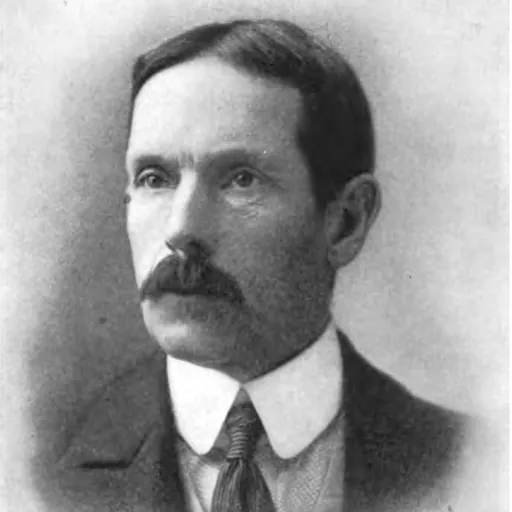
About Poultney Bigelow
Lived 1855 – 1954 (aged 98). Poultney Bigelow was an American lawyer, journalist, writer and jurist.
Poultney Bigelow (September 10, 1855 – May 28, 1954) was an American journalist and author.
He was born in New York City, the fourth of eight children of John Bigelow, lawyer, statesman, and co-owner of the New York Evening Post, together with his wife Jane Tunis Poultney.
In 1861, at the beginning of the Civil War, when Bigelow was six years old, his father was appointed United States consul in Paris, and subsequently (1865) Minister to France, and Poultney was sent to a Potsdam preparatory school. While there he became a friend of Prince Wilhelm and his younger brother, Prince Henry, playing "Cowboys and Indians" with them in the schoolyard. His friendship and correspondence with the Kaiser continued throughout their lives, though their relations became somewhat more reserved just before World War I as a result of some of the opinions expressed in Bigelow's articles. For a time, Bigelow was an admirer of both Adolf Hitler and Benito Mussolini — an admiration which ended when they demonstrated their violent natures.
Bigelow entered Yale College in 1873. For reasons of health, he took a two-year leave from studies, sailing for the Orient, which left him shipwrecked off the coast of Japan. He returned to Yale and graduated in 1879. He obtained a law degree from Columbia Law School and practiced briefly.
His chief occupation from the 1880s till his retirement in 1906 was as an author and journalist. He traveled extensively, and wrote often on the subject. He was a London correspondent for several American publications and was correspondent for The Times (of London) in Cuba during the Spanish–American War. He was a voluminous correspondent with the leading figures of the day, including Roger Casement, Henry George, Mark Twain, Geraldine Farrar, Percy Grainger, Frederic Remington, Kaiser Wilhelm II, Israel Zangwill and George S. Viereck.
He was the author of eleven books, including a two-volume autobiography, and several on history and colonial administration.
He founded the first American magazine devoted to amateur sports, Outing, in 1885.
Bigelow married twice. His first wife, with whom he had three daughters, was Edith Evelyn Joffrey (Jaffray)[1889 NY Social Register]. They married April 16, 1884, and divorced in 1902. His second wife, Lillian Pritchard, was a librarian in the library founded by John Bigelow at Malden. She died on December 1, 1932.
He retired to his family's home at Malden-on-Hudson.
In 1930, at the age of 74, he noted that "it's hell to live so long", but still made annual trips to visit the former Kaiser at Doorn.
He entered the Dale Sanitarium on January 14, 1954, where he died at the age of 98, at which time he was Yale's oldest alumnus,
In Nov 1906 Theodore Roosevelt visited Panama, where he was to make an investigation of labor conditions in particular. Asked about Bigelow's criticisms, Roosevelt was dismissive, stating, "in every large work there was always someone to find something that was not done as it should have been; but the employees should on no account pay attention to such criticisms, as the critics would sink out of sight, while the work (...) would remain long after all criticism had been forgotten.”
Although dismissed by Taft and Roosevelt, several historians have suggested that Bigelow's article was instrumental in Roosevelt visiting the canal, the first time a US president had traveled outside the US during the presidency, and to ultimately improve working conditions at the canal project.
Works 1889 – The German Emperor 1892 – The German Emperor and His Eastern Neighbors 1892 – Paddles and Politics Down the Danube 1895 – The German Struggle for Liberty 1895 – The Borderland of Czar and Kaiser: Notes from Both Sides of the Russian Frontier 1896 – History of the German Struggle for Liberty 1897 – Au pays des Boers 1898 – White Man's Africa 1900 – China Against the World 1901 – The Children of the Nations: A Study of Colonization and Its Problems 1915 – An American's Opinion of British Colonial Policy 1915 – Prussian Memories, 1864–1914 1918 – Britain, Mother of Colonies 1918 – Genseric, King of the Vandals and the First Prussian Kaiser 1919 – Prussianism and Pacifism: The Two Wilhelms Between the Revolutions of 1848 and 1918 1923 – Japan and Her Colonies, Being Extracts from a Diary Made Whilst Visiting Formosa, Manchuria, and Shantun in the Year 1921 1925 – Seventy Summers
Don’t just read it —
keep it.
Full-length biographies made to live with: read them, listen on the way to work, watch them tonight.
- E-book
- Audio
- Video
Instant download · yours to keep · every purchase keeps this site free
Important facts
People in Poultney Bigelow's life
Named in this biography and alive at the same time

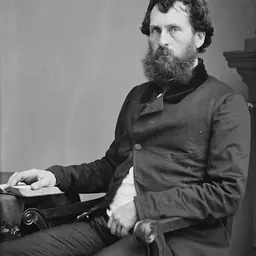

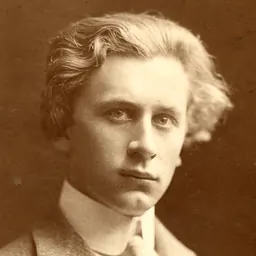

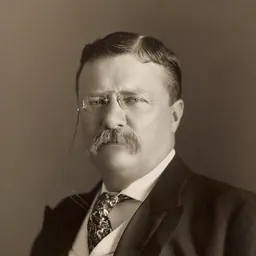
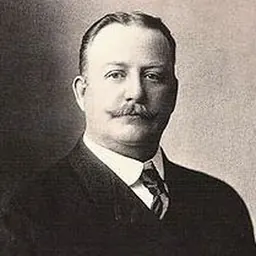
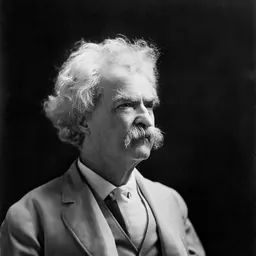
Related people
Same field, nearest in time
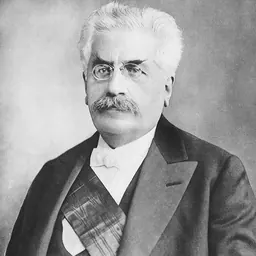
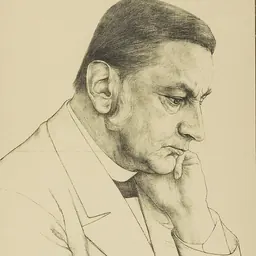


Contemporaries
People whose lives overlapped Poultney Bigelow's






Frequently asked questions
Who was Poultney Bigelow?
American writer (1855–1954)
When was Poultney Bigelow born?
Poultney Bigelow was born on 10 September 1855 in New York City.
When did Poultney Bigelow die?
Poultney Bigelow died on 28 May 1954.
What was Poultney Bigelow's occupation?
Poultney Bigelow was a lawyer, journalist, writer and jurist.
What nationality was Poultney Bigelow?
Poultney Bigelow was American.
Sources & further reading
Cite this page
APA: Biography.guide. (2026). Poultney Bigelow. https://biography.guide/poultney-bigelow/
MLA: "Poultney Bigelow." Biography.guide, https://biography.guide/poultney-bigelow/.
Chicago: "Poultney Bigelow." Biography.guide. https://biography.guide/poultney-bigelow/.
Data last updated: 2026-09-20 · Spot an error? Report a correction.
Portrait: Wikimedia Commons · author & licence
Page generated 2026-09-27 04:58 UTC