
About Porfírio Pardal Monteiro
Lived 1897 – 1957 (aged 60). Porfírio Pardal Monteiro was a Portuguese architect.
Porfírio Pardal Monteiro (1897–1957) was a Portuguese architect and university professor, considered one of the most important architects of the first half of the 20th century in Portugal. Along with other architects, who included Cottinelli Telmo, Carlos Ramos, Luís Cristino da Silva, Cassiano Branco, and Jorge Segurado, he led the development of modernist architecture in Portugal. He left his mark on Portugal's capital, Lisbon, having been responsible for many of its most important architectural achievements between the 1920s and 1950s. Early life Monteiro was born on 16 February 1897 in the parish of Pero Pinheiro in the municipality of Sintra. He was the son of Pedro Manuel Monteiro who came from a family of builders who worked in the marble and stonework industry. His mother was Mariana Gertrudes Monteiro, a domestic worker. He was the sixth child from his father's first marriage and had another brother from his father’s second marriage. Together with a brother he moved to Lisbon in 1904 to complete his primary education.
From the age of 13, Monteiro studied at the Lisbon School of Fine Arts, initially following general studies before devoting himself to architecture, where he was a student of José Luís Monteiro, who also came from a family of stonemasons. While still attending the school, he worked in the studio of Miguel Ventura Terra, a friend of his father and one of the most prominent architects of the early 20th century in Portugal, who not only influenced his views on architecture but also influenced his Republican convictions. These led him to enlist as a volunteer in the Lisbon Academic battalion in 1919, which was formed to fight rebels who wished to reinstate the monarchy and had captured the Fort of Monsanto near Lisbon.
Career In 1919, after completing an architecture degree, Monteiro was employed by the School Construction Division of the Ministry of Education. In the same year, he married Maria Luísa Vasques Kopke Correia Pinto. They would have four children. Also in 1919 he designed his first building, a mansion in the traditional Portuguese style. In 1920, he joined the architecture department of the Caixa Geral de Depósitos (CGD), where he would stay until 1929. He developed the CGD branches in Alcântara Setúbal, and Porto. With a substantial budget for the Porto branch, he integrated Art Deco features into a neoclassical building, reflecting his experience during a 1925 trip to Paris, where he visited the International Exhibition of Modern Decorative and Industrial Arts.
At the same time as working for CGD, he became first assistant in the newly created chair of architecture in the civil engineering programme at the Instituto Superior Técnico (IST) in Lisbon. Between 1925 and 1928 he worked on the Art Deco Cais do Sodré railway station, the Lisbon terminus for the line from Cascais. In 1927, he began designing new facilities for the IST, adopting, as at Cais do Sodré, the reinforced concrete construction system, but this time on a much larger scale. This project would become a major opportunity to promote modern architecture in Portugal. It also marked the first collaboration between Monteiro and Duarte Pacheco, then director of IST, who would go on to become the Minister of Public Works and the Mayor of Lisbon.
Projects for the National Institute of Statistics and other important buildings in the 1930s followed. In 1930, he became a correspondent for the newly created L'Architecture d'Aujourd'hui magazine, which gave his work international visibility between 1934 and 1938 (during World War II, the magazine was secretly based in his studio). In 1932, he became a founding member of the RIA (Réunion International des Architectes) group, which became the predecessor of the International Union of Architects (UIA). In that same year, he undertook a study trip to the Soviet Union as part of a group of European architects.
In 1933, he designed the Church of Our Lady of the Rosary of Fátima in Lisbon, for which he received the 1938 Valmor Prize. Despite the Catholic Church's support, the building's modernity would be challenged by the more conservative sectors of Portuguese society. For this project, he enlisted the collaboration of a group of nine artists, including Francisco Franco, Almada Negreiros, and Lino António. In 1934, he began projects for the Alcântara Maritime Terminal and the Rocha do Conde de Óbidos Terminal, completed in 1943 and 1948, where he again collaborated with Negreiros. In 1936 he participated in the 13th International Congress of Architects in Rome, where he sought out ideas from similar ocean liner terminals in other countries, including those at Cherbourg and Le Havre in France, Genoa and Trieste in Italy, and some in the United States, including Los Angeles. In 1936, he took office as president of the National Union of Architects (until 1944); and in 1937, he travelled to Algeria and Italy with Pacheco and then to Paris, where he attended the Exposition Internationale des Arts et Techniques dans la Vie Moderne.
Illness and death In 1956, Monteiro suffered the first of at least two strokes. Unable to work and plunged into depression, he committed suicide on 16 December 1957, with barbiturates, at his home in Lisbon. He was buried in the Alto de São João Cemetery.
In his honour there is a street named Rua Pardal Monteiro, in the Loios neighborhood of Marvila.
Major works and awards Monteiro's works include: 1920 – Building at 49 Av. da República; Valmor Prize 1923. 1923 – Temple of the Lisbon Adventist Church – Caixa Geral de Depósitos Building, Avenida dos Aliados, Porto 1925 – House on Calçada de Santo Amaro, Lisbon; Valmor Prize 1928. 1926 – Cais do Sodré railway station, Lisbon – House on Avenida 5 de Outubro, 207–215, Lisbon; Valmor Prize 1929. 1927 – University campus and buildings of the Instituto Superior Técnico, Lisbon. 1930 – Ford Lusitana Building, Rua Castilho, Lisbon (demolished) 1931 – National Institute of Statistics, Lisbon. 1938 – Church of Our Lady of the Rosary of Fátima, Valmor Prize 1938 – Monument to António José de Almeida, Lisbon (with Leopoldo de Almeida). 1936 – Diário de Notícias Building, Lisbon – Valmor Prize 1940. 1940 – Pavilion and Sphere of Knowledge, Portuguese World Exhibition, Lisbon. 1942–1947 – Various residential buildings in Lisbon; Municipal Architecture Prize 1947 (residential building, Avenida Sidónio Pais, No. 16, Lisbon). 1943 – Alcântara Maritime Terminal, Lisbon 1949 – National Laboratory of Civil Engineering, Lisbon. 1948 – Rocha do Conde de Óbidos Maritime Terminal, Lisbon. 1952 – Tivoli Hotel, Avenida da Liberdade, Lisbon – Mundial Building (Hotel Mundial), Lisbon – Beginning of projects for the University City, Lisbon (Faculty of Law, Faculty of Arts, Rectorate). 1954 – Beginning of the project for the National Library of Portugal, Lisbon. 1959 – Ritz Hotel (currently the Four Seasons), Lisbon
Don’t just read it —
keep it.
Full-length biographies made to live with: read them, listen on the way to work, watch them tonight.
- E-book
- Audio
- Video
Instant download · yours to keep · every purchase keeps this site free
Important facts
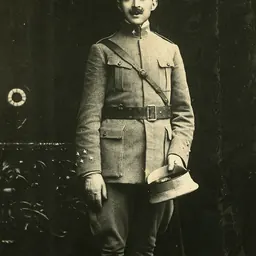
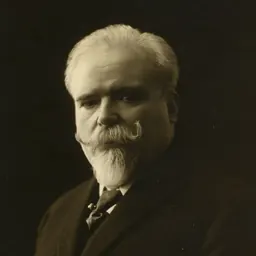
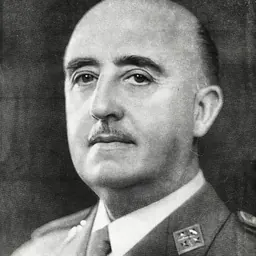
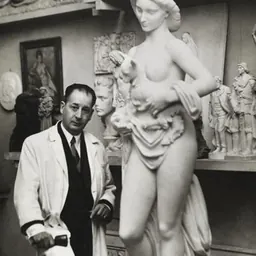
People in Porfírio Pardal Monteiro's life
Named in this biography and alive at the same time



Related people
Same field, nearest in time


Contemporaries
People whose lives overlapped Porfírio Pardal Monteiro's



Frequently asked questions
Who was Porfírio Pardal Monteiro?
Portuguese architect (1897-1957)
When was Porfírio Pardal Monteiro born?
Porfírio Pardal Monteiro was born on 16 February 1897 in Freguesia de Montelavar.
When did Porfírio Pardal Monteiro die?
Porfírio Pardal Monteiro died on 16 December 1957 in Lisbon.
What was Porfírio Pardal Monteiro's occupation?
Porfírio Pardal Monteiro was an architect.
What nationality was Porfírio Pardal Monteiro?
Porfírio Pardal Monteiro was Portuguese.
Sources & further reading
· Wikipedia: Porfírio Pardal Monteiro
· DBpedia: Porfírio Pardal Monteiro
Cite this page
APA: Biography.guide. (2026). Porfírio Pardal Monteiro. https://biography.guide/porfirio-pardal-monteiro/
MLA: "Porfírio Pardal Monteiro." Biography.guide, https://biography.guide/porfirio-pardal-monteiro/.
Chicago: "Porfírio Pardal Monteiro." Biography.guide. https://biography.guide/porfirio-pardal-monteiro/.
Data last updated: 2026-09-20 · Spot an error? Report a correction.
Page generated 2026-09-27 05:19 UTC