
About Pir Roshan
Lived 1515 – 1573 (aged 57–58). Pir Roshan was an Indian poet, sufi and merchant, known for Pashto poetry, Pashtun nationalism and Roshani movement.
Background Bayazid was born in 1525 just outside Jalandhar in Punjab (present-day India), but early in his childhood, he moved with his family to their ancestral homeland of Kaniguram in South Waziristan (present-day Pakistan). He descended from a prominent family of Medina which traced its ancestry from Abu Ayyub al-Ansari, a companion of prophet Muhammad. His family was one of the many families who fled back to their ancestral land after the Turkic ruler Babur overthrew the Afghan Lodi dynasty in India in 1526. His grandfather was from the Lohgar Valley near Kabul in the country of the Barkis, but had immigrated to Waziristan, while his grandson was born in India. His father, Abdullah, was an Islamic Qadi (judge). However, his father and relatives, and later Bayazid himself, also traded between Afghanistan and India.
Roshani movement
Bayazid began teaching at the age of 40. His message was well received by the Mohmand and Shinwari tribesmen. He then went to the Peshawar valley and spread his message to the Khalil and Muhammadzai. He sent missionaries (khalifas) to various parts of South and Central Asia. He sent one of his disciples, Dawlat Khan, along with his book Sirat at-Tawhid to Mughal Emperor Akbar. Khalifa Yusuf was sent along with his book Fakhr at-Talibin to the ruler of Badakhshan, Mirza Sulayman. Mawdud Tareen was sent to propagate his message to Kandahar, Balochistan, and Sindh. Arzani Khweshki was sent to India to convey the message to common people there. Besides, he also sent his deputies to Kabul, Balkh, Bukhara, and Samarkand. However, when he and his followers started spreading their movement amongst the Yousafzais, Bayazid came into direct confrontation with the orthodox followers of Pir Baba in Buner. He established a base in the Tirah valley where he rallied other tribes. In Oxford History of India, Vincent Smith describes this as the first "Pashtun renaissance" against Mughal rule. When Mughal Emperor Akbar proclaimed Din-i Ilahi, Bayazid raised the flag of open rebellion. He led his army in several successful skirmishes and battles against Mughal forces, but they were routed in a major battle in Nangarhar by Mughal General Muhsin Khan.
Battle of Aghazpur The Battle of Aghazpur was the first major military confrontation between Bayazid and the Mughal forces, fought near Kalpani, close to present-day Shahbazgarhi in Mardan, Khyber Pakhtunkhwa. The battle was triggered after Mirza Hakim ordered Masum Khan, the Mughal governor of Peshawar, to arrest Bayazid. Tipped off in advance by two of his loyal disciples, Bahar Khan and Painda Khan of the Muhammadzai tribe, Bayazid fled from Hashtnagar toward Mardan, where the Mughal soldiers intercepted him. Despite being heavily outnumbered, Bayazid and his 313 followers fought with exceptional bravery and defeated the Mughal army, inflicting heavy losses on their side. Bayazid himself named the battle "Aghazpur" as a symbol of his resolve against Mughal oppression. The victory proved to be a turning point in his life, as it inspired him to pursue his own independent authority over parts of the Afghan borderland. Emboldened by this success, he proceeded to Tirah with the help of the Afridis, established his independent rule there.
Death Following his defeat at Tora Ragha in Shinwari territory at the hands of Mohsin Khan's forces, Bayazid managed to escape the battlefield with the help of his loyal companions. However, the harsh conditions of the journey took a severe toll on him. Exhausted and overcome by extreme heat and thirst during his retreat, he fell gravely ill on his way toward Hashtnagar. He died at Kalpani, near what is now Mardan, around 980 A.H. (1572 A.D.). Historians differ on the precise year of his death Makhzan records it as 1573–74, while Tawarikh Hafiz Rahmat Khani places it as late as 1578.
Aftermath During the 1580s, Yusufzais rebelled against the Mughals and joined the Roshani movement of Pir Roshan. In late 1585, Mughal Emperor Akbar sent military forces under Zain Khan Koka and Birbal to crush the Roshani rebellion. In February 1586, about 8,000 Mughal soldiers, including Birbal, were killed near the Karakar Pass between Buner and Swat while fighting against the Yusufzai lashkar led by Kalu Khan. This was the greatest disaster faced by the Mughal army during Akbar's reign. However, during the attack, Pir Roshan was himself killed by the Mughal army near Topi. In 1587, Mughal general Man Singh I defeated 20,000 strong Roshani soldiers and 5,000 horsemen. Major Henry George Raverty transpired the account from Akhund Darweza about Pir Roshan's coffin was seized in the midst of a battle between the Roshaniyya and Mughal forces. Some of his bones were burnt, and cast into the Indus river. Pir Roshan's five sons, however, continued fighting against the Mughals until about 1640.
Successors
Bayazid's sons were put to death with the exception of his youngest, Jalala, who was pardoned by Akbar as he was only 14 years old when he was captured. He later took up arms as Pir Jalala Khan and successfully engaged the Mughal armies. The Mughal forces were repulsed, but six years later Muzaffar Khan marched against Ahdad Khan. After several months of intense fighting, Ahdad Khan was killed. The death of Jahangir in 1627 led to a general uprising of the Pashtuns against Mughal forces.
Pir Roshan also originally wrote his Khair al-Bayan in Pashto, which meant that the text was more accessible to the Pashtuns than the Arabic Quran and that those followers took some measure of pride in its composition.
During the 19th century, orientalist scholars translating texts from Pashto and other regional texts termed his movement a "sect" which believed in the transmigration of souls and in the representation of God through individuals. Ideologically, history assessors with left-wing view has regarded him as reformer who fight against conservative value among Pashtuns during his era.
Aminullah Khan Gandapur, in his book Tārīkh-i-Sarzamīn-i-Gōmal (History of the Gomal Land; National Book Foundation-2008, 2nd Ed. ISBN 978-969-23423-2-2; P-57-63), ascribed a chapter to the Roshani movement and to their strife and achievement with the sword and the pen.
Don’t just read it —
keep it.
Full-length biographies made to live with: read them, listen on the way to work, watch them tonight.
- E-book
- Audio
- Video
Instant download · yours to keep · every purchase keeps this site free
Important facts
People in Pir Roshan's life
Named in this biography and alive at the same time
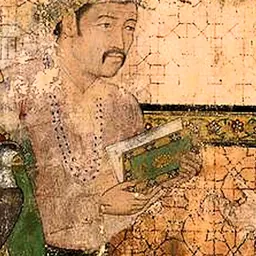
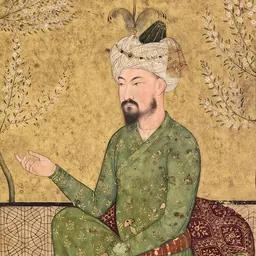

Related people
Same field, nearest in time
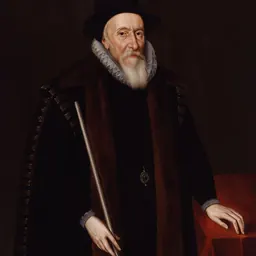
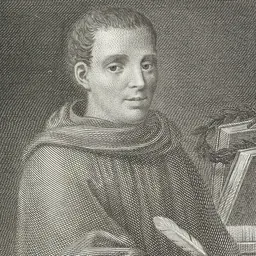
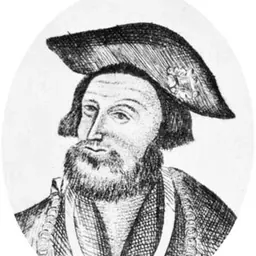

Contemporaries
People whose lives overlapped Pir Roshan's
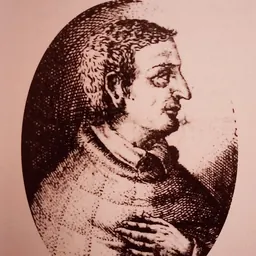

Frequently asked questions
Who was Pir Roshan?
Indian poet
When was Pir Roshan born?
Pir Roshan was born in 1515 in Jalandhar.
When did Pir Roshan die?
Pir Roshan died in 1573 in Tarbela.
What was Pir Roshan's occupation?
Pir Roshan was a poet, sufi and merchant.
What was Pir Roshan known for?
Pir Roshan was known for Pashto poetry, Pashtun nationalism and Roshani movement.
What nationality was Pir Roshan?
Pir Roshan was Indian.
Sources & further reading
Cite this page
APA: Biography.guide. (2026). Pir Roshan. https://biography.guide/pir-roshan/
MLA: "Pir Roshan." Biography.guide, https://biography.guide/pir-roshan/.
Chicago: "Pir Roshan." Biography.guide. https://biography.guide/pir-roshan/.
Data last updated: 2026-09-20 · Spot an error? Report a correction.
Page generated 2026-09-27 05:15 UTC