
Pippo Barzizza
Italian composer, arranger, conductor, and music director
About Pippo Barzizza
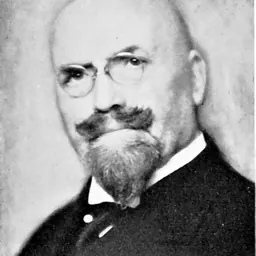
Lived 1902 – 1994 (aged 91). Pippo Barzizza was an Italian composer, conductor, saxophonist, pianist, jazz musician and music arranger.
Giuseppe "Pippo" Barzizza (; 15 May 1902 – 4 April 1994) was an Italian composer, arranger, conductor and music director.
Giuseppe Barzizza, called Pippo, was born in Genova on 15 May 1902, and died in Sanremo on 4 April 1994. He became famous in the 1930s and 1940s, at the beginning with Blue Star Orchestra and then with Orchestra Cetra. He composed songs and film soundtracks. His treatise, "Barzizza's method" was printed in 1952. His basics and exercises "are so clear that's it's enough to read this little book to overcome any doubts or hesitation!” Franco Franchi said, "Barzizza was among the first to be interested in jazz music and swing and he became for many years, together with his friend and rival Cinico Angelini, a great example for his fellows, both for his extraordinary compositions and his skills to find out new talents and songs, and for his attempt to give a modern mark to Italian music".
Biography
Pippo Barzizza was born in Genova, 15 May 1902, to Luigi and Fortunata Battaglieri. He was a child prodigy. At age six he entered the Camillo Sivori Institute to study violin and quickly passed the exam and took his first award. Pippo could hardly read words but he was already able to write a Mozart symphony "with nor a pale errors".
After attending primary and secondary schools he went to Cristoforo Colombo High School, where he studied violin at the Conservatory with professor Biasoli. He listened to his father's phonographic cylinders, creating a passion for classical and symphonic music. Followed by his uncle, he often went to the Carlo Felice Theatre, where he saw, 'from a very comfortable stage position', many representations of famous lyric operas.
He became skilled in mathematics and decided to follow mathematical studies, graduating as an engineer. Strongly supported by Biasoli, he also studied Harmony, Counterpoint, Composition, and Instruments. He emphasized the piano until about 1933, followed by the violin, banjo and the trumpet section. In the same period he played at Politeama in Genova as lead violinist. In his spare time he performed music at silent movie showings at the cinema near his home.
Pippo Barzizza at the center with his beloved violin. Genova, 1920.
At 17 he stopped violin studies. After listening to Yehudi Menuhin, he was demoralized and decided to pursue conducting and composition. From 17 to 21, he performed on ships and for orchestras in Genova. His first engagement was on a luxury steamer (an early cruise ship) called Esperia, but because of his youth, the captain took him on board as a passenger. In New York he first heard jazz and swing music. Pippo copied many records, sections, and he improved his skills as an arranger. In 1922 he was discovered by Armando di Piramo and joined his orchestra at Olimpia and de Ferrari in Genova. In 1923, serving in the Italian Army in Rimini, he founded a military orchestra. On 12 April 1924, he finished his service and came to Milan to play at Cova, for Di Piramo's orchestra. A few months later Philip's brothers came to Cova, with their band, the Riviera Five. Pippo taught Sid the basics as arranger, and he gave saxophone lessons, including the pizzicato technique. In Milan he performed his first recording at Pathè, near Sempione.
In 1925 he started his career as an author, first for Armando, then with Carisch and finally with Curci, where he started a long relationship. He also began working as an arranger, and in 1925 after a short period at Carminati, his first line up was for Blue Star. Blue Star Orchestra, 1925, the year of foundation. Barzizza on sax.
Blue Star
The Orchestra had two fixed members, Gianni Miglio and Luigi Balma, and included many others. Pippo played nine instruments and selected the members of his orchestra with a simple rule: each member must play at least three instruments, read music and play a wide list of songs from memory. The band soon held seven musicians, who played 36 instruments including the mellophone. "Pics of this time show a group of seven performers and all around a huge scenery of instruments, in one of these you can count at least 26: almost four each! It must have been an astonishing show to see them!”.
Blue Star Orchestra, 1928 or '29. Barzizza is to the left on violin.
Blue Star's debut show was 25 July, at Sempioncino; then at Cova with great success and at Olimpia; it became known as one of the greatest Italian orchestras. Thanks to Eugenio Pugliatti, Blue Star performed in France and Switzerland. They played at Casino de Cannes, at Saint Raphael, at Ciro in Paris, at Palace Hotel in Saint Moritz. Accompanied by Pugliatti, they played in Costantinople part of a financially successful tour. He purchased a flat for his parents in Pegli and a Fiat 507 Torpedo. He played in Genova at Grand'Italia. In the following years he performed in Cannes, Saint Raphael and again in Paris and Milan (at Olimpia, Cova, Birra Italia). The Blue Star Orchestra broke up in 1933.
Recordings
From 1931 to 1936 Pippo focused on making recordings. He worked with the labels Fonit, Columbia, La Voce del Padrone, Odeon, Brunswick and Fonotipia. In 1934, Carisch released Pippo Barzizza, King of Italian Jazz; and then New series of Blue Star arrangements. In 1935 he was noticed for jazz recording sessions. In 1936 he received from EIAR a proposal to conduct Cetra Orchestra in Torino. He moved there with his family.
Cetra Orchestra
Cetra Orchestra, under Claude Bampton's direction, a good English musician and conductor, debuted with 16 musicians, growing to 28, producing "strong form and special characteristic, so to be soon considered the best among big Italian orchestras talking jazz language".
Award series
In his honor, "Centro Studi Stan Kenton" in Sanremo, instituted an award for arrangers (interrupted since 2004) whose jury was formed by Morricone. The winners were Enrico Blatti (Roma) and Stefano Zavattoni (Perugia) and in 2002 and Antonello Cpuano (Campobasso) in 2003. Arranger award recipients were Virgilio Savona, Piero Piccioni, Gianni Ferrio, Roberto Pregadic and Riz Ortolani.
Music
Orchestras
Blue Star Orchestra
1925
Blue Star, 1927. Barzizza is in the middle with the accordion
Pippo Barzizza – sax, tenor, violino, pianoforte, banjo, arrangement Giovanni Miglio – trumpet, pianoforte, French horn Carlo – trumpet Mazza – trombone Gino Della Santa – violino, clarinet, sax / Giuseppe Cattafesta – sax, clarinet Luigi Balma – basso, drum, oboe, canto
1928
Barzizza with Pizzini, Rabagliati and Petralia. Turin, late 30s
Pippo Barzizza – sax, tenor, violino, pianoforte, banjo, arrangement Potito Simone – trombone, basso Leo Hermann – trumpet / Giuseppe Alù – trumpet Giovanni Miglio – trumpet, pianoforte, French horn Raymond – Alto sax, clarinet Luigi Balma – basso, drum, sax, oboe, canto Alfredo Spezialetti – violino, bass saxophine, soprano sax
Cetra Orchestra
In 1936 Barzizza signed with broadcaster EIAR to conduct Cetra Orchestra, inherited by Claude Bampton. Pippo immediately substitutes some members and totally reforms the line-up and modern arrangements. In the early 1940s Cetra was considered the best among Italian jazz orchestras.
1936
Pippo Barzizza – conductor, arrangement Emanuele Giudice, Claudio Pasquali, Michele Garabello – trumpet Luigi Mojetta, Beppe Mojetta – trombone Sergio Quercioli, Domenico Mancini – clarinet, sax alto Marcello Cianfanelli – sax tenore Cesare Estill – clarinet, sax baritono Agostino Valdambrini, Piero Filanci, Felice Abriani, Adriano La Rosa – violino Gino Filippini – pianoforte Saverio Seracini – Guitar Aldo Fanni – contrabbasso Francesco Bausi – drum
1940
Pippo Barzizza – conductor, arrangement Gaetano Gimelli, Emanuele Giudice, Claudio Pasquali, Michele Garabello – trumpet Luigi Mojetta, Beppe Moretta, Clinio Bergamini – trombone Sergio Quercioli, Domenico Mancini – clarinet, sax alto Tullio Tilli, Marcello Cianfanelli, Battista Gimelli – sax tenore Cesare Estill – clarinet, sax baritono Agostino Valdambrini, Piero Filanci, Felice Abriani, Adriano La Rosa – violini Francesco Ferrari – pianoforte, fisarmonica, arrangement Gino Filippini – pianoforte Aldo Tonini – Guitar Aldo Fanni – contrabbasso Francesco Bausi – drum
Other orchestras (1951–1960)
In 1951 Barzizza moved to Rome; the Cetra Orchestra disbanded, leading to the Modern Orchestra, with 56 members. He conducted almost fifty-four successful broadcasts, like "Rosso e Nero".
Singers
Orchestra performances and songs
In 1936 Barzizza composed and arranged a piece for orchestra: "Marilena", and it will become his theme song. It was a swing piece. Another piece was "Il boscaiolo", a happy country song made with Rabagliati and Lescanos.
Discography
"The enormous discography of Cetra Orchestra conducted by Barzizza between June 1936 and the end of 1948 hasn't been rebuilt yet, because of the great difficulty of such an enterprise. Bombing of Second World War destroyed the archives of Italian labels, and the originals were lost".
Filmography
Publications
L'Orchestrazione Moderna nella Musica Leggera, aka the "Barzizza", Curci, first edition 1952.
Recognition
"Microfono d'argento" with Cetra Orchestra, 1949 "Song Awards", with Modern Orchestra, 1955 He was named Commander and Knight, but he preferred the title of "Maestro".
Don’t just read it —
keep it.
Full-length biographies made to live with: read them, listen on the way to work, watch them tonight.
- E-book
- Audio
- Video
Instant download · yours to keep · every purchase keeps this site free
Important facts
People in Pippo Barzizza's life
Named in this biography and alive at the same time





Related people
Same field, nearest in time



Contemporaries
People whose lives overlapped Pippo Barzizza's



Frequently asked questions
Who was Pippo Barzizza?
Italian composer, arranger, conductor, and music director (1902–1994)
When was Pippo Barzizza born?
Pippo Barzizza was born on 15 May 1902 in Genoa.
When did Pippo Barzizza die?
Pippo Barzizza died on 2 April 1994 in Sanremo.
What was Pippo Barzizza's occupation?
Pippo Barzizza was a composer, conductor, saxophonist, pianist, jazz musician and music arranger.
What nationality was Pippo Barzizza?
Pippo Barzizza was Italian.
Sources & further reading
Cite this page
APA: Biography.guide. (2026). Pippo Barzizza. https://biography.guide/pippo-barzizza/
MLA: "Pippo Barzizza." Biography.guide, https://biography.guide/pippo-barzizza/.
Chicago: "Pippo Barzizza." Biography.guide. https://biography.guide/pippo-barzizza/.
Data last updated: 2026-09-26 · Spot an error? Report a correction.
Page generated 2026-09-27 05:13 UTC