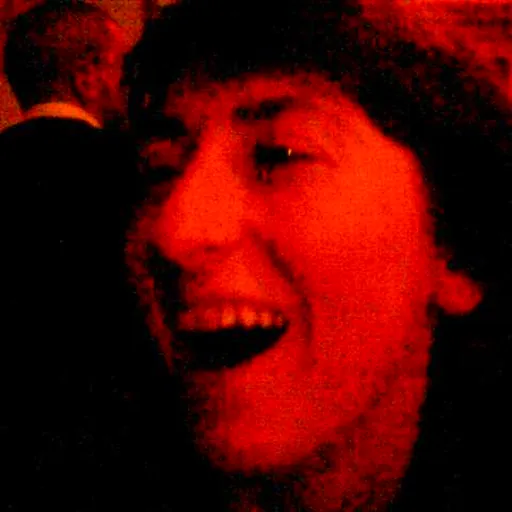
About Pippa Bacca
Lived 1974 – 2008 (aged 33). Pippa Bacca was an Italian artist, peace activist and performance artist.
Giuseppina Pasqualino di Marineo (9 December 1974– March 31, 2008), known as Pippa Bacca, was an Italian performance and feminist artist.
On 31 March 2008, Pippa Bacca disappeared in Gebze, Turkey, during an international hitchhiking trip to promote world peace under the motto "marriage between different peoples and nations". Bacca and fellow artist Silvia Moro were symbolically wearing wedding dresses during their trek.
On 11 April 2008, the Turkish police arrested a man who later confessed to her rape and murder and led the authorities to her body. As children, their mother dressed Bacca and her sisters all in green to make them recognisable and to not lose them. As an adult, Bacca would decide to always wear the color green, and would write all her letters and postcards in green ink. Bacca would become a vegetarian, but once a year indulged herself and ate fish.
As her uncle Piero Manzoni died before her birth, Bacca never met him; but her mother Elena safeguarded her brother's artistic legacy and preserved his art. Bacca grew up well aware of her uncle's artistic work, and she and her siblings were raised "breathing the same creative air" as their uncle.
Despite the family's consideration of themselves as nonconformist, Bacca and her family were, in many ways, conservative with devoutly Catholic and pro-monarchist values. Both her parents were politically active; her father, was the leader of the Italian Monarchist Union political party in the 1970s, while Bacca's mother, was involved in the Italian Democratic Socialist Party and considered a right-wing liberal, as well as engaged in the Silenzia Maggiore (Silent Majority) movement that had formed as a reaction to the 1968 student protests in Italy.
Bacca's parents separated when she was five years old, and later divorced in 1987 when she was 13. Afterwards, Bacca's and her mother and sisters lived in the Azienda Lombarda Edilizia Residenziale public housing units, located in Corso Garibaldi. Sharing a strong family bond, the sisters called themselves "Il Neurone" ("The Neuron"), making their way by walking, biking, and hitchhiking.
Bacca attended a classical high school (liceo classico), with a focus on Italian and foreign literature, history, philosophy, and art history. Bacca had thoughts about pursuing a degree in mathematics, but instead of continuing her studies after her graduation she decided to travel to Ireland where she spent a year before returning to Italy to find work.
On her return, she lived with her mother and sister Maria. Bacca found part-time work in an interbank call center through which she could support . Bacca also worked for the Archivo Opere Piero Manzoni (Archive of the Works of Piero Manzoni) between 1998 and 2003, where she assisted the art historian Germano Celant with compiling a catalogue raisonné of her uncle's art.
As an adult, Bacca leaned towards the left politically Like her first exhibit, this one was also done with silhouettes but inspired by votive offerings to the Indigenous goddess Mater Matuta, representing different aspects of motherhood. Another exhibition followed in 2002 with La luna nel pozzo ("The Moon in the Well") at the Galleria Fondo Perduto ("Lost Fund Gallery"), where Bacca explored the theme of femininity by retracing the phases of the moon in 14 works, from new moon to full moon.
She was also drawn to performance art, an expression that seemed to align with her personality. For example, on one occasion Bacca went to meet a boyfriend at the Bergamo railway station where she dressed up as a mermaid and bathed in the fountain in front of the station.
According to some sources, however, her artistic projects and eccentric lifestyle were not one and the same, though it might appear as such to outsiders. and Turkey. During the sometimes long wait for a lift, Bacca would recite the Rosary. She was also very familiar with the lives of saints and would talk at length about them when in company. Incorporating her hitchhiking into her artistic work, she photographed people who gave her a lift and also later recorded their conversations. in Perugia.
Bacca worked with different media including photography, collage and embroidery. Her 2004 piece, Surgical Mutations, consisted of a series of leaves collected in a wood and cut-out as to resemble different floral species. In 2006, she had her first institutional solo exhibition, The Broken Image at the Fabbrica del Vapore ("Steam Factory") in Milan. As a member of the art collective Coniglio Viola (Purple Rabbit) around this time, she also helped to curate some exhibitions. Another of her projects was taking photographs of people on the streets of Milan in 2007, which she then put in glass jar with grappa and flour, then shaken, dispersing the flour grains in the liquid, which produced the effect of mist around the photos.
She was also a singer and joined the Coro di Micene ("Mycene Choir"), an historically anarchist choir in Milan, but went on to start her own choir, Bubble Gum, in the summer of 2005. To further emphasise that they were two different people, Pippa Bacca and Eva Adamovich had different telephone numbers. and a diminutive of "Giuseppina", she had been known by this name since her school days. a 16th-century painting, with the title of "Ritratto presunto di Pippa ed Eva" (Presumed Portrait of Pippa and Eva).
"Brides on Tour" Project Sometime before 2004, Bacca attended the wedding of a friend, whose concern about getting her white gown dirty made Bacca think about how strange it was that a piece of clothing used for just one special day could hold such importance. This was her inspiration for the "Brides on Tour" project. In 2006, she started working on a performative piece, "Brides on Tour" to promote world peace with fellow artist Silvia Moro. In the two years preceding the project, Bacca learned Arabic so as to be able to communicate with the people she would meet between Turkey and Jerusalem.
The artists, wearing white wedding dresses, departed from Milan on 8 March 2008, travelling through the Balkans and arriving in Turkey 12 days later. They had planned to hitchhike through the Middle East, their final destination being Jerusalem.
Disappearance After travelling together across Europe, Bacca and Moro split up just prior to their arrival in Istanbul, planning to meet up again in Beirut. Bacca was last seen on 31 March. On 12 April, her naked, strangled, and decomposing body was found in bushes near Gebze, about 60 km southeast of Istanbul. The suspect said he was "under the influence of drugs and alcohol" and could not remember what happened. He had been traced after he inserted his own SIM card into the victim's cellphone, which alerted police because he had a previous conviction for theft. Sidewalks and houses in the vicinity of the church were decorated with green balloons and banners. Bacca's coffin was also covered in a cloth in her favourite color green. The choir she had started performed during the ceremony.
Bacca was buried in the family tomb in Casirate d'Adda in the dress she wore on her tour, as it was the dress she wore at the time of her death.
Aftermath In the aftermath, Bacca's sister Maria gave a statement to the Italian news agency ANSA: "[Bacca's] travels were for an artistic performance and to give a message of peace and trust, but not everyone deserves trust… We weren't particularly worried because she had been hitchhiking for a long time, and thus was capable of avoiding risky situations… She was a determined person when it came to her art". A commentary in Today's Zaman, while expressing sadness for the woman's death, criticised the supposed obsequiousness of Turkish politicians to "foreigners" in the Bacca case, writing: "Let's face it, if Pippa were a Turk, some people would feel free to say that a hitchhiking woman deserves to be raped." The columnist argued that local problems such as violence against women should be addressed regardless of Turkey's concern for being shamed before foreigners. Hürriyet ("Liberty"), a top selling Turkish newspaper, printed an article on the murder, entitled "We are ashamed". On the occasion of the 2009 Art Festival in Faenza, the Istanbul Biennial director Fulya Erdemci made a public apology on behalf of her country.
Bacca's fellow traveler Silvia Moro returned to Milan and stopped making art after the incident.
Legacy Bacca was not a well-known artist outside Milan before her death, but the circumstances of her death have made her a symbol for women's vulnerability and she has come to represent resistance and resilience. Critics, however, have pointed to the risk artists take in pursuit of artistic endeavours. Even so, Bacca's final project has continued inspiring others in many different expressions and mediums:
The performance artist Carolina Bianchi processes her own sexual assault in her piece "Cadela Força" ("Bitch Strength") by taking a knockout drug, and while still conscious, she talks about the femicide of Bacca.
For her 2010 project "My Letter to Pippa", Turkish documentary filmmaker Bingöl Elmas dressed in black as a symbol of grief and travelled the same road as Bacca while documenting her own journey. Turkish artist Nezeket Ekici created Tooth for Tooth, an eight-channel video installation in 2016 as a tribute to women murdered in Turkey.
The painter Franco Biagioni, who depicted events in a series of paintings in his l'Archivio Dipinto della Memoria (The Painted Archive of Memory) in a style reminiscent of votive paintings, depicted the death of Bacca in one of them.
In 2011, Italian artist Nadia Impala recorded the song "Correndo con le forbici in mano (Ode a Pippa Bacca)" ("Running with Scissors in Hand [Ode to Pippa Bacca]").
In 2013, the band Radiodervish released the album Human, and its first song, "Velo di sposa" ("Bridal Veil"), was in memory of Bacca.
Elina Chauvet, a Mexican artist, was inspired by Bacca's story for her Corazón Abierto ("Open Heart") piece in 2012 and dedicated her project "La Confianza" ("Trust") to Bacca, consisting of white gowns embroidered with red thread to depict messages and images. The work was exhibited at the Dior Gallery in Paris.
In 2024, it was announced that a film would be made about Bacca's life, produced by the Palermo-based production company Tramp Limited and directed by Levi Riso.
Ti sei vestita di bianco (You Dressed in White), an exhibition at the MURATS (Museo Unico Regionale dell'arte Tessile Sarda) (Sole Regional Museum of Sardinian Textile Art) in Samugheo, Sardinia, was inaugurated in May 2024 to pay tribute to Bacca and "all women who undertake journeys of discovery and personal growth, inviting us to reflect on the universal values of love, hope and solidarity".
Tributes In 2008, a women's compassion movement in Konya, Turkey, named one of its women's shelters after Bacca.
In 2012, a documentary about Bacca's story, La Mariée (The Bride), was directed by Joël Curtz, featuring video archives from her camera that the film team had been able to recover.
In 2020, three events honoured Bacca: The White Dress, a semi-fictional book about her last days, by Nathalie Léger (translation from French); Bermdans in bruidsjurk (Roadside Dance in Wedding Dress), a non-fiction book exploring the events leading up to her death, by Sarah Venema (in Dutch); and the dedication of a public garden by the city of Milan in the Brera district.
Don’t just read it —
keep it.
Full-length biographies made to live with: read them, listen on the way to work, watch them tonight.
- E-book
- Audio
- Video
Instant download · yours to keep · every purchase keeps this site free
Important facts
People in Pippa Bacca's life
Named in this biography and alive at the same time


Related people
Same field, nearest in time



Contemporaries
People whose lives overlapped Pippa Bacca's



Frequently asked questions
Who was Pippa Bacca?
Italian artist (1974–2008)
When was Pippa Bacca born?
Pippa Bacca was born on 9 December 1974 in Paderno Dugnano.
When did Pippa Bacca die?
Pippa Bacca died on 31 March 2008 in Gebze.
What was Pippa Bacca's occupation?
Pippa Bacca was an artist, peace activist and performance artist.
What nationality was Pippa Bacca?
Pippa Bacca was Italian.
Sources & further reading
Cite this page
APA: Biography.guide. (2026). Pippa Bacca. https://biography.guide/pippa-bacca/
MLA: "Pippa Bacca." Biography.guide, https://biography.guide/pippa-bacca/.
Chicago: "Pippa Bacca." Biography.guide. https://biography.guide/pippa-bacca/.
Data last updated: 2026-09-22 · Spot an error? Report a correction.
Portrait: Wikimedia Commons · author & licence
Page generated 2026-09-27 05:04 UTC