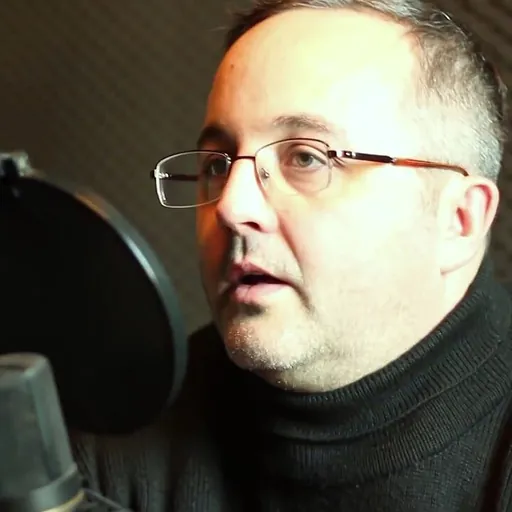
About Piotr Gontarczyk
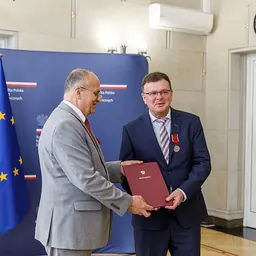
Born 1970. Piotr Gontarczyk is a Polish historian, political scientist and journalist.
Piotr Gontarczyk (born 29 April 1970) is a Polish historian with a doctorate in history and political science.
He is employed by the Polish Institute of National Remembrance. He specializes in the World War II history of the Polish communist movement, and in contemporary Polish history.
Career Gontarczyk studied journalism and political science at Warsaw University, in 2003 receiving a doctorate for his thesis, The Polish Workers' Party: The Road to Power, 1942-1945. In 2004 the thesis was honored with a Jerzy Łojek Award.
Gontarczyk has also studied at the Warsaw University Institute of History.
In 1998–2005 he worked in the office of the Commissioner for the Public Interest with its deputy commissioner, Judge Krzysztof Kauba. Since 2006 he is vice-director of the Office of Archivization of Documents at the Institute of National Remembrance. In September 2007 he was named deputy director of the Lustration Office at the Institute of National Remembrance.
In 2006 Gontarczyk identified Zygmunt Bauman (1925–2017) as a former agent, in 1945–53, of the Polish Security Service.
Gontarczyk is a former member of the academic corporation, Respublica.
In 2012 he criticized the Polish Foreign Ministry's recommendation of the book, Inferno of Choices: Poles and the Holocaust, about Polish antisemitism as an act of incompetence which may tarnish Poland's reputation. He was later accused of smearing the work of the same editors when disussing their later book Night Without End.
He has published articles in such scholarly publications as Zeszyty Historyczne, , Glaukopis, Dzieje Najnowsze, Zeszyty Historyczne WiN, Biuletyn Kwartalny Radomskiego Towarzystwa Naukowego, Biuletyn Instytutu Pamięci Narodowej, and Aparat Represji w Polsce Ludowej 1944–1989. He has also been published in many newspapers such as Życie, Rzeczpospolita, Gazeta Polska, Nasz Dziennik, Polityka, Gazeta Wyborcza, Uważam Rze, Do Rzeczy, Więź, Najwyższy Czas!, Tygodnik Solidarność, , Wprost, and Życie Warszawy.
Przytyk pogrom In 2000, Gontarczyk published a book about the Przytyk pogrom: Pogrom? Zajścia polsko-żydowskie w Przytyku 9 marca 1936 r. Mity, fakty, dokumenty (Pogrom? The Polish-Jewish Events at Przytyk on 9 March 1936: Myths, Facts, Documents). Jerzy Tomaszewski, praises Gontarczyk for efforts aiming at describing in details the events, and his critical approach to press reports, but criticizes him for restricting sourcing to almost exclusively on Polish legal and administrative documentation, seeing Polish, Jewish and American publications as being based almost exclusively on the prewar Jewish press and on books published in the communist period. According to Tomaszewski, this rejection was irrational and wrong, narrowing the scope of information on the subject.
Jedwabne Pogrom In 2001, Gontarczyk wrote that the earlier involvement of some Jews in communist atrocities during the World War II Soviet occupation of Poland cannot excuse the 10 July 1941 Jedwabne pogrom, even if that involvement contributed to anti-Jewish violence. Gontarczyk criticized historian Jan T. Gross' 2001 book, Neighbors: The Destruction of the Jewish Community in Jedwabne, Poland, describing the Jedwabne pogrom. Gontarczyk criticized Gross for giving different weight to witness statements based on the witnesses' ethnicities, for showing a lack of objectivity, and for treating witness statements as reliable solely on the basis of whether the witness had been at risk of becoming a Holocaust victim. According to Gontarczyk, this approach contravenes established procedure in history studies, where every statement should be judged objectively.
Wałęsa controversy In 2008, Gontarczyk and Sławomir Cenckiewicz published a book, . It caused a major controversy in Poland. Gontarczyk and Cenckiewicz argued that in the 1970s the Solidarity leader and later President of Poland Lech Wałęsa was a secret informant of the Polish communist Security Service. Michael Szporer wrote that the book should have been more nuanced in its judgments of anticommunist leaders, and that it unfairly singled out Wałęsa. Professor Wlodzimierz Suleja named Gontaryczk's book as one of the most important biographies in recent historiography in Poland.
Personal life Gontarczyk is married to Aneta Gontarczyk. In 2009, Gontarczyk, who had worked for the Military Intelligence Services verification commission, had her security clearance revoked. According to Gontarczyk, this was political retribution by Donald Tusk's administration for Gontarczyk's book about Lech Wałęsa.
Books Tajne oblicze GL-AL, PPR. Dokumenty (1997–1999) - co-author Pogrom? Zajścia polsko-żydowskie w Przytyku 9 marca 1936 r. Mity, fakty, dokumenty (2000), Polska Partia Robotnicza. Droga do władzy 1941-1944 (2003), Tajny współpracownik "Święty" (2005) Kłopoty z historią (2006) SB a Lech Wałęsa. Przyczynek do biografii (2008) (with Sławomir Cenckiewicz) Najnowsze kłopoty z historią. Publicystyka z lat 2008-2012 (2013)
Don’t just read it —
keep it.
Full-length biographies made to live with: read them, listen on the way to work, watch them tonight.
- E-book
- Audio
- Video
Instant download · yours to keep · every purchase keeps this site free
Important facts
People in Piotr Gontarczyk's life
Named in this biography and alive at the same time



Related people
Same field, nearest in time



Contemporaries
People whose lives overlapped Piotr Gontarczyk's

Frequently asked questions
Who is Piotr Gontarczyk?
Polish historian
When was Piotr Gontarczyk born?
Piotr Gontarczyk was born on 29 April 1970 in Żyrardów.
What is Piotr Gontarczyk's occupation?
Piotr Gontarczyk is a historian, political scientist and journalist.
What nationality is Piotr Gontarczyk?
Piotr Gontarczyk is Polish.
Sources & further reading
Cite this page
APA: Biography.guide. (2026). Piotr Gontarczyk. https://biography.guide/piotr-gontarczyk/
MLA: "Piotr Gontarczyk." Biography.guide, https://biography.guide/piotr-gontarczyk/.
Chicago: "Piotr Gontarczyk." Biography.guide. https://biography.guide/piotr-gontarczyk/.
Data last updated: 2026-09-21 · Spot an error? Report a correction.
Portrait: Wikimedia Commons · author & licence
Page generated 2026-09-27 05:01 UTC