
About Pinchas HaKohen Lintup
Lived 1851 – 1924 (aged 72). Pinchas HaKohen Lintup was a writer.
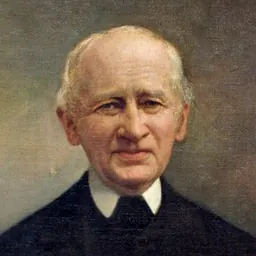
Pinchas HaKohen Lintup or Pinhas HaKohen Lintop (, ) (10 October 1851 – 1 June 1924) was a Religious Zionist Lithuanian rabbi and teacher who served as the spiritual leader of the Hasidic community of Biržai.
In his work, Kana'uteh de-Pinhas, Bezalel Naor states that "Rabbi Lintop was unique in that he was one of only three major Lithuanian kabbalists in that country at the beginning of the 20th century: Solomon Elyashev, Abraham Isaac Hakohen Kook, and Pinhas Hakohen Lintop."
Lintup's life is discussed in several contemporary works, notably in Lee Shai Weissbach's translation of A Jewish Life on Three Continents by Lintup's student Menachem Mendel Frieden. His theological views and impact are presented in Bezalel Naor's translation, commentary and notes on The Legends of Rabbah bar Bar Hannah by Rav Kook. Lintup's extensive correspondence with Rabbi Abraham Kook is also excerpted in Naor's Kana'uteh De Pinhas, as well as Reuven Dessler's Shnos Dor Vdor - Volume 4.
Lintup was a supporter of the Mizrachi movement.
Early life The Synagogue of Habad Hasidim in Birzai, the ’20s–’30s of the 20th century.
Lintup was born in Dvinsk to Yehuda Leib HaKohen Lintup, a rabbi. In 1876, Pinchas was appointed rabbi in Vabolnik, Lithuania prior to being sought out by the Hasidic Jews of Biržai to lead their community in 1888. Lintup was a Religious Zionist and supporter of the Mizrachi movement.
Lintup and his wife sought passage to Palestine in 1924. Rabbi Kook requested a visa for them from the British Governorate on 24 March 1924. This request was approved on 30 July 1924, However, Lintup had died two months prior.
Lintup died on 1 June 1924 in Biržai and was buried in the city's Jewish cemetery.
Personal life
The Movsas family in Krekenava in 1938. Slova Lintup is seated third from left. Lintup and his wife Slova (née Kantzapovich) had eleven children who survived childbirth. One of his sons, Tzvi Hirsch immigrated to the United States in 1905. He changed his name to Harry Sebee Linfield. He became a Reform rabbi.
Lintup's daughter Liba, married Binyomin Tzvi Movsas, who initially succeeded his father-in-law as rabbi in Birzai. Movsas later served as rabbi of the town of Krekenava until he was killed along with his family during the Holocaust. One of the Movsas’ children, Miriam, managed to escape, eventually settling in Cleveland, Ohio, where her husband, Eliezer Levi was rosh mechina (high school dean) at the Telshe Yeshiva.
Philosophy Lintup viewed the salvation of the Jewish people as inextricably linked to Torah study. He believed that knowledge of penimiyut haTorah (inwardness of Torah) contained the medicine for the spiritual malady of the generation. Both Lintup and Rabbi Abraham Isaac Kook attempted, each in his own way, to disseminate Kabbalah to the masses and came under criticism from their rabbinic peers for it.
Philosophically, Lintup sought to synthesize the schools of Moshe Chaim Luzzatto, the Vilna Gaon and Chabad. He believed that Kabbalah in general, and Tsimtsum in particular, were not to be taken in a purely literal fashion, thereby placing himself at odds with other Kabbalists. Frieden has stated that his teacher was a Mitnaged (opponent of Hasidism) in spirit,
Lintup also stressed in this work the central importance of faith in one's thinking. For although Lintup studied philosophy, he felt many would interpret philosophic thinking and the changes wrought by the industrial revolution as obviating the need for faith, which he believed central to the purposefulness and very existence of the Jewish people. Concerning faith, scholar Dr. Marc B. Shapiro notes that Lintup challenged “Maimonides’ view that one who is mistaken when it comes to principles of faith is worse than one who actually commits even the worst since,” This was a work of Talmudic commentary. Yalkut Avenu Emunat Yisrael. Published in 1895. Ma’amar Binyan ha-Umah, (Building of a Nation) Published in 1906 & 1908. Hashvenu Shel Olim (The World's Account), Published in 1912. I
In the 21st century, works containing certain of Rabbi Lintup's letters and theological views were published, including:
Kana’uteh de-Pinhas (The Zeal of Pinhas) produced by Rabbi Bezalel Naor, centers on a previously unpublished 1909 letter from Rabbi Lintup to Rabbi Abraham Isaac Hakohen Kook, the first Ashkenazi Chief Rabbi of Eretz Yisrael. Snos Dor va-Dor (Volume 4) produced by Reuven Dessler contains two significant letters from Rabbi Lintup to Rabbi Kook circa 1907 and 1909.
Don’t just read it —
keep it.
Full-length biographies made to live with: read them, listen on the way to work, watch them tonight.
- E-book
- Audio
- Video
Instant download · yours to keep · every purchase keeps this site free
Important facts
People in Pinchas HaKohen Lintup's life
Named in this biography and alive at the same time


Related people
Same field, nearest in time

Contemporaries
People whose lives overlapped Pinchas HaKohen Lintup's





Frequently asked questions
Who was Pinchas HaKohen Lintup?
Lithuanian rabbi (1851-1924)
When was Pinchas HaKohen Lintup born?
Pinchas HaKohen Lintup was born on 10 October 1851 in Daugavpils.
When did Pinchas HaKohen Lintup die?
Pinchas HaKohen Lintup died on 1 June 1924.
What was Pinchas HaKohen Lintup's occupation?
Pinchas HaKohen Lintup was a writer.
Sources & further reading
· Wikipedia: Pinchas HaKohen Lintup
· DBpedia: Pinchas HaKohen Lintup
Cite this page
APA: Biography.guide. (2026). Pinchas HaKohen Lintup. https://biography.guide/pinchas-hakohen-lintup/
MLA: "Pinchas HaKohen Lintup." Biography.guide, https://biography.guide/pinchas-hakohen-lintup/.
Chicago: "Pinchas HaKohen Lintup." Biography.guide. https://biography.guide/pinchas-hakohen-lintup/.
Data last updated: 2026-09-20 · Spot an error? Report a correction.
Page generated 2026-09-27 05:23 UTC