
Pim Mulier
Dutch sports pioneer, one of the founders of modern sports in the Netherlands
About Pim Mulier
Lived 1865 – 1954 (aged 89). Pim Mulier was a Dutch speed skater, athletics competitor, journalist, amateur painter, illustrator and art collector.
Willem Johan Herman Mulier, also known as Pim Mulier (10 March 1865 – 12 April 1954) was one of the leading figures in the sporting history of the Netherlands.
He was a co-founder of the oldest football club still in existence in the Netherlands, Koninklijke HFC in 1879, and the founder of the first tennis club in the Netherlands in 1884. He also organized the first athletics competition in 1886 and he was the founder of the Dutch Football and Athletics Association in 1889, which became NVB within a few years when athletics was abandoned, much to his sorrow. In 1890 he ice skated past eleven cities in Friesland, which became a precursor to the Elfstedentocht, and he even designed the medal for participation himself. Mulier was the major pioneer in establishing and promoting cricket and football in the Netherlands as he founded clubs in both sports. He was the first chairman of the Football Association, the Athletics Association, and of Koninklijke HFC, and the first secretary of the Dutch Association for Physical Education. The importance of his work and his appreciation for it is evidenced by the numerous awards bestowed on him by governments, organizations, and associations, such as the Order of the Netherlands Lion and the Silver Carnations from the Prins Bernhard Cultuurfonds for the propaganda and related organizational work for many branches of sport. An ancestor of the family, Jan Mulier, fought alongside Louis I, Prince of Condé, in the French Wars of Religion in the 16th century. From an early age, Pim was passionate about sports. He practiced a lot of them while growing up and thus developed into an all-around athlete who competes in different sports such as football, skating, running, cycling, tennis, cricket, and bandy. During this time he learned several languages, from which he later benefited as a sports official. Mulier then found a meadow in the Koekamp that seemed suitable for football and thus he wrote a letter to the mayor of Haarlem to ask permission to use it to play football with his club, an unprecedented initiative in the Netherlands at the time. The surface of the Koekamp, where their "wrestling arena" was located, was uneven and there were a few trees in the middle of the field, but they just got used to it and played around it. In 1886 he organized the first football match within the German borders.
Mulier as captain of the unofficial Dutch national team in a match against Maidstone in 1895. Mulier became the leader of the club "as a matter of course", and his fellow campaigners called him meneer (sir) Mulier. In 1895 he earned a second cap for bondselftal, as the Dutch national team was called until its official inception in 1905. In 1886 he became Dutch champion in the 350 meters and two years later he won the mile event in Ostend. During the first athletics competitions organized by NVAB in 1891, he became the Dutch champion in the quarter mile. In 1890, during the long and harsh winter of 1890–91, the 25-year-old Mulier become the first man to ride the so-called Frisian Elfstedentocht, which is completing a skating tour along the eleven Frisian cities, something that he achieved in just 12 hours and 55 minutes, an unofficial record for a long time.
He was important not because he did things first, but because he had a certain vision of the sport. That vision was that sport can be a social force. This distinguishes him from his contemporaries, who saw sport mainly as a pleasant pastime for themselves and their friends. — Daniel Rewijk in Mulier's biography Bandy quickly became Mulier's favorite game, stating "Bandy is my favorite place to hang out because it is the fastest game in the world, faster than football, baseball or lacrosse, it is spicier than cricket, tennis or golf, so with the bandy agreement, our beloved game is near". He also played a major role in the founding of the Dutch Olympic Committee in 1912, through his role as secretary of the NBvLO.
On 12 March 2015, two days after the 150th anniversary of Mulier's birth, Daniël Rewijk obtained his PhD at the University of Groningen on a dissertation and biography about Pim Mulier.
Mulier has always been an opponent of mixing professional and amateur sports. In the late 19th and early 20th centuries, it was not uncommon for athletes to receive money or valuables for winning a match. This was especially the case in short-track speed skating and hard sailing. These prices were a welcome addition to their meager income for farmers, workers, and skippers. The sculpture was made by the artist Frank M. Zeilstra and placed on the occasion of the 100th anniversary of the Keatsferiening Pim Mulier in 1986. There is also a Pim Mulier Open tennis tournament. In addition, Amsterdam, Zwolle, Stiens, Franeker, and Sneek all have streets named after Mulier; with the Sneek Sport center being located on the Pim Mulierstraat. The winner of the Elfstedentocht receives the Pim Mulier exchange prize. There is even a Hospital health care company based in Arnhem named after him. In 1985, the Pim Mulier Foundation, a national organization in the field of health management, was founded, with the purpose of improving the vitality of employees, teams, and organizations, beginning at the National Sports Centre Papendal. On 12 April 2002, the independent, non-profit Mulier Instituut was opened in Utrecht, which studies sport from a social science perspective.
Don’t just read it —
keep it.
Full-length biographies made to live with: read them, listen on the way to work, watch them tonight.
- E-book
- Audio
- Video
Instant download · yours to keep · every purchase keeps this site free
Important facts
Related people
Same field, nearest in time

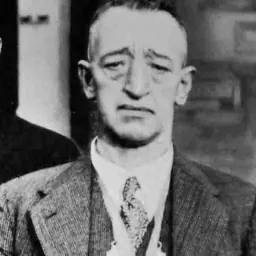
Contemporaries
People whose lives overlapped Pim Mulier's


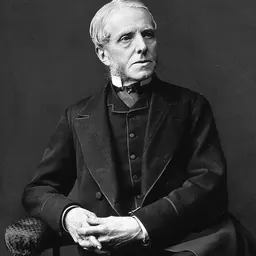
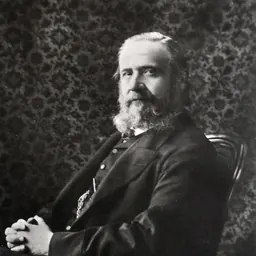


Frequently asked questions
Who was Pim Mulier?
Dutch sports pioneer, one of the founders of modern sports in the Netherlands (1865–1954)
When was Pim Mulier born?
Pim Mulier was born on 10 March 1865 in Witmarsum.
When did Pim Mulier die?
Pim Mulier died on 12 April 1954 in The Hague.
What was Pim Mulier's occupation?
Pim Mulier was a speed skater, athletics competitor, journalist, amateur painter, illustrator and art collector.
What nationality was Pim Mulier?
Pim Mulier was Dutch.
Sources & further reading
Cite this page
APA: Biography.guide. (2026). Pim Mulier. https://biography.guide/pim-mulier/
MLA: "Pim Mulier." Biography.guide, https://biography.guide/pim-mulier/.
Chicago: "Pim Mulier." Biography.guide. https://biography.guide/pim-mulier/.
Data last updated: 2026-09-25 · Spot an error? Report a correction.
Page generated 2026-09-27 05:11 UTC