
About Pierre Salinger
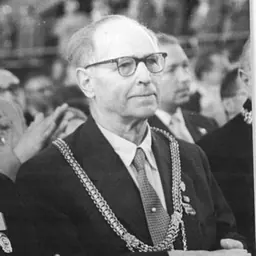
Lived 1925 – 2004 (aged 79). Pierre Salinger was an American and French journalist, politician and writer.
Pierre Emil George Salinger (June 14, 1925 – October 16, 2004) was an American journalist, author and politician. He served as the ninth White House Press Secretary for United States presidents John F. Kennedy and Lyndon B. Johnson. Salinger served as a United States Senator in 1964 and as campaign manager for the 1968 Robert F. Kennedy presidential campaign.
After leaving politics, Salinger became known for his work as an ABC News correspondent, particularly for his coverage of the 1979-81 Iran Hostage Crisis; the 1988 bombing of Pan Am Flight 103 over Lockerbie, Scotland; and his claims of a missile being the cause of the explosion of TWA Flight 800 in 1996.
Early life Salinger was born in San Francisco, California. His father, Herbert Salinger, was a New York City–born mining engineer, and his mother, Jehanne (née Biétry), was a French-born journalist. Salinger's mother was Catholic and his father was Jewish. He continued studying piano after they returned to San Francisco and was able play scores by Bach, Debussy, Beethoven and George Gershwin, whom he once met. (Jacqueline Kennedy, unlike husband John F.) Kennedy, loved music-related culture, as she had studied piano and ballet in her early years and as a student at Vassar. But her husband did not appreciate or enjoy most kinds of music, which he said hurt his ears. After he became president, she relied on Salinger to suggest and invite artists to appear at the While House. Toward the end of his life, Kennedy's opinion had changed somewhat, and he "came to feel that progress in the arts was intimately related to all that he wanted America to be," which led to his supporting the creation of what became the John F. Kennedy Center for the Performing Arts in Washington, D.C. He attended San Francisco State University (then College) from 1941 to 1943, during which time he became managing editor and columnist for the student newspaper.
He began his journalism career as "Lucky Pierre", a horse racing columnist and later reporter for the San Francisco Chronicle and as a contributing editor to Collier's in the 1940s and 1950s. After Kennedy was elected in 1961, he hired Salinger as his press secretary. When Kennedy became the first president to allow live television broadcasts of his news conferences, Salinger was said to have managed the press corps with "wit, enthusiasm and considerable disdain for detail",
In May 1962, Salinger went to Moscow alone to meet with the press. Upon his arrival, he was unexpectedly invited to spend time with Khrushchev at his dacha outside the city. He later said that Kennedy's actions during that crisis were among the most incredible things a president had ever done in the 20th century and noted how close the countries had come to nuclear war.
Salinger continued as press secretary for United States President Lyndon B. Johnson after the assassination of President Kennedy.
At the time of President Kennedy's assassination in November 1963, Salinger was on a plane to Tokyo with six Cabinet members, including Secretary of State Dean Rusk. Salinger was to attend an economic conference and start working on a February 1964 visit by Kennedy as the first United States president to visit Japan since the end of World War II.
Salinger was retained by President Lyndon B. Johnson as press secretary. Johnson said, "I don't have to tell you that Mr. Salinger was John F. Kennedy's press secretary ... and I don't know what I would have done without him, night and day, over this past month."
Senate run Following his service in the Kennedy and Johnson administrations, Salinger returned to California and ran for the Senate. He defeated California State Controller Alan Cranston in a contentious Democratic primary. California Governor Pat Brown, who had supported Cranston, appointed Salinger a Democratic senator to fill the vacancy resulting from the July 30, 1964, death of retiring Senator Clair Engle; he took office on August 4, 1964. In his bid for a full six-year term in the 1964 election, Salinger was defeated by former actor and vaudeville song and dance man George Murphy following a campaign in which Salinger's recent return to his native state became an issue and his legal residency was being challenged in court. He was also hurt by his adamant support, despite advice from his political managers, of legislation banning racial housing discrimination. Salinger's loss made California the sole Democratic-held seat to go Republican in what was otherwise a Democratic landslide.
Salinger resigned from the Senate on December 31, 1964, three days before his term was to expire. Murphy, who was to take office on January 3, 1965, was appointed to fill the remaining two days of Salinger's term, giving Murphy a slight advantage in seniority in the Senate over other members elected in 1964 when seniority was more vital in Senate affairs than now.
Salinger went on to work in the private sector, which included a stint as a vice president of Continental Airlines. He sold his interest in the ballclub two years later prior to the start of the 1968 season.
Batman appearance Salinger appeared in the January 4, 1968, episode of the ABC Television series Batman portraying "Lucky Pierre," a lawyer who defends Catwoman and the Joker in a trial. As a joke on the real Salinger's political career, Pierre is introduced with a photograph of Richard Nixon on his desk.
Robert Kennedy assassination Salinger was one of the managers of United States Senator Robert F. Kennedy's 1968 presidential campaign and was standing 10 to 12 feet away when Kennedy was fatally shot in the kitchen of the Ambassador Hotel in Los Angeles, California on June 5 (he died the next day). Salinger claimed that Jim McManus, who was also working on the campaign, said to him, "I've got to get the message to Los Angeles, under no circumstances should Bobby go through that kitchen ... there's usually grease on the floor. He's going to fall or something."
Salinger, devastated by the assassination, moved to France and was a correspondent for the weekly news magazine L'Express.
Journalism for ABC In 1976, ABC Sports employed Salinger as a features commentator for the network's coverage of the Olympic Winter Games in Innsbruck, Austria, and the Summer Games in Montreal, Quebec.
Salinger provided commentary on the 1989 Tour de France for ABC Sports.
In the 1980s, he was well known as a member of Amiic (World Real Estate Investment Organization, Geneva), with François Spoerry, Paul-Loup Sulitzer and Jean-Pierre Thiollet. The organization was dissolved in 1997.
In a November 1989 report for ABC's Prime Time Live, Salinger claimed that Iran had paid Syria and Ahmed Jibril, the head of the Popular Front for the Liberation of Palestine-General Command (PFLP-GC), to carry out the Pan Am 103 bombing.
After the August 1990 Iraq invasion of Kuwait, ABC started work on a special program about the invasion. The network sent Salinger to the Middle East, where he obtained a transcript in Arabic of a conversation between Saddam Hussein and the US Ambassador to Iraq, April Glaspie. The ambassador told Saddam, "We have no opinion on your Arab-Arab conflicts", which was interpreted by some as giving Saddam the green light to invade Kuwait, which he did only days later.
Claims about TWA Flight 800 Three months after the explosion of TWA Flight 800, Salinger claimed to have received a document verifying conspiracy theories about the flight that it had been shot down by friendly fire, and that this had been covered up by the United States government. He claimed that an intelligence agent had sent him the document. What Salinger was touting was, in fact, a hoax document that had been circulating the internet for weeks prior, and which had been emailed to him by a former airline pilot. By lending his distinction and credibility to these conspiracy theories, Salinger helped to bolster them.
Later life After leaving ABC in 1993, Salinger moved back to Washington and became an executive with Burson-Marsteller, a public relations firm.
In November 2000, he became exasperated when he was denied permission to give exonerating evidence as part of his testimony before the Scottish Court in the Netherlands trying two Libyans for the December 21, 1988, bombing of Pan Am 103 over Lockerbie, Scotland. Salinger stated that he knew who the real bombers were, but was told by trial judge Ranald Sutherland, Lord Sutherland, "If you wish to make a point you may do so elsewhere, but I'm afraid you may not do so in this court."
During the 2000 United States presidential election, Salinger said that he would permanently move to France if George W. Bush won, and fulfilled this promise after Bush's victory. He died from heart failure at the age of 79 on October 16, 2004, at a hospital in Cavaillon, near his home, La Bastide Rose, in Le Thor. He is interred in Arlington National Cemetery.
Don’t just read it —
keep it.
Full-length biographies made to live with: read them, listen on the way to work, watch them tonight.
- E-book
- Audio
- Video
Instant download · yours to keep · every purchase keeps this site free
Important facts
People in Pierre Salinger's life
Named in this biography and alive at the same time

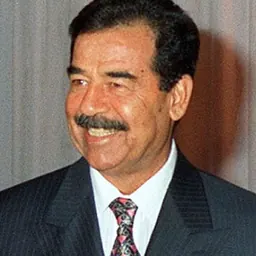

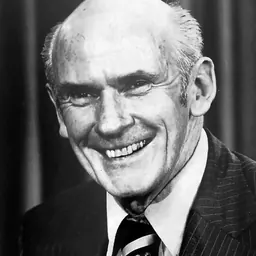
Related people
Same field, nearest in time



Contemporaries
People whose lives overlapped Pierre Salinger's



Frequently asked questions
Who was Pierre Salinger?
American Senator and journalist (1925–2004)
When was Pierre Salinger born?
Pierre Salinger was born on 14 June 1925 in San Francisco.
When did Pierre Salinger die?
Pierre Salinger died on 16 October 2004 in Cavaillon.
What was Pierre Salinger's occupation?
Pierre Salinger was a journalist, politician and writer.
What nationality was Pierre Salinger?
Pierre Salinger was American and French.
Sources & further reading
Cite this page
APA: Biography.guide. (2026). Pierre Salinger. https://biography.guide/pierre-salinger/
MLA: "Pierre Salinger." Biography.guide, https://biography.guide/pierre-salinger/.
Chicago: "Pierre Salinger." Biography.guide. https://biography.guide/pierre-salinger/.
Data last updated: 2026-09-20 · Spot an error? Report a correction.
Page generated 2026-09-27 05:28 UTC