
About Pierre Mabille
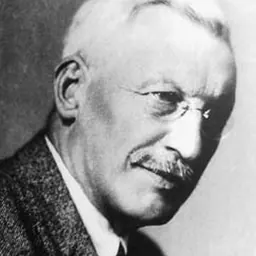
Lived 1904 – 1952 (aged 48). Pierre Mabille was a French physician writer, surgeon, physician and writer.
Pierre Mabille (3 August 1904 – 13 October 1952) was a French physician, writer, anthropologist, and cultural diplomat associated with surrealism. His writings combined medicine, psychology, anthropology, social theory, mythology, and Western esotericism. A friend and collaborator of André Breton, Mabille contributed regularly to the Surrealist periodical Minotaure and became an important theorist of the movement's interest in myth, initiation, prophecy, and the marvellous.
During the Second World War, Mabille worked as a surgeon and teacher in the Caribbean and Mexico. He subsequently became the first director of the Institut Français in Haiti and cultural attaché to the French legation in Port-au-Prince. His best-known work, Le Miroir du merveilleux (1940; translated as Mirror of the Marvelous), is an anthology and theoretical study of the marvellous in mythology, folklore, literature, and esoteric traditions. Later scholars have credited Mabille with helping to redirect Surrealism toward comparative mythology, the collective unconscious, initiatory experience, and the cultures of the Americas. Following his parents' separation and a period spent in Amiens during the First World War, his family settled in Paris. In 1924 he prepared for the competitive examination for the Paris hospital internship and met his first wife, Hélène Destroyat, with whom he had three children.
Mabille began assembling the morphological and psychological observations that became La Construction de l'homme while continuing his medical work. He sought to understand the human being simultaneously as a biological organism, a psychological subject, a social being, and a microcosm participating in larger natural and cosmic processes. He joined the directing committee of Minotaure in 1937.
The Caribbean and Mexico
Mabille left metropolitan France on 28 September 1940. His journey took him through Algeria and Morocco before he reached Martinique, Guadeloupe, and eventually Haiti.
His encounter with Haitian Vodou became important to his thinking about ritual, possession, collective life, and the persistence of the marvellous within modern societies. Rather than regarding myth as a survival from a superseded stage of culture, Mabille understood it as an active form through which communities organised experience, memory, and desire.
Mabille's travels between Haiti, Cuba, and Mexico connected Surrealists and associated intellectuals across the Caribbean and Latin America. His circle included Alejo Carpentier, Juan Larrea, Benjamin Péret, Wifredo Lam, Aimé Césaire, Suzanne Césaire, and the Cuban anthropologist Lydia Cabrera. Cabrera translated La Construction de l'homme into Spanish as La arquitectura del hombre: Su unidad dialéctica in 1945. She also reportedly prepared a translation of Le Miroir du merveilleux, although no published or surviving copy has been located. He also established the Franco-Haitian cultural journal Conjonction, whose first issue appeared in January 1946.
Breton's lectures coincided with growing opposition to Lescot's authoritarian government. His declarations were taken up by radical students associated with the journal La Ruche, but the uprising that overthrew Lescot in January 1946 arose from longstanding economic, political, and social conflicts within Haiti rather than from Breton's visit alone.
Return to France and death
After returning to Paris, Mabille resumed his medical, anthropological, and Surrealist activities. In 1948 he contributed to the Surrealist review Néon and helped establish the Société de morpho-physiologie humaine, serving as its general secretary until his death. The philosopher of science Gaston Bachelard became an honorary member of the society. The Belgian artist and filmmaker Jean Raine subsequently made a documentary about the test with Mabille's assistance.
At the time of his death, Mabille was working on a projected Traité d'anthropologie différentielle. An unpublished manuscript of approximately 152 pages is preserved in the Bibliothèque littéraire Jacques-Doucet.
In La Construction de l'homme (1936), Mabille proposed a psychophysiological account of the body organised around four principal regions: the osteomuscular mass, the viscera, the head, and the genital extremity. He associated the peripheral and skeletal structures with conscious relations to the external world, while regarding the viscera as the seat of subconscious energies, desires, and aversions. Historians of medicine have interpreted the book as an anti-reductionist attempt to combine physiology with the Surrealist investigation of the unconscious.
His Thérèse de Lisieux (1937) was a polemical medico-psychological study of Thérèse of Lisieux. Mabille interpreted the saint's life through pathology, psychoanalysis, sexuality, social conditioning, and what he regarded as the repressive effects of bourgeois Catholic society. He nevertheless treated Thérèse's experience as evidence of an intense desire for transformation. Mabille argued that an economic revolution would remain incomplete without a corresponding transformation of emotional and inner life.
In Égrégores ou la Vie des civilisations (1938), Mabille applied the esoteric concept of the egregore to the formation, development, and decline of civilizations. He treated civilizations as collective beings generated by the shared desires, symbols, fears, institutions, and imaginative activity of their members. Like biological organisms, these collective formations were said to pass through periods of birth, growth, conflict, decline, and transformation.
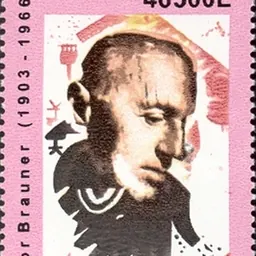
La Conscience lumineuse (1938) examined visual perception and artistic consciousness through the relationship between light and shadow. Drawing partly upon the cosmological diagrams of Robert Fludd, Mabille treated illumination and darkness as physical phenomena, psychological conditions, and symbolic expressions of consciousness and the unconscious. His ideas developed through his friendships with painters including André Masson, Yves Tanguy, Victor Brauner, Matta, and Onslow Ford.
Mabille returned to the subject in the shorter work Le Merveilleux (1946), written substantially in Mexico. There he presented the marvellous as a force of psychic and social renewal capable of restoring hope after the destruction of the Second World War.
Mabille's broader contribution has been identified with Surrealism's increased use of alchemical language, collective mythology, Jungian psychology, initiatory structures, secret-society imagery, and non-European religious and cultural materials. His work helped establish a conceptual bridge among the unconscious, esotericism, anthropology, artistic form, and the hope for psychic and social transformation.
Selected publications
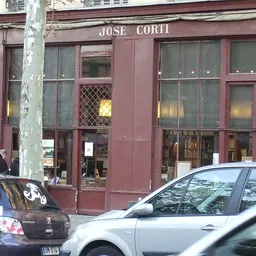
La Construction de l'homme. Paris: Jean Flory, 1936. Spanish translation by Lydia Cabrera: La arquitectura del hombre: Su unidad dialéctica. 1945. Thérèse de Lisieux. Paris: José Corti, 1937. La Conscience lumineuse. Paris: Skira, 1938. Égrégores ou la Vie des civilisations. Paris: Jean Flory, 1938. Le Miroir du merveilleux. Paris: Éditions du Sagittaire, 1940. English translation by Jody Gladding: Mirror of the Marvelous: The Classic Surrealist Work on Myth. Rochester, Vermont: Inner Traditions, 1998. . Reissued as Mirror of the Marvelous: The Surrealist Reimagining of Myth. Rochester, Vermont: Inner Traditions, 2018. . “La Jungle.” Tropiques, no. 12, January 1945. Le Merveilleux. Paris: Éditions des Quatre-Vents, 1946. Initiation à la connaissance de l'homme. Paris: Presses Universitaires de France, 1949. Revised edition of La Construction de l'homme. La Technique du test du village. Paris: Revue de morpho-physiologie humaine, 1950. “Souvenirs d'Haïti.” 84, no. 17, January–February 1951. “Nostradamus, ses prophéties, son temps.” Inconnues, vol. 10, 1955. Posthumously published. Traversées de nuit. Paris: Plasma, 1981. Posthumous collection. Messages de l'étranger. Paris: Plasma, 1981. Posthumous collection. Conscience lumineuse, conscience picturale. Edited by Jacqueline Chénieux-Gendron and Rémy Laville. Paris: José Corti, 1989. Pierre Mabille et le surréalisme: Une anthologie critique (1934–1952). Edited by Fabrice Flahutez and Emmanuel Bauchard. Paris: Hermann, 2024. .
Don’t just read it —
keep it.
Full-length biographies made to live with: read them, listen on the way to work, watch them tonight.
- E-book
- Audio
- Video
Instant download · yours to keep · every purchase keeps this site free
Important facts
People in Pierre Mabille's life
Named in this biography and alive at the same time


Related people
Same field, nearest in time



Contemporaries
People whose lives overlapped Pierre Mabille's



Frequently asked questions
Who was Pierre Mabille?
French physician and Surrealist writer (1904–1952)
When was Pierre Mabille born?
Pierre Mabille was born on 2 August 1904 in Reims.
When did Pierre Mabille die?
Pierre Mabille died on 13 October 1952 in Paris.
What was Pierre Mabille's occupation?
Pierre Mabille was a physician writer, surgeon, physician and writer.
What nationality was Pierre Mabille?
Pierre Mabille was French.
Sources & further reading
Cite this page
APA: Biography.guide. (2026). Pierre Mabille. https://biography.guide/pierre-mabille/
MLA: "Pierre Mabille." Biography.guide, https://biography.guide/pierre-mabille/.
Chicago: "Pierre Mabille." Biography.guide. https://biography.guide/pierre-mabille/.
Data last updated: 2026-09-20 · Spot an error? Report a correction.
Page generated 2026-09-27 05:16 UTC