
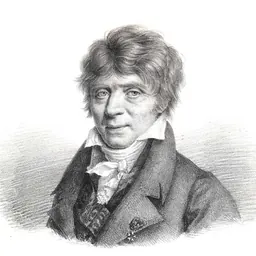
Pierre-Chrysologue Pambrun
French Canadian militia officer and fur trader
About Pierre-Chrysologue Pambrun
Lived 1792 – 1841 (aged 48). Pierre-Chrysologue Pambrun was a fur trader.
Pierre Chrysologue Pambrun (1792 – 1841) was a French Canadian militia officer and later a fur trader in the service of the Hudson's Bay Company. Pambrun fought against the United States in the War of 1812, in particular the Battle of the Châteauguay. He joined the HBC during a time of turmoil with its competitors, the North West Company. After the Battle of Seven Oaks, he was among those held captive by men employed by the NWC.
With the merger of the NWC and the HBC during 1821, Pambrun was sent to the Pacific Northwest. He was first stationed in the New Caledonia District, and in 1832 was put in charge of Fort Nez Percés, a vital station placed among the Walla Walla. Over time Pambrun strengthened relations with the neighboring Sahaptin nations through fair treatment and joining in on seasonal animal hunts. In addition to its use by the HBC, Fort Nez Percés would become an important stopping point for American migrants following the Oregon Trail. When ABCFM missionaries Marcus Whitman and Henry H. Spalding arrived in the area to proselytize among the Sahaptins, Pambrun helped them select Waiilatpu for a mission post. Pambrun gained the distinction of becoming the sole French-Canadian promoted to the rank of Chief Trader in the Columbia Department. While riding a horse in 1841, Pambrun became grievously injured in an accident and died four days later. He was survived by his pregnant wife, Catherine Umpherville Pambrun, and eight children.
Early life Pambrun was born in Vaudreuil-Dorion, Quebec on 17 December 1792. During the War of 1812, Pambrun enlisted in the primarily Québécois militia, the Canadian Voltigeurs and rose to the rank of sergeant by 1813. Pambrun fought in several skirmishes and earned acclaim for capturing an American scouting party. During the "Canadien Thermopylae" of the Battle of the Châteauguay, Pambrun served under Jacques Viger. In July, twenty families of Red River were located on the shores of Lake Winnipeg, having resided there since leaving the colony. They agreed to accompany the HBC men back to their former homes. Pambrun was then stationed in Pembina, and he journeyed with Governor Semple to visit the regional HBC stations. Officials of the company began to worry about the rapidly rising hostilities with their NWC competitors. In April 1816, Semple ordered Pambrun to proceed to the NWC Fort Qu'Appelle where Métis were gathering, but was instructed to "carefully avoid every act of hostility until fully justified by the conduct of our enemies." The party was bound for the Red River Colony to resupply the settlement. On 9 May, they were attacked by Cuthbert Grant and 49 NWC, With the closing of the case, Pambrun began a tour of service across interior HBC posts in 1820. Serving as a clerk, he spent time at Cumberland House, the York Factory, Fort Edmonton until being assigned to the New Caledonia Department in 1824.
By 1821, Pambrun had entered into a common-law marriage, known as marriage à la façon du pays in the fur trade, with Catherine "Kitty" Humpherville. Humpherville was of Cree and European heritage. Over the next twenty years, the Pambruns had five sons and four daughters. They were formally married on December 8, 1838. This culminated in Wide Mouth's son killing a Native cattle herder employee of the fort.
Pambrun's focus turned to fort administration, quickly discharging any "drunken hangers-on or other undesirables". Various headmen and chieftains were issued calendars to "have one tribe present at one time", the time schedules only being revoked when Pambrun was assured of the good intentions of each nation. While in Oregon Country in 1831, George Simpson, described Pambrun as "an active, steady, dapper little fellow."
Weary travelers who crossed the continent into the Oregon Country praised Pambrun's hospitality. Jason Lee and four Methodist clergy and laypeople reached Fort Nez Perces on 2 September 1834. Lee reported that Pambrun "proffered me any provisions he had", giving several spare tents and meals. The few horses and cattle held by the Methodists were traded for provisions, with the promise to receive replacements at Fort Vancouver.
Other than HBC employees, Pambrun's other non-Native contacts were members of the American Board of Commissioners for Foreign Missions (ABCFM). Samuel Parker and Marcus Whitman were sent in 1835 to explore the Oregon Country for suitable areas to establish missions, though Whitman departed east at the Rendezvous. Parker went through Fort Nez Perces on 6 October 1835, receiving a meal including the "great luxuries" of milk, bread, butter, and sugar. An escort of several Walla Wallas was organised for Parker by Pambrun as well. Additionally traveling with the missionaries was John Sutter, then headed for Alta California overland. Pambrun killed a "fat mare" and served the horse to Sutter when the latter departed for Fort Vancouver. The mission carpenter, Gray, found the meals served "a great change from dried and pounded buffalo meat" that the party had previously subsisted on. For dessert, Pambrun served muskmelons he grew two miles outside the fort, During that year he additionally became the godfather over one of Tawatoy's Catholic baptised sons.
Death Pambrun became gravely injured while riding a horse in 1841 and continued to live in agony for four days under the care of Marcus Whitman. Narcissa Whitman reported that "He was only anxious to die that he might be relieved of pain." Shortly before dying, Pambrun attempted to arrange a marriage between Cornelius Rogers and his daughter Maria, who rejected the proposition. Pamburn's body was later exhumed and placed in the Catholic Stella Maris Cemetery at Fort Vancouver on 9 March 1844. François Norbert Blanchet presided over the service, with attendees including John McLoughlin and James Douglas.
Don’t just read it —
keep it.
Full-length biographies made to live with: read them, listen on the way to work, watch them tonight.
- E-book
- Audio
- Video
Instant download · yours to keep · every purchase keeps this site free
Important facts
People in Pierre-Chrysologue Pambrun's life
Named in this biography and alive at the same time
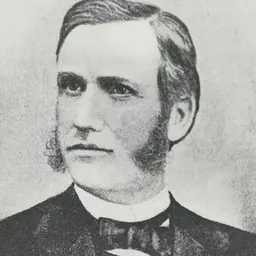
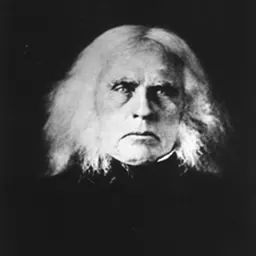


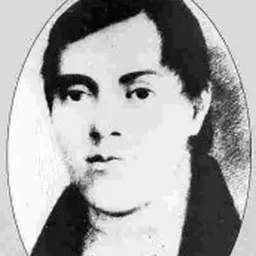
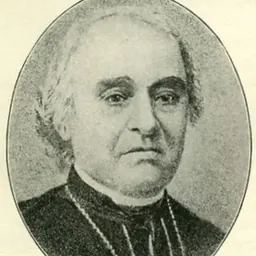
Related people
Same field, nearest in time



Contemporaries
People whose lives overlapped Pierre-Chrysologue Pambrun's


Frequently asked questions
Who was Pierre-Chrysologue Pambrun?
French Canadian militia officer and fur trader
When was Pierre-Chrysologue Pambrun born?
Pierre-Chrysologue Pambrun was born on 17 December 1792 in L'Islet.
When did Pierre-Chrysologue Pambrun die?
Pierre-Chrysologue Pambrun died on 15 May 1841 in Fort Walla Walla.
What was Pierre-Chrysologue Pambrun's occupation?
Pierre-Chrysologue Pambrun was a fur trader.
Sources & further reading
· Wikipedia: Pierre-Chrysologue Pambrun
· DBpedia: Pierre-Chrysologue Pambrun
Cite this page
APA: Biography.guide. (2026). Pierre-Chrysologue Pambrun. https://biography.guide/pierre-chrysologue-pambrun/
MLA: "Pierre-Chrysologue Pambrun." Biography.guide, https://biography.guide/pierre-chrysologue-pambrun/.
Chicago: "Pierre-Chrysologue Pambrun." Biography.guide. https://biography.guide/pierre-chrysologue-pambrun/.
Data last updated: 2026-09-20 · Spot an error? Report a correction.
Page generated 2026-09-27 05:26 UTC