
Pia Lamberty
Social psychologist from Germany
About Pia Lamberty
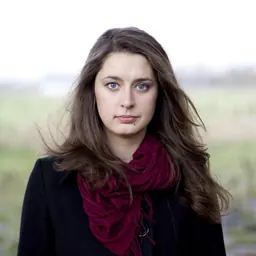
Born 1984. Pia Lamberty is a German social psychologist, literary studies and psychologist.
Pia Lamberty (born 11 February 1984) is a German social psychologist who researches conspiracy ideologies. She is a co-founder and co-CEO of the Center for Monitoring, Analysis and Strategy (CeMAS).
Early life and career Lamberty was born in Groß-Gerau on 11 February 1984. She completed a bachelor's degree in literature and philosophy at RWTH Aachen University. During this time, Lamberty worked as a student assistant at the Centre for Learning and Knowledge Management and at the Chair of Information Management in Mechanical Engineering while pursuing her studies. Subsequently, she completed a master's degree in comparative literature and cultural poetics at the University of Münster.
She also completed a bachelor's degree in psychology at the University of Hagen from 2011 to 2014, graduating with a Bachelor of Science. She then went on to complete a master's degree in psychology with a focus on social cognition and media psychology at the University of Cologne in 2016, graduating with a Master of Science. Her master's thesis dealt with the topic Uncovering hidden agencies: The Role of Trust and Control in the development of conspirational thinking. From June 2015 to January 2016, Lamberty worked as a research assistant for the University of Cologne's Social Cognition Center. Since November 2016, she has been working as a PhD student at the University of Mainz.
In May 2020, Lamberty co-authored the book Fake Facts - Wie Verschwörungstheorien unser Denken bestimmen (Fake Facts - How Conspiracy Theories Influence Our Thinking) with civil rights activist Katharina Nocun. The book explores the reasons why people may be drawn to conspiracy theories.
In March 2021, Lamberty co-founded the Center for Monitoring, Analysis and Strategy (CeMAS), an extremism monitoring agency and think tank, which brings together interdisciplinary expertise on the topics of conspiracy ideologies, disinformation, anti-Semitism and right-wing extremism. She is also its co-CEO.
Research Lamberty's research examines how people from the 'middle of society' are radicalised by conspiracy theories and reject democracy as a whole. She found that men with a relatively low level of formal education are particularly susceptible to believing in conspiracy myths. However, the reason for this is not a lack of intelligence, but rather a feeling of having been left behind by society. In addition, it can be observed worldwide that people who tend to be politically right-wing are more likely to believe in conspiracy narratives, although conspiracy myths can also be found in left-wing circles. For example, the issue of vaccination brings together vaccine-critical, left-wing alternative parents, esotericists and people from the extreme right. Belief in conspiracy is very widespread. Almost one in five Germans believes in conspiracy narratives on the subject of vaccination. A third believe that politicians are merely puppets of the powers behind them. Lamberty states that "we know from research that in situations that cause a loss of control and feelings of powerlessness, people believe more strongly in conspiracies […] They try to connect loose ends to patterns in order to compensate for this loss of control".
In their book, Lamberty and Nocun reject the term 'conspiracy theory' because it suggests scientific validity where there is none. They propose using the terms 'conspiracy myths' and 'conspiracy narratives' instead.
According to Lamberty, anti-Semitic narratives, which are constantly being updated by conspiracy believers, play a special role. "While for a long time the focus was mainly on the Illuminati or the Bilderbergers, in recent years the philanthropist George Soros has become the subject of many anti-Semitic myths. The danger posed by such conspiracy myths was evident not only in the right-wing extremist terrorist attack in Halle last year . When we talk about conspiracy mentality, we are referring to a generalised mistrust, a structure of prejudice against all persons and groups who are perceived as powerful. This applies to science and the media, but also to social groups. Jews have often been and continue to be associated with power and are therefore often the subject of conspiracy narratives. This overlap between conspiracy thinking and anti-Semitism is also evident in empirical studies".
Reception Alexander Kluy from Der Standard wrote that the "well-written, easy-to-read, scientifically sound book" Fake Facts came at just the right time. "Nocun and Lamberty tackle apocalyptics, financial myths, cancer myths, left-wing and esoteric mythologems. Only the final chapter, with practical advice on dealing with conspiracy theorists, falls short, as is so often the case with analytically strong treatises".
Julia Bähr of the Frankfurter Allgemeine Zeitung wrote in her review of the book: "Where it gets so specific, Fake Facts is particularly instructive. Because thinking about conspiracy narratives involves taking into account their degree of absurdity. Whether you feel comfortable with the idea or not, the fact that a significant portion of society is disconnecting from all rationality is a phenomenon that should be kept in mind, not only academically but also personally. The authors offer recommendations on how to respond to those affected in your circle of acquaintances – and none of them involve ignoring them".
Matthias Meisner from Der Tagesspiegel described the work as a fact-filled and well-researched book: "In view of the rapid succession of events since the beginning of the year, the authors deserve the highest praise for their precise examination of the myths surrounding Covid-19. And thus to the crudeness of 'hygiene demonstrations' and gatherings of 'corona rebels'".
In August 2020, Pia Lamberty shared in an interview with Tagesschau that she was regularly attacked on social media, threatened with death and sexual abuse because of her research.
In May 2021, the Süddeutsche Zeitung newspaper profiled Lamberty and discussed in detail the hate messages she received from conspiracy theorists, particularly as a result of the protests against protective measures against the COVID-19 pandemic in Germany.
Awards and scholarships 2016
1st place in the Master's Thesis Award, Department of Psychology, University of Cologne, 2016 Funding for a research stay at the Centre for Social and Cultural Psychology at the Université libre de Bruxelles, with Olivier Klein
2023
Madsack Prize (together with Katharina Nocun)
Personal life Lamberty has described receiving threats from conspiracy theorists as a result of her work in researching conspiracy ideologies, particularly due to the COVID-19 protests in Germany.
Don’t just read it —
keep it.
Full-length biographies made to live with: read them, listen on the way to work, watch them tonight.
- E-book
- Audio
- Video
Instant download · yours to keep · every purchase keeps this site free
Important facts
People in Pia Lamberty's life
Named in this biography and alive at the same time



Related people
Same field, nearest in time





Contemporaries
People whose lives overlapped Pia Lamberty's



Frequently asked questions
Who is Pia Lamberty?
social psychologist from Germany
When was Pia Lamberty born?
Pia Lamberty was born in 1984 in Groß-Gerau.
What is Pia Lamberty's occupation?
Pia Lamberty is a social psychologist, literary studies and psychologist.
What nationality is Pia Lamberty?
Pia Lamberty is German.
Sources & further reading
Cite this page
APA: Biography.guide. (2026). Pia Lamberty. https://biography.guide/pia-lamberty/
MLA: "Pia Lamberty." Biography.guide, https://biography.guide/pia-lamberty/.
Chicago: "Pia Lamberty." Biography.guide. https://biography.guide/pia-lamberty/.
Data last updated: 2026-09-20 · Spot an error? Report a correction.
Page generated 2026-09-27 05:19 UTC