
Phyllis Le Cappelaine Burke
Social reformer and housing commissioner
About Phyllis Le Cappelaine Burke
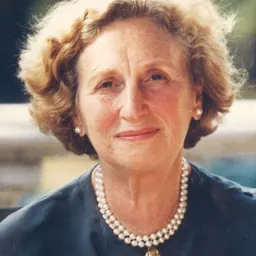
Lived 1900 – 1969 (aged 69). Phyllis Le Cappelaine Burke was an Australian market researcher, social reformer, women's rights activist and philanthropist.
Phyllis Le Cappelaine Burke (27 January 1900 – 20 August 1969), was an English-born Australian market researcher, housing commissioner, civic volunteer and philanthropist. She studied economics at the University of Sydney, graduating with a Bachelor's degree in 1922. She served for twenty years on the Housing Commission of New South Wales, and supported numerous social reform causes through her voluntary activities. A devout Catholic, in 1943, she founded Altair, a discussion group for Catholic women who were University graduates. She was also a foundation member of the Sydney chapter of the St. Joan Social and Political Alliance.
Personal life and education
Phyllis Le Cappelaine Taylor was born on 27 January 1900, in Maldon, Essex, England. Her parents, John Le Cappelaine Taylor (d. 1947) and Bridget Emily Taylor (née Dooley), emigrated to Australia when Phyllis was an infant.
As a young woman, Taylor attended a Catholic school for girls run by the Sisters of Mercy in North Sydney. The Monte Sant'Angelo Mercy College, as it was known, had been established in 1873. The girls were taught subjects as varied as English, history, geography, math, art, music and needlework. After graduating from secondary school, Taylor attended the University of Sydney, where she earned a Bachelor in Economics in 1922.
Taylor married John Murray Burke on 31 July 1922, in a ceremony held at St. Patrick's Cathedral in Sydney. John Murray Burke had served as a private in the infantry in the Australian armed forces during World War I. After the war, he worked as a mercer, selling silk and fabrics. The couple had nine children together. She also contributed to public initiatives on curbing venereal disease among the military, considering it a public health threat to women.
In 1945, she joined the Housing Commission of New South Wales, and continued on this Commission for twenty years, retiring in 1965. As a Commissioner, Burke urged consideration of women's needs and perspectives in the development and implementation of housing projects. She lobbied for more modern designs in public housing to reduce time needed for homemaking.
Burke was skilled at raising funds for charitable organizations and humanitarian efforts. She was in charge of promoting the 1946 UN appeal in NSW, raising funds to help refugees and communities recovering from the ravages of World War II. She later served a similar role for the United Nation's appeal for children. and the New South Wales Society for Crippled Children, which aided children affected by polio. She also advocated for increased governmental support for large families, to reduce poverty. Norma Parker, one of the first social workers in Australia, and Jean Daly, a women's rights activist who later represented Australia on the UN Commission on the Status of Women. After the 1944 Social Justice Statement was published by the Australian Catholic Bishops Conference, the members of Altair expressed their concern that the Bishops' statement did not reflect a broad enough view of women's role in society. A Social Justice Statement has been issued annually by the bishops every year since 1940, to coincide with a Social Justice Sunday. Their letter to the bishops went unanswered. Burke was a foundation member and served on committees with the organization.
Norman Gilroy, then the Archbishop of Sydney, opposed the new chapter of the St. Joan's Alliance, and made it clear that he would disapprove of Catholic women in his diocese joining the group. To minimize their exposure, he prevented information and advertisements about the group from being included in the regional Catholic newspaper, the Catholic Weekly.
Don’t just read it —
keep it.
Full-length biographies made to live with: read them, listen on the way to work, watch them tonight.
- E-book
- Audio
- Video
Instant download · yours to keep · every purchase keeps this site free
Important facts
People in Phyllis Le Cappelaine Burke's life
Named in this biography and alive at the same time




Related people
Same field, nearest in time





Contemporaries
People whose lives overlapped Phyllis Le Cappelaine Burke's





Frequently asked questions
Who was Phyllis Le Cappelaine Burke?
Social reformer and housing commissioner
When was Phyllis Le Cappelaine Burke born?
Phyllis Le Cappelaine Burke was born on 27 January 1900 in Maldon.
When did Phyllis Le Cappelaine Burke die?
Phyllis Le Cappelaine Burke died on 20 August 1969 in Randwick.
What was Phyllis Le Cappelaine Burke's occupation?
Phyllis Le Cappelaine Burke was a market researcher, social reformer, women's rights activist and philanthropist.
What nationality was Phyllis Le Cappelaine Burke?
Phyllis Le Cappelaine Burke was Australian.
Sources & further reading
· Wikipedia: Phyllis Le Cappelaine Burke
· DBpedia: Phyllis Le Cappelaine Burke
Cite this page
APA: Biography.guide. (2026). Phyllis Le Cappelaine Burke. https://biography.guide/phyllis-le-cappelaine-burke/
MLA: "Phyllis Le Cappelaine Burke." Biography.guide, https://biography.guide/phyllis-le-cappelaine-burke/.
Chicago: "Phyllis Le Cappelaine Burke." Biography.guide. https://biography.guide/phyllis-le-cappelaine-burke/.
Data last updated: 2026-09-26 · Spot an error? Report a correction.
Page generated 2026-09-27 05:14 UTC