
Philostorgius
Byzantine Church historian (368 – c. 439)
About Philostorgius
Lived 368 – 433 (aged 64–65). Philostorgius was a Roman and Byzantine church historian, writer, religious writer and historian.
Philostorgius (; 368 – c. 439 AD) was an Anomoean Church historian of the 4th and 5th centuries.
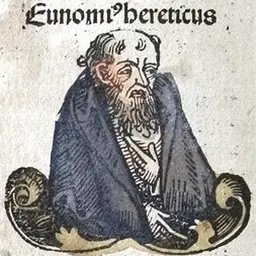
Very little information about his life is available. He was born in Borissus, Cappadocia to Eulampia and Carterius, and lived in Constantinople from the age of twenty. He is said to have come from an Arian family, and in Constantinople soon attached himself to Eunomius of Cyzicus, who received much praise from Philostorgius in his work.
He wrote a history of the Arian controversy titled Church History (Ἐκκλησιαστικὴ ἱστορία, Ekklēsiastikē Historia). Philostorgius' original appeared between 425 and 433, in other words, slightly earlier than the History of Socrates of Constantinople, and was formed in twelve volumes bound in two books. The original is now lost. However, the ninth-century historian Photius found a copy in his library in Constantinople, and wrote an epitome of it. Others also borrowed from Philostorgius, most notably the author of the Artemii Passio (Artemius being a legendary martyr under Julian the Apostate), and so, despite the eventual disappearance of the original text, it is possible to form some idea of what it contained by reviewing the epitome and other references. This reconstruction of what might have been in the text was first published, in German, by the Belgian philologist Joseph Bidez in 1913; a third, revised edition of his work undertaken by Friedhelm Winkelmann was published in 1981; this edition has recently been translated into English by Philip R. Amidon.
He also wrote a treatise against Porphyry, which is completely lost.
Value Philostorgius' account of the emperor Constantine I's death is not corroborated by any other extant source. He reports that Constantine was poisoned by his family members and subsequently avenged by his son Constantius II, who is portrayed sympathetically by Philostorgius. Other historians say that Constantius instigated of the murders of his male relatives following Constantine's death, but only in Philostorgius' version are the murders justified.
Philostorgius' tale must be false, since Constantius' "official version" denied any involvement in the murders, calling his relatives the innocent victims of an army mutiny. Varying suggestions have been given for the origins of this rumor. Burgess believed it was a later invention when Constantius' role in the murders could no longer be plausibly denied, while Crawford thought it was used to motivate the soldiers to murder Constantius' relatives.
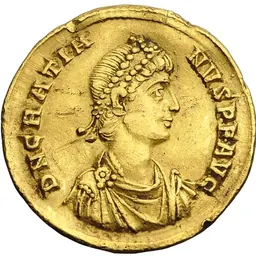
In other cases, however, what Philostorgius says is consistent with what other sources say. For instance, Ammianus Marcellinus' statement that Gratian supervised the education of his younger brother Valentinian II lines up with Philostorgius, who disliked Gratian but admits that he "discharged the duty of a father" towards Valentinian.
Editions Bruno Bleckmann, Markus Stein (ed.): Philostorgios Kirchengeschichte (= Kleine und fragmentarische Historiker der Spätantike E 7). 2 vols. Ferdinand Schöningh, Paderborn 2015. Philostorgius, Kirchengeschichte. Mit dem Leben des Lucian von Antiochien und den Fragmenten eines arianischen Historiographen, edited by Joseph Bidez and revised by Friedhelm Winkelmann, GCS (Berlin: Akademie-Verlag, 1981). Philostorgius Church History, editor and translator Philip R. Amidon, S.J. (Atlanta: Society of Biblical Literature, 2007). Photios, Epitome of the Ecclesiastical History of Philostorgius, tr Edward Walford, (London: Henry G. Bonn, 1855)
Don’t just read it —
keep it.
Full-length biographies made to live with: read them, listen on the way to work, watch them tonight.
- E-book
- Audio
- Video
Instant download · yours to keep · every purchase keeps this site free
Important facts
People in Philostorgius's life
Named in this biography and alive at the same time


Related people
Same field, nearest in time




Contemporaries
People whose lives overlapped Philostorgius's

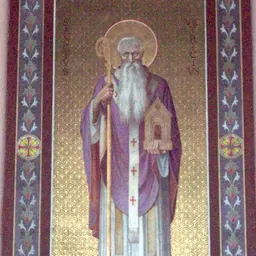
Frequently asked questions
Who was Philostorgius?
Byzantine Church historian (368 – c. 439)
When was Philostorgius born?
Philostorgius was born in 368 in Cappadocia.
When did Philostorgius die?
Philostorgius died in 433 in Antioch, Antakya.
What was Philostorgius's occupation?
Philostorgius was a church historian, writer, religious writer and historian.
What nationality was Philostorgius?
Philostorgius was Roman and Byzantine.
Sources & further reading
Cite this page
APA: Biography.guide. (2026). Philostorgius. https://biography.guide/philostorgius/
MLA: "Philostorgius." Biography.guide, https://biography.guide/philostorgius/.
Chicago: "Philostorgius." Biography.guide. https://biography.guide/philostorgius/.
Data last updated: 2026-09-20 · Spot an error? Report a correction.
Page generated 2026-09-27 05:02 UTC