
Phillip Parker King
British Royal Navy officer and early explorer of the Australian and Patagonian coasts
About Phillip Parker King
Lived 1791 – 1856 (aged 64). Phillip Parker King was an Australian and British naval officer, ornithologist, botanical collector, hydrographer, explorer and politician.
Phillip Parker King (13 December 1791 – 26 February 1856) was an early explorer of the Australian and Patagonian coasts.
Early life and education King was born on Norfolk Island, to Philip Gidley King and Anna Josepha King née Coombe, and named after his father's mentor, Admiral Arthur Phillip (1738–1814), first governor of New South Wales and founder of the British penal colony which later became the city of Sydney, which explains the difference in spelling of his and his father's first names. King was sent to England for education in 1796, and he joined the Royal Naval Academy, at Portsmouth, in county Hampshire, England in 1802. King entered the Royal Navy in 1807, where he was commissioned lieutenant in 1814.
Expeditions in Australia
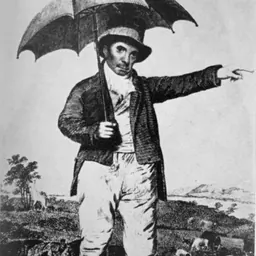
King was assigned to survey the parts of the Australian coast not already examined by Royal Navy officer, Matthew Flinders, (who had already made three earlier exploratory voyages between 1791 and 1810, including the first circumnavigation of Australia) and made four voyages between December 1817 and April 1822. Amongst the 19-man crew were Allan Cunningham, a botanist, John Septimus Roe, later the first Surveyor-General of Western Australia, and the Aboriginal man Bungaree. The first three trips were in the 76-tonne cutter , but the vessel was grounded in 1829. The Admiralty had instructed King to discover whether there was any river "likely to lead to an interior navigation into this great continent". The Colonial Office had given instructions to collect information about topography, fauna, timber, minerals, climate, and the Indigenous peoples and the prospects of developing trade with them.
King was concerned at this point of the crew's vulnerability to the armed Makassan proas, as the Makassans harvested trepang (sea cucumbers) and traded along the northern Australian coast at that time, so he ordered the cannons to be mounted along the beach. They managed to repair the ship without incident and sailed away in early October 1820, but not before the ship's carpenter had been instructed to inscribe "Mermaid 1820" on an ancient boab tree, which still stands today.
Fourth voyage King's fourth voyage was undertaken in the 154-tonne sloop HMS Bathurst. The ship headed north, through Torres Strait and to the north-west coast of the continent, including the Dampier Archipelago. Further survey of the west coast was made after a visit to Mauritius. In addition to written records, King also lent his hand to drawing and watercolour painting for illustrations, some of which were later used to illustrate his accounts. The result was presented at a meeting of the Royal Geographical Society in 1831. His eldest son, also named Philip Gidley King, accompanied his father and continued as a midshipman on HMS Beagle (1832–1836) on the continuing survey of Patagonia under Robert FitzRoy, in the company of noted scientist Charles Darwin (1809–1882). King owned a property at Dunheved in the western suburbs of Sydney where he entertained Charles Darwin on Darwin's last night in Sydney in January 1836.
Later life
King was appointed to the first New South Wales Legislative Council in 1829, however he was absent from the colony and did not take his seat, and was replaced by John Campbell. When King returned to the colony in 1832 he pressed for his reappointment to the council, however he was not re-appointed until February 1839. King was again appointed to the Legislative Council in 1850, and was elected as the member for the Counties of Gloucester and Macquarie in 1851.
In 1855 King was promoted to Rear admiral of the Blue on the retired list, becoming the first Australian-born flag officer in the (Royal Navy). King was a Fellow of the Royal Society.
Family King married Harriet Lethbridge in 1817 prior to sailing to New South Wales. Harriet died at Ashfield, Sydney, on 19 December 1874. John (1820–1895) (William) Essington (1821–1910) (Charles) Macarthur (1824–1903) Frederick (1825–1895), Arthur Septimus (1827–1899)
John Oxley named the waterway Kings River on 4 October 1818 after King. The name was changed from Kings Creek to King Creek at the request of residents and council on 19 January 2007.
Six species of reptiles are named in his honour: Amphisbaena kingii, Chlamydosaurus kingii, Egernia kingii, Elgaria kingii, Hydrophis kingii, and Liolaemus kingii. Chlamydosaurus kingii, the frill-neck lizard, was first collected by the botanist Cunningham at Careening Cove on the third journey in 1820 (see above).
Works
Extracts from a letter addressed by Capt. Philip Parker King, R.N., F.R.S. and L.S., to N.A. Vigors, Esq., on the animals of the Straits of Magellan. Zoological Journal London 3:422-32. 1828. Notes on birds collected by Capt. King in Chile.Proceedings of the Committee of Science and Correspondence of the Zoological Society of London, 1831: 29–30.1831
King, P.P. and Broderip, W.J. Description of Cirrhipedia, Conchifera and Mollusca, in a collection formed by the officers of H.M.S. Adventure and Beagle employed between the years 1826 and 1830 in surveying the southern coasts of South America, including the Straits of Magalhaens and the coast of Tierra del Fuego. The Zoological Journal, 5: 332–349.1832 .
Don’t just read it —
keep it.
Full-length biographies made to live with: read them, listen on the way to work, watch them tonight.
- E-book
- Audio
- Video
Instant download · yours to keep · every purchase keeps this site free
Important facts
People in Phillip Parker King's life
Named in this biography and alive at the same time


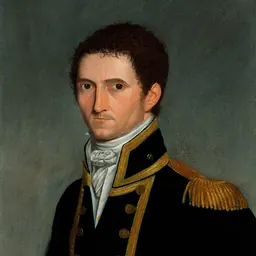
Related people
Same field, nearest in time

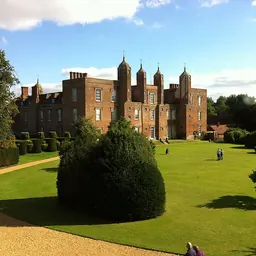



Contemporaries
People whose lives overlapped Phillip Parker King's
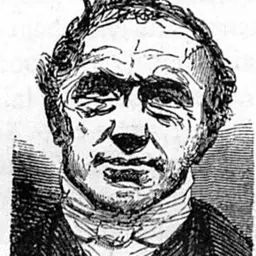
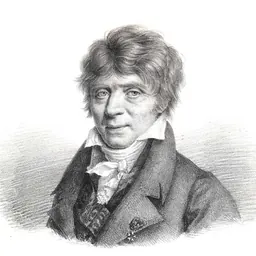


Frequently asked questions
Who was Phillip Parker King?
British Royal Navy officer and early explorer of the Australian and Patagonian coasts (1791–1856)
When was Phillip Parker King born?
Phillip Parker King was born on 13 December 1791 in Norfolk Island.
When did Phillip Parker King die?
Phillip Parker King died on 26 February 1856 in North Sydney.
What was Phillip Parker King's occupation?
Phillip Parker King was a naval officer, ornithologist, botanical collector, hydrographer, explorer and politician.
What nationality was Phillip Parker King?
Phillip Parker King was Australian and British.
Sources & further reading
· Wikipedia: Phillip Parker King
· DBpedia: Phillip Parker King
Cite this page
APA: Biography.guide. (2026). Phillip Parker King. https://biography.guide/phillip-parker-king/
MLA: "Phillip Parker King." Biography.guide, https://biography.guide/phillip-parker-king/.
Chicago: "Phillip Parker King." Biography.guide. https://biography.guide/phillip-parker-king/.
Data last updated: 2026-09-20 · Spot an error? Report a correction.
Page generated 2026-09-27 05:22 UTC