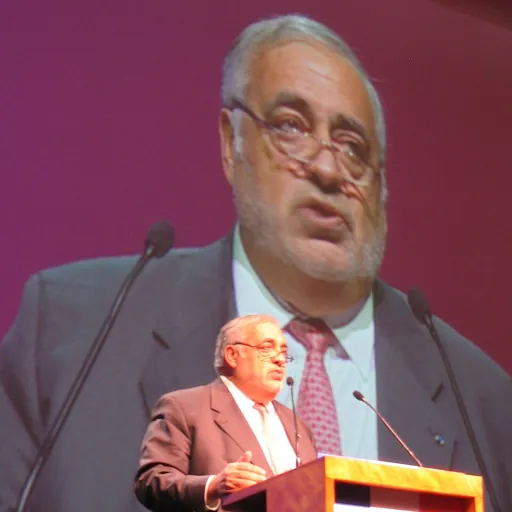
About Philippe Séguin
Lived 1943 – 2010 (aged 66). Philippe Séguin was a French politician.
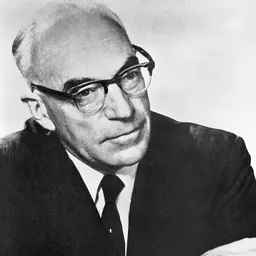
Philippe Séguin (; 21 April 1943 – 7 January 2010) was a French political figure who was President of the National Assembly from 1993 to 1997 and President of the Cour des Comptes of France from 2004 to 2010.
He entered the Court of Financial Auditors in 1970, but he began a political career in the Neo-Gaullist party RPR. In 1978, he was elected to the National Assembly as a deputy for the Vosges département. He was Mayor of Épinal between 1983 and 1997.
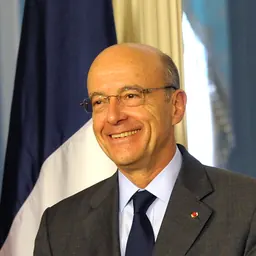
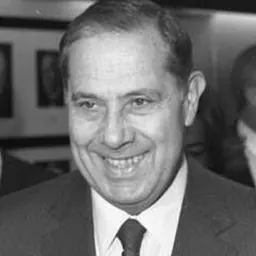
Representing the social tradition of Gaullism, he was Minister of Social Affairs in Jacques Chirac's cabinet, from 1986 to 1988. After Chirac's defeat at the 1988 presidential election, he allied with Charles Pasqua and criticized the abandonment of Gaullist doctrine by the RPR executive. He accused Alain Juppé and Édouard Balladur of wanting an alignment on liberal and pro-European policies.
In 1992, he played a leading role in the No campaign against the Maastricht Treaty. On the eve of the vote he opposed President François Mitterrand in a televised debate.
As president of the National Assembly from 1993 to 1997, he supported the winning candidacy of Jacques Chirac at the 1995 presidential election. He inspired the theme of Chirac's campaign which was named "the social fracture".
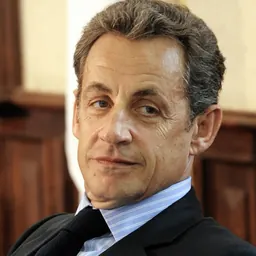
Their relations deteriorated when he took the lead of the RPR, after the right-wing defeat at the 1997 legislative election. He failed to change the name of the party to "The Rally". He criticized the ascendancy of President Chirac within the party, refusing to be the leader of a "Chirac's fan-club". He resigned in 1999 just before the European elections, leaving his deputy Nicolas Sarkozy in charge.
As the RPR's official candidate, he lost the 2001 mayoral election in Paris, mostly due to a heavily criticized campaign marred by gaffes and controversy. Refusing the merger of the Neo-Gaullist party with the right-wing classical forces in the Union for a Popular Movement, he quit politics in 2002.
He died at the age of 66 on 7 January 2010 from a heart attack.
Political career
President of the Court of Audit of France : 2004–2010 (death).
Governmental function
Minister of Social Affairs and Employment : 1986–1988.
Electoral mandates
National Assembly
President of the National Assembly of France : 1993–1997. Vice-president of the National Assembly of France : 1981–1986. Member of the National Assembly of France for Vosges (1st constituency) : 1978–1986 / 1988–2002. Elected in 1978, reelected in 1981, 1986, 1988, 1993, 1997.
Regional Council
Vice-president of the Regional Council of Lorraine : 1979–1983. Regional councillor of LorraineLorraine : 1979–1986.
Municipal Council
Mayor of Épinal : 1983–1997 (resigned). Municipal councillor of Épinal : 1983–1997 (resigned). Councillor of Paris : 2001–2002 (resigned).
Political functions
President of the Rally for the Republic : 1997–1999 (resigned).
Don’t just read it —
keep it.
Full-length biographies made to live with: read them, listen on the way to work, watch them tonight.
- E-book
- Audio
- Video
Instant download · yours to keep · every purchase keeps this site free
Important facts
People in Philippe Séguin's life
Named in this biography and alive at the same time


Related people
Same field, nearest in time



Contemporaries
People whose lives overlapped Philippe Séguin's

Frequently asked questions
Who was Philippe Séguin?
French politician (1943-2010)
When was Philippe Séguin born?
Philippe Séguin was born on 21 April 1943 in Tunis.
When did Philippe Séguin die?
Philippe Séguin died on 7 January 2010 in 16th arrondissement of Paris.
What was Philippe Séguin's occupation?
Philippe Séguin was a politician.
What nationality was Philippe Séguin?
Philippe Séguin was French.
Sources & further reading
Cite this page
APA: Biography.guide. (2026). Philippe Séguin. https://biography.guide/philippe-seguin/
MLA: "Philippe Séguin." Biography.guide, https://biography.guide/philippe-seguin/.
Chicago: "Philippe Séguin." Biography.guide. https://biography.guide/philippe-seguin/.
Data last updated: 2026-09-23 · Spot an error? Report a correction.
Portrait: Wikimedia Commons · author & licence
Page generated 2026-09-27 05:07 UTC