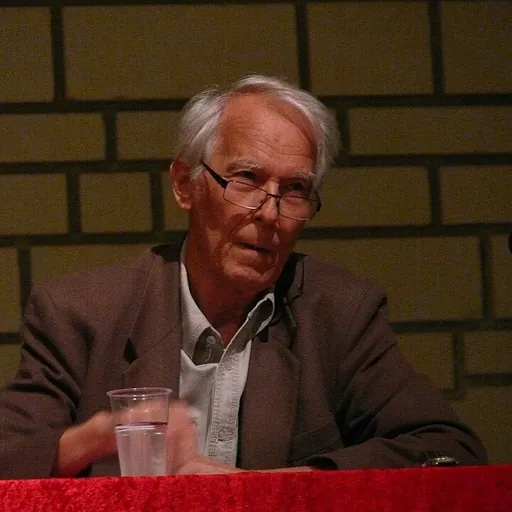
About Philippe d'Iribarne
Born 1937. Philippe d'Iribarne is a French economist, sociologist, businessperson, anthropologist and entrepreneur.
Philippe d’Iribarne (born 7 March 1937, Casablanca, French Morocco) is a French author and director of research at CNRS. He works within a research centre called LISE (Laboratoire interdisciplinaire en sociologie économique or "interdisciplinary laboratorium on economic sociology").
Work Philippe d'Iribarne graduated from École polytechnique of France and from Institut d'études politiques de Paris.
He is one of the most notable critics of the limitations of the works of Geert Hofstede, expressing concern that "a theory of culture that considers culture to be ‘shared meaning’ does not allow for representation of the forms of unity and continuity." Part of d'Iribarne's objections have been with the weaknesses of Hofstede's terminology in general and category names specifically (e.g., power distance as a culture as whole versus a culture's acceptance of hierarchy only within organizational settings). More pointedly, d'Iribarne questions the generalized conclusions that Hofstede draws from the data, imposing Hofstede's own value system on what the data show. For instance, d'Iribarne questioned Hofstede's conclusions from the uncertainty avoidance statistics, arguing that Hofstede superimposes his own view that data. For d'Iribarne, Hofstede simply presumes that showing high stress at work correlates with weak uncertainty avoidance, while d'Iribarne asserts that the presence of high stress could just as readily indicate high stress results from high uncertainty avoidance, since no external control exists in low uncertainty avoidance cultures. Finally, d'Iribarne questions Hofstede's implicit assumption of uniformity in complex organizations, let alone entire national cultures. Such assumptions of uniformity are useful, d'Iribarne writes only "if one thinks of a culture specific to a close-knit community." Instead, though, d'Iribarne notes that in most situations, "society is split into more or less antagonistic groups"
Iribarne's interest is on the influence of national cultures on the way organisations function. He and his team within the LISE have so far surveyed organisations in 40-odd countries in Europe, Africa, America and Asia. Jorion has also published in the Revue de Mauss, a French anti-utilitarian journal.
Books
In French 1989 - La logique de l’honneur, Seuil 1998 - Cultures et mondialisation (with Alain Henry, Jean-Pierre Segal, Sylvie Chevrier, Tatjana Globokar) 2003 - Le Tiers-monde qui réussit : Nouveaux modèles, Odile Jacob 2006 - L'étrangeté française, Seuil 2008 - Penser la diversité du monde, Seuil
In English Successful Companies in the Developing World, AFD, 2007
Don’t just read it —
keep it.
Full-length biographies made to live with: read them, listen on the way to work, watch them tonight.
- E-book
- Audio
- Video
Instant download · yours to keep · every purchase keeps this site free
Important facts
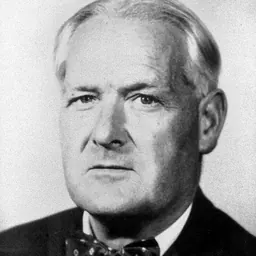
People in Philippe d'Iribarne's life
Named in this biography and alive at the same time



Related people
Same field, nearest in time




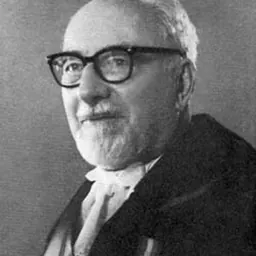
Contemporaries
People whose lives overlapped Philippe d'Iribarne's



Frequently asked questions
Who is Philippe d'Iribarne?
French sociologist
When was Philippe d'Iribarne born?
Philippe d'Iribarne was born on 7 March 1937 in Casablanca.
What is Philippe d'Iribarne's occupation?
Philippe d'Iribarne is an economist, sociologist, businessperson, anthropologist and entrepreneur.
What nationality is Philippe d'Iribarne?
Philippe d'Iribarne is French.
Sources & further reading
· Wikipedia: Philippe d'Iribarne
· DBpedia: Philippe d'Iribarne
Cite this page
APA: Biography.guide. (2026). Philippe d'Iribarne. https://biography.guide/philippe-d-iribarne/
MLA: "Philippe d'Iribarne." Biography.guide, https://biography.guide/philippe-d-iribarne/.
Chicago: "Philippe d'Iribarne." Biography.guide. https://biography.guide/philippe-d-iribarne/.
Data last updated: 2026-09-20 · Spot an error? Report a correction.
Page generated 2026-09-27 05:10 UTC