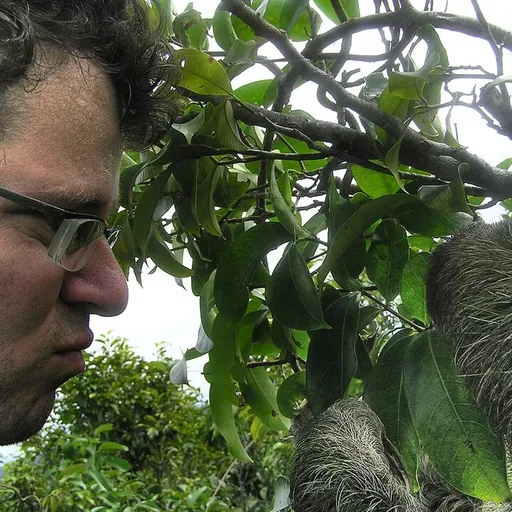
About Philippe Cuénoud
Born 1968. Philippe Cuénoud is a Swiss entomologist and botanist.
Philippe Cuénoud (born July 8, 1968) is an entomologist and botanist of Swiss and Ukrainian descent, living in Onex (near Geneva), who worked on the Psocoptera of Switzerland and Papua New Guinea, as well as on plant phylogeny. He found in 1991 the only then known population of Lachesilla rossica near Geneva (the species has been described from southern Russia and may still exist there - it was found in Albania in 2015 ) and contributed further to the knowledge of the flora and fauna of the canton of Geneva with the first mention of a slender-billed gull (a Mediterranean bird species usually absent form Switzerland) and with the discovery of the first reported population of small-leaved helleborines. He also participated in a multidisciplinary study of the free-living fauna and flora of Basel's Zoo. In a 1999 trip to Brasil with Alain Chautems, he was among the first few people to see the newly rediscovered flower Sinningia araneosa, that had gone missing for more than a century. Small-leaved helleborine from the firstly discovered population of this species in the canton of Geneva, 2004. In 2022, he joined Onex's City Council to help better protect a population of autumn lady's-tresses.
Entomology
Botany Betanin, a pigment found in some plants of the order Caryophyllales. Cuénoud studied the phylogeny of the genus Ilex (hollies and related species, Aquifoliaceae) with Jean-François Manen, Pierre-André Loizeau and Rodolphe Spichiger (in the same laboratory as Philippe Clerc and Vincent Savolainen), a study that led to the synonymy of the North American genus Nemopanthus with Ilex. He also studied the plant order Caryophyllales (made up of about 30 plant families, many of which are adapted to dry habitats - e.g. cacti - or carnivory: sundews and nepenthes, among others) with Vincent Savolainen and Mark Chase in Kew Gardens, sequencing the matK gene for many of its genera, and analysing the pigments of some of them (some Caryophyllales are known to produce betalains, an almost unique occurrence among Angiosperms). These results confirmed that Molluginaceae and Phytolaccaceae in their traditional sense are paraphyletic, and contributed to the recognition of the families Barbeuiaceae (containing a single liana species in its own genus, living on the island of Madagascar), Gisekiaceae (made up of the monotypic, African genus Gisekia), Limeaceae (comprising two genera of herbaceous plants from Africa, India and Australia) and Lophiocarpaceae (containing Lophiocarpus and Corbichonia, two genera of herbs from Africa and India).
Don’t just read it —
keep it.
Full-length biographies made to live with: read them, listen on the way to work, watch them tonight.
- E-book
- Audio
- Video
Instant download · yours to keep · every purchase keeps this site free
Important facts
People in Philippe Cuénoud's life
Named in this biography and alive at the same time

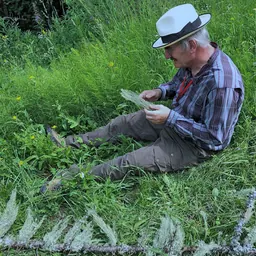
Related people
Same field, nearest in time



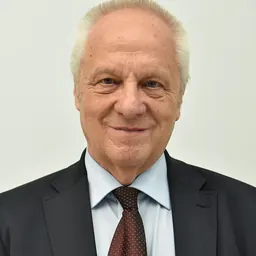
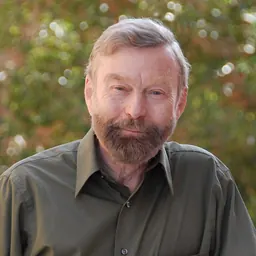

Contemporaries
People whose lives overlapped Philippe Cuénoud's

Frequently asked questions
Who is Philippe Cuénoud?
Swiss entomologist
When was Philippe Cuénoud born?
Philippe Cuénoud was born on 8 July 1968 in Geneva.
What is Philippe Cuénoud's occupation?
Philippe Cuénoud is an entomologist and botanist.
What nationality is Philippe Cuénoud?
Philippe Cuénoud is Swiss.
Sources & further reading
Cite this page
APA: Biography.guide. (2026). Philippe Cuénoud. https://biography.guide/philippe-cuenoud/
MLA: "Philippe Cuénoud." Biography.guide, https://biography.guide/philippe-cuenoud/.
Chicago: "Philippe Cuénoud." Biography.guide. https://biography.guide/philippe-cuenoud/.
Data last updated: 2026-09-22 · Spot an error? Report a correction.
Portrait: Wikimedia Commons · author & licence
Page generated 2026-09-27 05:04 UTC