
About Philip Massinger
Lived 1583 – 1640 (aged 56–57). Philip Massinger was a British playwright and writer.
Philip Massinger (1583 – 17 March 1640) was an English dramatist. His plays, including A New Way to Pay Old Debts, The City Madam, and The Roman Actor, are noted for their satire and realism, and their political and social themes.
Early life The son of Arthur Massinger or Messanger, he was baptised at St. Thomas's Salisbury on 24 November 1583. He apparently belonged to an old Salisbury family, for the name occurs in the city records as early as 1415. He is described in his matriculation entry at St. Alban Hall, Oxford (1602), as the son of a gentleman. His father, who had also been educated at St. Alban Hall, was a member of parliament, and was attached to the household of Henry Herbert, 2nd Earl of Pembroke. Herbert recommended Arthur in 1587 for the office of examiner in the Court of the Marches.
William Herbert, 3rd Earl of Pembroke, who would come to oversee the London Stage and the royal company as King James's Lord Chamberlain, succeeded to the title in 1601. It has been suggested that he supported Massinger at Oxford, but the omission of any reference to him in any of Massinger's prefaces points to the contrary. Massinger left Oxford without a degree in 1606. His father had died in 1603, and that may have left him without financial assistance. The lack of a degree and the want of patronage from Lord Pembroke may both be explained on the supposition that he had become Roman Catholic. On leaving the university he went to London to make his living as a dramatist, but his name cannot be definitely affixed to any play until fifteen years later, when The Virgin Martyr (registered with the Stationers Company, 7 December 1621) appeared as the work of Massinger and Thomas Dekker. The Emperor of the East, tragicomedy (licensed 11 March 1631; printed 1632) Believe as You List, tragedy (rejected by the censor in January, but licensed 6 May 1631; MS) The City Madam, comedy (licensed 25 May 1632; printed 1658) The Guardian, comedy (licensed 31 October 1633; printed 1655) The Bashful Lover, tragicomedy (licensed 9 May 1636; printed 1655)
Collaborations With John Fletcher: Sir John van Olden Barnavelt, tragedy (August 1619; MS) The Little French Lawyer, comedy (c. 1619–23; printed 1647) A Very Woman, tragicomedy (c. 1619–22; licensed 6 June 1634; printed 1655) The Custom of the Country, comedy (c. 1619–23; printed 1647) The Double Marriage, tragedy (c. 1619–23; Printed 1647) The False One, history (c. 1619–23; printed 1647) The Prophetess, tragicomedy (licensed 14 May 1622; printed 1647) The Sea Voyage, comedy (licensed 22 June 1622; printed 1647) The Spanish Curate, comedy (licensed 24 October 1622; printed 1647) The Lovers' Progress or The Wandering Lovers, tragicomedy (licensed 6 December 1623; revised 1634; printed 1647) The Elder Brother, comedy (c. 1625; printed 1637).
With John Fletcher and Francis Beaumont:
Thierry and Theodoret, tragedy (c. 1607?; printed 1621) The Coxcomb, comedy (1608–10; printed 1647) Beggars' Bush, comedy (c. 1612–15?; revised 1622?; printed 1647) Love's Cure, comedy (c. 1612–15?; revised 1625?; printed 1647).
With John Fletcher and Nathan Field: The Honest Man's Fortune, tragicomedy (1613; printed 1647) The Queen of Corinth, tragicomedy (c. 1616–18; printed 1647) The Knight of Malta, tragicomedy (c. 1619; printed 1647).
With Nathan Field: The Fatal Dowry, tragedy (c. 1619, printed 1632); adapted by Nicholas Rowe: The Fair Penitent
With John Fletcher, John Ford, and William Rowley (?), or John Webster (?): The Fair Maid of the Inn, comedy (licensed 22 January 1626; printed 1647).
With John Fletcher, Ben Jonson, and George Chapman (?): Rollo Duke of Normandy, or The Bloody Brother, tragedy (c. 1616–24; printed 1639).
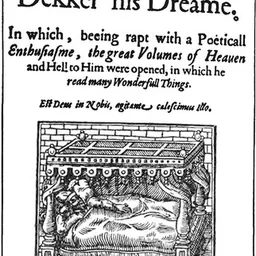
With Thomas Dekker: The Virgin Martyr, tragedy (licensed 6 October 1620; printed 1622).
With Thomas Middleton and William Rowley: The Old Law, comedy (c. 1615–18; printed 1656).
Some of these "collaborations" are in fact more complex: revisions by Massinger of older plays by Fletcher and others, etc. (It is not necessary to suppose that Massinger, Fletcher, Ford, and Rowley-or-Webster sat down in a room together to write a play.)
More than a dozen of Massinger's plays are said to be lost, though the titles of some of these may be duplicates of those of existing plays. Eleven of these lost plays were manuscripts used by John Warburton's cook for lighting fires and making pies. The tragedy The Jeweller of Amsterdam (c. 1616–19) may be a lost collaboration, with Fletcher and Field.
The list given above represents a consensus of scholarship; individual critics have assigned various other plays, or portions of plays, to Massinger—like The Faithful Friends, or the first two acts of The Second Maiden's Tragedy (1611).
Massinger's independent works were collected by Thomas Coxeter (4 vols., 1759, revised edition with introduction by Thomas Davies, 1779), by J. Monck Mason (4 vols., 1779), by William Gifford (4 vols., 1805, 1813), by Hartley Coleridge (1840), by Lt. Col. Cunningham (1867), and selections by Arthur Symons in the Mermaid Series (1887–1889).
Subsequent work on Massinger includes Philip Edwards and Colin Gibson, eds., The Plays and Poems of Philip Massinger (5 vols., Oxford, 1976), Martin Garrett, ed., Massinger: the Critical Heritage (London, 1991), chapters in Annabel Patterson, Censorship and Interpretation: the Conditions of Writing and Reading in Early Modern England (Madison, 1984) and Martin Butler, Theatre and Crisis 1632–1642 (Cambridge, 1984), and Martin Garrett, "Philip Massinger" in the revised Dictionary of National Biography (Oxford, 2005).
Don’t just read it —
keep it.
Full-length biographies made to live with: read them, listen on the way to work, watch them tonight.
- E-book
- Audio
- Video
Instant download · yours to keep · every purchase keeps this site free
Important facts
People in Philip Massinger's life
Named in this biography and alive at the same time





Related people
Same field, nearest in time


Contemporaries
People whose lives overlapped Philip Massinger's



Frequently asked questions
Who was Philip Massinger?
English playwright (1583–1640)
When was Philip Massinger born?
Philip Massinger was born in 1583 in Salisbury.
When did Philip Massinger die?
Philip Massinger died on 17 March 1640 in London.
What was Philip Massinger's occupation?
Philip Massinger was a playwright and writer.
What nationality was Philip Massinger?
Philip Massinger was British.
Sources & further reading
Cite this page
APA: Biography.guide. (2026). Philip Massinger. https://biography.guide/philip-massinger/
MLA: "Philip Massinger." Biography.guide, https://biography.guide/philip-massinger/.
Chicago: "Philip Massinger." Biography.guide. https://biography.guide/philip-massinger/.
Data last updated: 2026-09-20 · Spot an error? Report a correction.
Page generated 2026-09-27 05:21 UTC