
About Philip J. Siemens
Lived 1943 – 2023 (aged 79). Philip J. Siemens was an American physicist.
Philip John Siemens (November 13, 1943 – June 29, 2023) was a theoretical physicist who trained at MIT and Cornell, and who taught and conducted research at the Niels Bohr Institute, Lawrence Berkeley National Laboratory, Texas A&M University, Oak Ridge National Laboratory, and Oregon State University.
He was a fellow of both the American Physical Society and the American Association for the Advancement of Science. Early life and education Philip John Siemens, the eldest of Dorothea and Jacob J. Siemens' five children, was born November 13, 1943, in Elgin, Illinois. He attended Wheaton Academy and earned a National Merit scholarship to study at the Massachusetts Institute of Technology, where he majored in physics.
As a Cornell University graduate student, Siemens specialized in theoretical nuclear physics. He co-authored two publications prior to his dissertation: in 1967, "Shape of Heavy Nuclei", and in 1969, "Nuclear-matter reaction matrix".
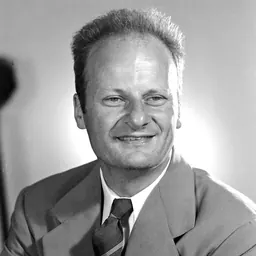
His 1970 dissertation, New Statistical Theory of the Nuclear Surface, was advised by Nobel laureate Hans Bethe.
Career In the decade following completion of his doctorate, Siemens worked at the University of Copenhagen's Niels Bohr Institute. In 1975, he co-authored, "Linear response theory for dissipation in heavy-ion collisions" with Helmut Hofmann.
While on leave from the Niels Bohr Institute in 1979, Siemens also co-authored three papers with Joseph I. Kapusta at Lawrence Berkeley National Laboratory: "Evidence for a Soft Nuclear-Matter Equation of State", "Evidence for a Blast Wave from Compressed Nuclear Matter", and "Evidence for a Soft Nuclear-Matter Equation of State". "Nuclear fragmentation", "Testing QCD Plasma Formation by Pion Correlations in Relativistic Nuclear Collisions", and "Testing of QCD Plasma Formation by Dilepton Spectra in Relativistic Nuclear Collisions".
Siemens was welcomed as a "distinguished scientist" at Oak Ridge National Laboratory in 1986. The Knoxville News Sentinel reported Siemens was "recognized as one of the theoretical leaders in the physics of nuclei heated to very high temperatures stellar explosions and in high-energy collisions." The Tomahawk in Mountain City called Siemens "a recognized leader in the theoretical interpretation of nuclear structures and collisions of energetic heavy nuclei produced by large particle accelerators".
While at the University of Tennessee in the late 1980s, Siemens published two studies: "Bubbles and drops in superheated and supercooled nuclear matter, and "Color correlations in QCD plasma". He also co-authored the 1989 publication of "Relativistic transport theory of fluctuating fields for hadrons".
Near the end of his career, wanting to be closer to his family in Oregon, he "convinced Oregon State University in Corvallis to hire him and increase its commitment to theoretical physics". followed by two papers in 1991: "Vaporization of color-singlet pairs from a quark-gluon plasma", and "Model solutions of regularized relativistic transport equations". These papers were followed by three more: "Kaon pictures of QCD plasma droplets" in 1992; "Crossing-symmetric two-particle reduction of four-point vertex" in 1993; and "Self-consistent couplings of pions and Δ-hole states in nuclear matter" in 1994.
Philip Siemens' retirement was acknowledged in the department newsletter in January 2007. He died of leukemia in Eugene in January 2023.
1991 Fellow of the American Association for the Advancement of Science, for achievements in "theoretical studies of nuclear matter, the nuclear equation of state and the physics of nuclear collision".
Don’t just read it —
keep it.
Full-length biographies made to live with: read them, listen on the way to work, watch them tonight.
- E-book
- Audio
- Video
Instant download · yours to keep · every purchase keeps this site free
Important facts
People in Philip J. Siemens's life
Named in this biography and alive at the same time



Related people
Same field, nearest in time


Contemporaries
People whose lives overlapped Philip J. Siemens's


Frequently asked questions
Who was Philip J. Siemens?
American physicist
When was Philip J. Siemens born?
Philip J. Siemens was born on 13 November 1943 in Elgin.
When did Philip J. Siemens die?
Philip J. Siemens died on 29 June 2023 in Eugene.
What was Philip J. Siemens's occupation?
Philip J. Siemens was a physicist.
What nationality was Philip J. Siemens?
Philip J. Siemens was American.
Sources & further reading
· Wikipedia: Philip J. Siemens
Cite this page
APA: Biography.guide. (2026). Philip J. Siemens. https://biography.guide/philip-j-siemens/
MLA: "Philip J. Siemens." Biography.guide, https://biography.guide/philip-j-siemens/.
Chicago: "Philip J. Siemens." Biography.guide. https://biography.guide/philip-j-siemens/.
Data last updated: 2026-09-20 · Spot an error? Report a correction.
Page generated 2026-09-27 05:31 UTC