
About Philip Dodd
Born 1949. Philip Dodd is a writer.
Philip Dodd (born 1949) is an English broadcaster, entrepreneur, curator, writer and editor. He is chairman of the creative industries company Made in China.
Early career Until 1986, Philip Dodd was a full-time university academic. He was a lecturer in English Language and Literature, University of Leicester, 1976–1989, where he established a reputation in nonfiction studies and rhetoric, having founded (with the late J.C. Hilson) in 1977 the journal Prose Studies, the first journal exclusively devoted to the study of the aesthetics of nonfiction. It is still published, in the United States. He edited a number of related books on autobiography, travel writing and on the art critic Walter Pater.
During the early 1980s, he began work on notions of national identity, precipitated by the onset of the Falklands War and in 1986 with Robert Colls co-edited the volume of essays Englishness: Politics and Culture, 1880–1920, the first modern study of the formation of modern English identity. It was republished by Bloomsbury Press in 2014. The book brought him to the attention of both Melvyn Bragg at London Weekend Television and Alan Yentob, then Head of the Music and Arts department at BBC television. Dodd joined the Music and Arts Department as Yentob's consultant, working on series on culture, writing scripts, helping to found The Late Show, and working on the major six-part art series Relative Values: Art and Value. He also co-wrote (with Louisa Buck) the book of the series, which is still a set text on foundation art courses. In 1989, he left academic life and joined the New Statesman and Society, as deputy editor, while remaining consultant to the BBC, working on series on subjects ranging from political reform to contemporary art. From 1991 to 1998, he worked as consultant with Jane Root, co-owner of Wall to Wall TV, on a wide variety of television series.
Sight & Sound In 1990, he left the New Statesman and Society and accepted a post as editor of the quarterly Sight & Sound, which was merged with the Monthly Film Bulletin both published by the British Film Institute. The new magazine was relaunched in 1991 as a monthly newsstand magazine, Dodd was the Executive Producer of Damien Hirst's film in the exhibition, Hanging Around.
Directorship of ICA In 1997, he accepted the post of Director of the Institute of Contemporary Arts in London, at a turbulent point at its history. The ICA had a deficit of nearly £1 million Dodd introduced many innovations, including a writer-in-residence programme, which included Zadie Smith, a scientist-in-residence programme (the first time in Britain that a major arts organisation had appointed a scientist as creator), the Beck's Futures prize and a PhD programme. In 1998, he took the ICA to China, to Shanghai and Beijing – the first British contemporary arts institution to stage events there – and in 1999, hosted "Beijing London: Revolutionary Capitals", a series of events that showcased new Chinese creativity for the first time in Britain. Artists included Wang Jianwei and Zhang Dali, Xing Xing and Zhang Yuan. With events such as the Chinese season as well as a one devoted to contemporary India, Dodd moved the ICA from a white world into a global one. Artists who exhibited there under Dodd's directorship ranged from Yoko Ono to Philippe Parreno, from Urs Fischer to Steve McQueen who had his first one-person show at the ICA. Dodd was also the Executive Producer of the film distributed by the ICA, entitled Edward Said: the last interview. Dodd moved the ICA beyond the building and persuaded the Pet Shop Boys and the actor Simon McBurney to take over Trafalgar Square. The Boys wrote a new score for Battleship Potemkin which was played live to a screening of the film and McBurney wrote and performed a prologue from the top of St Martin's in the Field. This had an audience of 35000 people. Annual attendance at the ICA increased from 250,000 in 1997 to 750,000 in 2004 and the balance was back in the black.
Made in China In 2004, he left the ICA to found the agency Made in China (www.madeinchinauk.com), develop major projects between China and the UK, some cultural, some educational and some business-oriented. He set up the agency in a belief, stated in an interview in the Financial Times, that the future "belongs to a constellation of India and China". Made in China was the senior consultant (2007/8) on Shanghai eArts, the first annual digital arts festival in China., and was one of the founders of the UK-wide festival "China Now" in 2008. In the early days of Made in China, Dodd was also strategist to Art HK, the largest artfair in Asia, and was advisor to the Chaoyang District government of Beijing
Selected bibliography
Englishness: Politics and Culture, 1880–1920 (1986) Modern Selves: Essays on Modern British and American Autobiography (1986, editor)
Don’t just read it —
keep it.
Full-length biographies made to live with: read them, listen on the way to work, watch them tonight.
- E-book
- Audio
- Video
Instant download · yours to keep · every purchase keeps this site free
Important facts
People in Philip Dodd's life
Named in this biography and alive at the same time
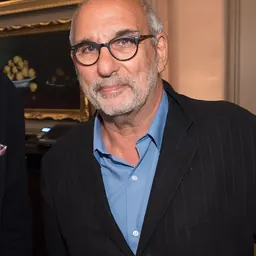
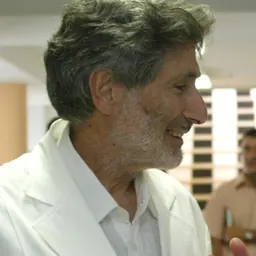

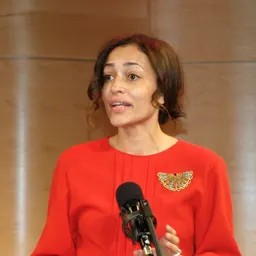


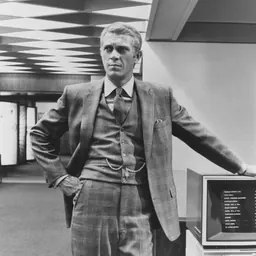
Related people
Same field, nearest in time


Contemporaries
People whose lives overlapped Philip Dodd's


Frequently asked questions
Who is Philip Dodd?
British broadcaster
When was Philip Dodd born?
Philip Dodd was born in 1949.
What is Philip Dodd's occupation?
Philip Dodd is a writer.
Sources & further reading
· DBpedia: Philip Dodd (broadcaster)
Cite this page
APA: Biography.guide. (2026). Philip Dodd. https://biography.guide/philip-dodd/
MLA: "Philip Dodd." Biography.guide, https://biography.guide/philip-dodd/.
Chicago: "Philip Dodd." Biography.guide. https://biography.guide/philip-dodd/.
Data last updated: 2026-09-20 · Spot an error? Report a correction.
Page generated 2026-09-27 05:01 UTC