
About Phil Karlson
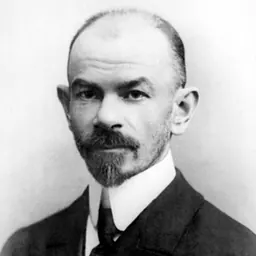
Lived 1908 – 1985 (aged 77). Phil Karlson was an American film director, screenwriter and director.
Philip N. Karlstein (July 2, 1908 – December 12, 1982), known professionally as Phil Karlson, was an American film director, noted for his gritty crime films and films noir. His notable works included Kansas City Confidential, Scandal Sheet (also 1952), 99 River Street (1953), Hell's Island (1955), The Phenix City Story (also 1955), Tight Spot (also 1955), and 5 Against the House (also 1955).
Karlson's other films including Gunman's Walk (1958), Hell to Eternity (1960), The Young Doctors (1961), the Elvis Presley vehicle Kid Galahad (1962), the Dean Martin spy comedy The Silencers (1966), the horror film Ben (1972), and the original Walking Tall (1973).
Biography Early life Karlson was the son of Irish actress Lillian O'Brien. His father was Jewish.
He attended Marshall High School and studied painting at Chicago's Art Institute. He tried to make a living as a song and dance man but was unsuccessful. Then he studied law, at his father's request, at Loyola Marymount University in California. He took a part-time job at Universal Pictures "washing toilets and dishes and whatever the hell they gave me" according to Karlson. He also sold some gags to Buster Keaton. Eventually he decided to pursue a career in film, quitting college a year before graduation.
Assistant Director at Universal Karlson got a job at Universal Pictures, doing a variety of jobs.
He worked as assistant director on Destry Rides Again (1932) and My Pal, the King with Tom Mix; The Countess of Monte Cristo (1934) and Cheating Cheaters (1934) with Fay Wray; I Like It That Way (1934); Romance in the Rain (1934); and Strange Wives (1934), directed by Richard Thorpe.
He worked on The Mystery of Edwin Drood (1935) with Claude Rains; Princess O'Hara (1935); Alias Mary Dow (1935), for Kurt Neumann; Werewolf of London (1935); Sing Me a Love Song (1935); She Gets Her Man (1935); The Affair of Susan (1935); Love Before Breakfast (1936), with director Walter Lang; The Girl on the Front Page (1936); and Top of the Town (1937).
Karlson said that Sam Goldwyn put him under contract intending to use him as a director, but Karlson wound up spending nine months idle. He asked for a release of his contract and got it.
He went back to Universal where he worked as an assistant on The Black Doll (1938); The Case of the Missing Blonde (1938); The Last Express (1938); His Exciting Night (1938), The Last Warning (1938), Newsboys' Home (1938), and Society Smugglers (1939), directed by Joe May.
His credits became more distinguished: Rio (1939), with Basil Rathbone, directed by John Brahm; The Invisible Man Returns (1940) and The House of the Seven Gables for May; I Can't Give You Anything But Love, Baby (1940), a musical; You're Not So Tough (1940), for May; Margie (1940), Seven Sinners (1940), with John Wayne and Marlene Dietrich for director Tay Garnett; Where Did You Get That Girl? (1941), for Arthur Lubin; and The Flame of New Orleans (1941), with Dietrich for René Clair.
Karlson did In the Navy (1941) with Abbott and Costello for Lubin, and he became friendly with Lou Costello, often pitching him gags. He followed this with Rocky (1948) with Roddy McDowall.
Columbia Karlson went over to Columbia Pictures where he directed two Westerns, Above All Laws (1947) and Fury (1948). He then made Ladies of the Chorus (1948), with Marilyn Monroe in her first substantial role.
British production company Eagle-Lion Films hired Karlson to direct The Big Cat (1949), which he later described as his answer to The Grapes of Wrath (1940).
These films were distributed by Columbia, who used Karlson for Mask of the Avenger (1951), a swashbuckler with John Derek. For Small he did Scandal Sheet (1952), a newspaper melodrama from a novel by Sam Fuller, and The Brigand (1952), another swashbuckler.
Karlson started directing Assignment: Paris (1952) for Columbia in Paris but was fired by studio head Harry Cohn during filming and replaced by Robert Parrish.
For Allied Artists he did a war biopic Hell to Eternity (1960), followed by Key Witness (1960). Both starred Jeffrey Hunter.
Karlson directed The Secret Ways (1961) from a novel by Alistair MacLean, although he clashed with star-producer Richard Widmark. He made a melodrama, The Young Doctors (1961); an Elvis Presley film, Kid Galahad (1962); and Rampage (1963), an adventure story with Robert Mitchum. He directed the pilot for a TV series about Alexander the Great with William Shatner that was not picked up and did uncredited work on Ride the Wild Surf (1964).
Karlson enjoyed a big hit with the first Matt Helm movie with Dean Martin, The Silencers (1966). It was made by Columbia who asked Karlson to take over from Roger Corman on A Time for Killing (1967). He returned to the Matt Helm movies for the fourth and final one, The Wrecking Crew (1968), co-starring Sharon Tate and Elke Sommer.
1970s Karlson made a war movie in Europe with Rock Hudson, Hornets' Nest (1970). He did a horror movie, Ben (1972), best remembered for its Michael Jackson theme song.
He had a huge success in 1973 with Walking Tall, the fact-based story of a crusading sheriff Buford Pusser in the most corrupt county in Tennessee. It was a major domestic and international hit, costing $500,000 and grossing more than $23 million. It also made Karlson a fortune, thanks to the fact that he owned a large percentage of it.
Career appraisal Wheeler Winston Dixon later wrote of Karlson: [He] emerges as a violent American original, born and brought up in Chicago, used to violence as a way of life, someone who was forced to make a great many films that he didn't believe in, just so that he could finally get a free hand with the minor studios to make the films that he did ... In Karlson's best films, a truly bleak vision of American society is readily apparent; a world where everything is for sale, where no one can be trusted, where all authority is corrupt, and honest men and women have no one to turn to but themselves if they want any measure of justice. For Karlson, everything comes with a price – in blood, death, and betrayal. ... In his finest work, Karlson seems to be saying "don't you believe what they tell you. Authority figures only look out for themselves. There are no easy answers. You won't get what you deserve, and you won't even get what you fight for. You'll get what you can take, and that's got to be enough."
In 2019, Karlson's film The Phenix City Story was selected by the Library of Congress for preservation in the National Film Registry for being "culturally, historically, or aesthetically significant".
Partial filmography
Don’t just read it —
keep it.
Full-length biographies made to live with: read them, listen on the way to work, watch them tonight.
- E-book
- Audio
- Video
Instant download · yours to keep · every purchase keeps this site free
Important facts
People in Phil Karlson's life
Named in this biography and alive at the same time








Related people
Same field, nearest in time
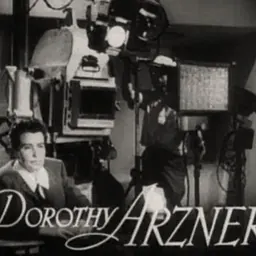
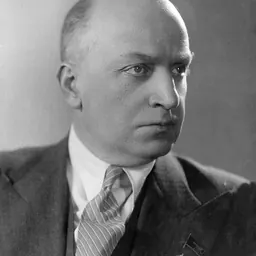

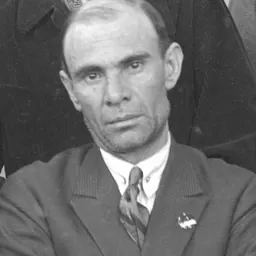
Contemporaries
People whose lives overlapped Phil Karlson's

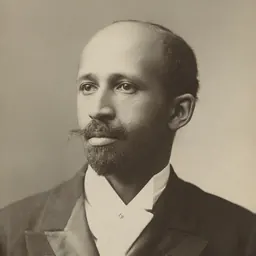
Frequently asked questions
Who was Phil Karlson?
American film director (1908–1982)
When was Phil Karlson born?
Phil Karlson was born on 2 July 1908 in Chicago.
When did Phil Karlson die?
Phil Karlson died on 12 December 1985 in Los Angeles.
What was Phil Karlson's occupation?
Phil Karlson was a film director, screenwriter and director.
What nationality was Phil Karlson?
Phil Karlson was American.
Sources & further reading
Cite this page
APA: Biography.guide. (2026). Phil Karlson. https://biography.guide/phil-karlson/
MLA: "Phil Karlson." Biography.guide, https://biography.guide/phil-karlson/.
Chicago: "Phil Karlson." Biography.guide. https://biography.guide/phil-karlson/.
Data last updated: 2026-09-22 · Spot an error? Report a correction.
Page generated 2026-09-27 05:03 UTC