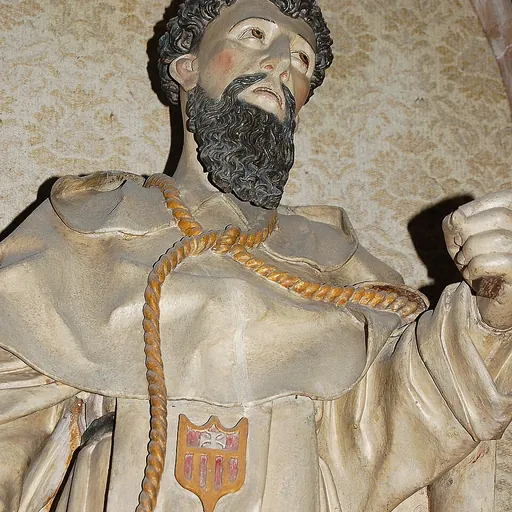
Petrus Armengol
Spanish saint
About Petrus Armengol
Lived 1238 – 1304 (aged 65–66).
Pedro Armengol (c. 1238 – 27 April 1304), born Pedro Armengol Rocafort, was a Spanish Roman Catholic who was of noble stock and a thief during his adolescence. He became a professed member of the Mercedarians after he experienced a sudden conversion and devoted himself to liberating captive Christians from the Moors. Armengol is best known for being hanged while a captive of the Moors but survived.
He was canonized as a saint on 8 April 1687 after Pope Innocent XI approved his long-standing "cultus" – or devotion.
Life Pedro Armengol Rocafort was born in La Guàrdia dels Prats in 1238 to the nobleman Arnau Armengol Rocafort. His mother died when Armengol was about eight, and his grief-stricken father immersed himself in his official duties.
The boy became quite proud and strong-willed as an adolescent during which time he became a robber and joined a group of bandits. In 1258 James I of Aragon traveled to Montpellier from Valencia. Armengol's father was a soldier in the entourage. Armengol's bandits collided with the soldiers and father and son soon recognized each other during the skirmish. Armengol surrendered. He was condemned to death, but in light of his father's meritorius service was reprieved. After completing the requisite studies, he was ordained a priest and shortly thereafter named a "redeemer", a particularly risky ministry devoted to liberating captive Christians in Moorish Andalusia and north Africa.
In 1266 he and Guillermo de Florencia ransomed 118 captives at Béjaïa. As they were waiting to embark for Barcelona, they learned of another twenty prepared to convert to Islam in exchange for freedom. They decided that Armengol would stand hostage against the payment of an additional ransom. A year passed and the deadline expired. When the funds did not arrive on time, he was hanged from a tree. Guillermo, having arrived three days late, was told the ransom would not be accepted since Armengol was hanged. He searched for his friend's remains and found him still alive. Armengol attributed his survival to the protection of the Virgin Mary. The pair used the ransom to purchase the freedom of the captives and traveled back to Catalonia.
Armengol spent the rest of his life at the Mercedarian house in his hometown of La Guàrdia dels Prats, where he was father superior in 1291. The attempted execution had a lasting effect on Armengol: it left his neck twisted and his face became quite haggard.
Armengol died on 27 April 1304. In 1646 the church he was buried in was burnt but his remains went undamaged. Minor modifications to his tomb were made in 1653.
Veneration
On 3 March 1626, Pope Urban VIII confirmed his long-standing cultus. Pope Innocent XI canonized him as a saint on 8 April 1687. Pope Benedict XIV affixed his feast as being on 27 April – the date of his death – but it was moved in 1969 to 26 April due to the reform of the General Roman Calendar. The Mercedarians and the Diocese of Córdoba retain 27 April.
In iconography he is depicted with a noose around his neck.
Don’t just read it —
keep it.
Full-length biographies made to live with: read them, listen on the way to work, watch them tonight.
- E-book
- Audio
- Video
Instant download · yours to keep · every purchase keeps this site free
Important facts
Contemporaries
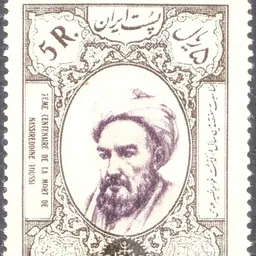
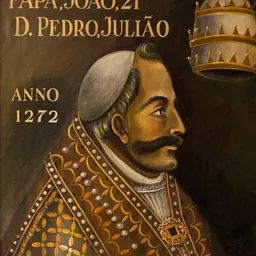
People whose lives overlapped Petrus Armengol's




Frequently asked questions
Who was Petrus Armengol?
Spanish saint
When was Petrus Armengol born?
Petrus Armengol was born in 1238 in La Guàrdia dels Prats.
When did Petrus Armengol die?
Petrus Armengol died on 27 April 1304 in La Guàrdia dels Prats.
What nationality was Petrus Armengol?
Petrus Armengol's recorded nationality: Crown of Aragon.
Sources & further reading
Cite this page
APA: Biography.guide. (2026). Petrus Armengol. https://biography.guide/petrus-armengol/
MLA: "Petrus Armengol." Biography.guide, https://biography.guide/petrus-armengol/.
Chicago: "Petrus Armengol." Biography.guide. https://biography.guide/petrus-armengol/.
Data last updated: 2026-09-23 · Spot an error? Report a correction.
Portrait: Wikimedia Commons · author & licence
Page generated 2026-09-27 05:05 UTC