
Petru Manoliu
Romanian novelist, essayist and newspaper editor
About Petru Manoliu
Lived 1903 – 1976 (aged 73). Petru Manoliu was a Romanian biographer, translator, poet, diarist and writer.
Petru Virgil Manoliu (; January 28, 1903 – January 29, 1976) was a Romanian novelist, essayist, and newspaper editor. Shaped by philosophical readings, marked by a sense of anxiety and the influence of André Gide, much of his early literary work falls into the category of Trăirism. These traits are complemented by Manoliu's activities in cultural journalism, alternating between contributions to left-wing papers and support for the far-right and mystical philosophy of Nae Ionescu. By the time of World War II, he had also begun writing historical fiction and plays, penning anticommunist and anti-Soviet articles in the central newspapers.
Manoliu was persecuted and twice imprisoned by the communist regime in the 1950s, serving time on the building site of the Danube–Black Sea Canal. Banned from publishing upon his return, he focused instead on translation work, and achieved national recognition for his renditions from Thomas Mann. He nevertheless lived a secluded life, marked by poverty, and continued to write works which went unpublished, in particular diaries.
Biography
Early life and debut Born in Mihăileni, Botoșani County, his parents were the teacher Ion Manoliu and his wife Victoria (née Stavrat). After attending primary school in his native village, he went to high school in Botoșani and Iași. He later enrolled in the literature and philosophy faculty of the University of Bucharest, during which time he was hired by Petre P. Negulescu to work at the Romanian Academy Library. Manoliu had noted contributions in Bilete de Papagal (which he also edited, under director Tudor Arghezi), and, from 1930 to 1930, he was editor of the newspaper Curentul, and, in 1931, also put out Pământul magazine, His first standalone book was the 1935 novel Rabbi Haies Reful, followed in 1936 by Tezaur bolnav ("Sickly Treasure", 1936). He also published scattered poetry, generally inspired by the more depressing periods of his life, and evidencing strong influences from Mihai Eminescu. Animated by the idea of a role for his literary generation (based on this "new spirituality" of the 1930s), He was married to the sister of Ioan Missir, the Botoșani mayor and aspiring novelist, whose work he reviewed in Credința. Both Missirs were American-born and Armenian, related to the literary critic Petru Th. Missir.
During his stay there, Manoliu produced articles celebrating irrationalism and criticizing the old school of literary criticism. At Floarea de Foc, he attacked posthumously Titu Maiorescu, the skeptical conservative, claiming to show how Maiorescu had "lied to the world", and prophesying that he would be soon forgotten. Writing in 2002, philologist Elvira Sorohan commented: "[the article] was ridiculous, given who it was that wrote it." Like other "new generation" men, Manoliu was affiliated with Criterion club. He left during a public scandal, sparked when Credința attacked Criterion host Petru Comarnescu for his homosexuality, preferring to side with Tudor.
Around 1935, Manoliu also joined Zaharia Stancu's left-leaning paper, Azi, and, according to his own testimony, actually managed it to 1937. His apolitical stance was nonetheless touched by the Orthodoxist politics of Nae Ionescu, the far-right philosopher. By 1936, Manoliu's articles in Credința described Ionescu as a leader of men and a figure of mythical proportions. A year later, he defended Ionescu's political radicalism against accusations of phyletism, defining nation and nationalism as a "community of destiny". In 1945, looking back on the period, the essayist Eugène Ionesco described the "good-for-nothing" Manoliu as "made reactionary" and "imbecilic" by Ionescu.
Leaving Credința in 1938, Manoliu joined Stancu's Lumea Românească daily, serving as the latter's editor for one year. After a stint editing and writing for Petrescu's România (1939–1940), he spent the rest of World War II, to 1944, as editor of, In 1940, he wrote a six-act historical play, Io, Ștefan Voievod. Featuring Stephen III of Moldavia as its central character, the work was only published in 2006. Ultimately graduating university in 1940, he joined the Romanian Writers' Society the following year. He also wrote Creangă (1944), a monograph on the life of writer Ion Creangă meant for popular consumption. At Costișa, he wrote diaries, essays and play, most of them still unpublished. is "confusing and lyrical". According to critic Nicolae Florescu, in this work and some of the later ones, Manoliu presents an epic fresco which confronts the tolerance of Romanians to the intolerance of foreigners and minorities.
Tezaur bolnav is inspired by André Gide, and focuses of the "Gidean" intellectual youth. As noted by critic Ovid Crohmălniceanu, its protagonists "always seem inclined to ask themselves questions as to the purpose of existence." Florescu sees Manoliu himself as possessed by a wish to declare his innermost thoughts and sentiments, a "sincerity that borders on the ridiculous". In Moartea nimănui, Manoliu's style is heavily indebted to Gide, but mainly recalls the proletarian literature of George Mihail Zamfirescu and Carol Ardeleanu. Set in the sugar mill of Chitila and in homeless shelters, it shows young intellectuals driven to destitution and despair, and introduces Mortaru, a homosexual character. According to Călinescu, its experimental nature "alienates the reader." This reading is supported by Crohmălniceanu, who notes: "The speculative torment is not without drama, but is greatly harmed by the lyricism of the exposition, which is all too impersonal."
Political repression pushed Manoliu away from his work as a novelist, but allowed him to carry on as a diarist. As noted by Florescu in 2008, his 1970s Jurnal de peregrin ("Pilgrim's Diary") "provides one of the most dramatic images of the aging intellectual, taken with the notion of failure and the awareness of his demise", a "despairing monologue, with no possibility of evading into the much richer past." Also according to Florescu, these last work mark Manoliu's return to his early idols, Ortega y Gasset and Mihai Eminescu.
Don’t just read it —
keep it.
Full-length biographies made to live with: read them, listen on the way to work, watch them tonight.
- E-book
- Audio
- Video
Instant download · yours to keep · every purchase keeps this site free
Important facts
People in Petru Manoliu's life
Named in this biography and alive at the same time


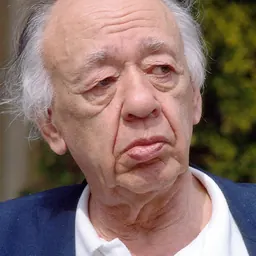
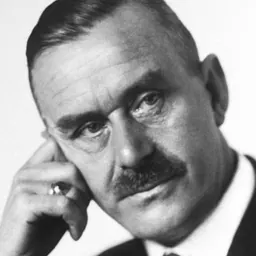

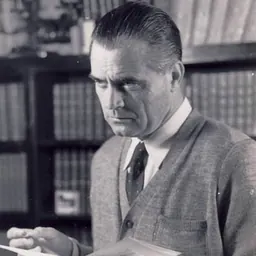
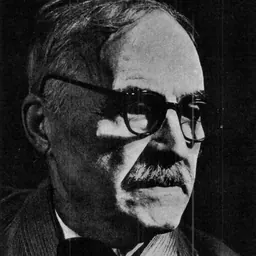

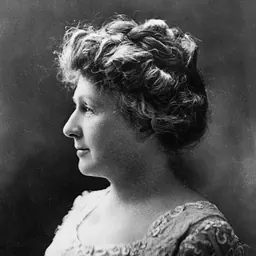
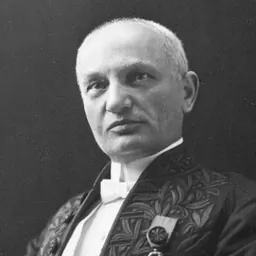
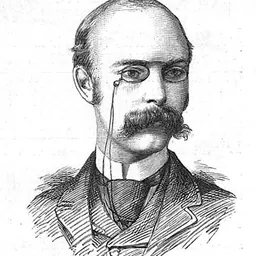
Related people
Same field, nearest in time
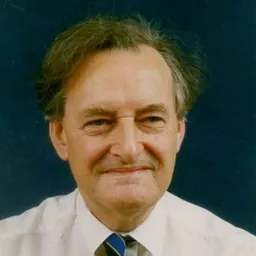
Contemporaries
People whose lives overlapped Petru Manoliu's
Frequently asked questions
Who was Petru Manoliu?
Romanian novelist, essayist and newspaper editor
When was Petru Manoliu born?
Petru Manoliu was born on 28 January 1903 in Mihăileni.
When did Petru Manoliu die?
Petru Manoliu died on 29 January 1976 in Bucharest.
What was Petru Manoliu's occupation?
Petru Manoliu was a biographer, translator, poet, diarist and writer.
What nationality was Petru Manoliu?
Petru Manoliu was Romanian.
Sources & further reading
Cite this page
APA: Biography.guide. (2026). Petru Manoliu. https://biography.guide/petru-manoliu/
MLA: "Petru Manoliu." Biography.guide, https://biography.guide/petru-manoliu/.
Chicago: "Petru Manoliu." Biography.guide. https://biography.guide/petru-manoliu/.
Data last updated: 2026-09-20 · Spot an error? Report a correction.
Page generated 2026-09-27 05:16 UTC