
About Petro Shelest
Lived 1908 – 1996 (aged 87). Petro Shelest was a Russian and Ukrainian statesperson and politician.
Petro Yukhymovych Shelest ( – 22 January 1996) was a Ukrainian Soviet politician who served as First Secretary of the Ukrainian Communist Party from 1963 until his removal in 1972. Ideologically a social moderate and a national communist, he oversaw a widespread liberalisation of Ukrainian society as part of the Khrushchev Thaw and Sixtier movement that led to increased visibility of the Ukrainian language and culture in public life. In 1972, Shelest was removed by Leonid Brezhnev and replaced with Volodymyr Shcherbytsky, who undid much of Shelest's reforms and oversaw intensive Russification of Ukrainian society.
Early career Petro Shelest was born in a Ukrainian peasant family in a village near Kharkiv in 1908. He studied engineering in Kharkiv, and held industrial jobs between 1932 and 1936. In 1928 he joined the Communist Party of the Soviet Union (CPSU) and in 1935 graduated from Mariupol Metallurgical Institute. He served in the Red Army from 1936 to 1937, but transferred to working for the Communist Party in 1937, as thousands of its members were caught up in the Great Purge. Between 1943 and 1954, Shelest was a chief manager of several large factories in Leningrad and Kyiv. From 1954 to 1963, he was respectively Second Secretary of the Kyiv city party committee, Second Secretary of the regional committee, and First Secretary of the Kyiv regional party committee.
First Secretary of Ukraine After Shelest was appointed First Secretary of the Communist Party of Ukraine (KPU) in 1963, he set out to run Ukraine with a degree of independence from Moscow, and to develop the republic's economy and encourage Ukrainian culture. It was during his tenure that construction began on the four nuclear plants at Chernobyl.
He antagonised the Soviet leader, Nikita Khrushchev, who publicly upbraided Shelest during a visit to Hungary over late delivery of Ukrainian equipment, then remarked: "Look how glum he is - just as if a hedgehog had been rammed down his throat." In November 1964, when Khrushchev was removed from office, Shelest was promoted to full membership of the Presidium (later renamed the Politburo).
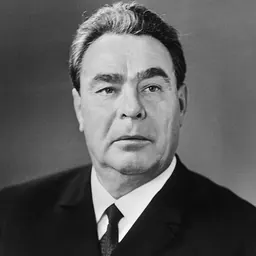
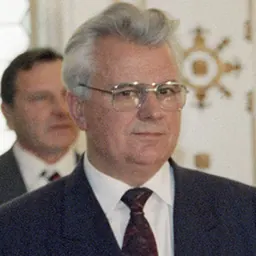
Shelest began his rule at a time of significant cultural shifts in Ukrainian society, as it began to increasingly distance itself from Russia and assert its unique identity. Regarded within the party as a localist, Shelest was viewed by various sectors of the public as either a supporter of increased Ukrainian autonomy within the Soviet Union or a typical Soviet bureaucrat. In a statement later attributed to him by historian Roman Solanchyk, Shelest said that he was "not Lazar Kaganovich" and did not rule under Ukraine in "the times of Stalin," noting himself as an opponent of hardliners. Historian Taras Kuzio has argued that Shelest was the leader of a revived national communist sect of the Communist Party of Ukraine after the group had previously been destroyed in the Great Purge. According to Kuzio, the national communist group was later led by Leonid Kravchuk, who oversaw the transition from Soviet to independent Ukraine.
A supporter of the Sixtier cultural movement and the Khrushchev Thaw, Shelest's policies brought greater prominence to the Ukrainian language and Ukrainian culture in public life, with the party echelons actively supporting such developments. An ultimately-unrealised 1965 plan, later leaked through samizdat, called for Ukrainian to eventually replace Russian as the language of instruction in higher education. The extent to which Shelest personally was involved in supporting the Sixtiers and other nationally minded Ukrainians, many of whom later formed the core of Ukraine's Soviet dissidents, remains in dispute. Shelest's policy of greater autonomy for Ukraine was also reflected in economic spheres, as he sought to decentralise economic management to the republican level. He also argued for Ukraine to become economically sovereign from the broader Soviet Union in 1965, a move which alarmed Soviet leadership. However, he was criticised by Ukrainian intellectuals such as Viacheslav Chornovil for his role in the 1965–1966 Ukrainian purge, which led to the arrest of several Sixtiers.
The core intention of Shelest's policies was to improve the popularity of the Communist Party among Ukrainians, following the extreme unpopularity of Stalinist rule in Ukraine. Such plans had fruitful results: by 1971 KPU membership was 2.5 million, and annually increasing at double the rate of the Union average.
Prague Spring In 1968, Shelest played a major role in deciding how the Soviet government should respond to the Prague Spring, the sudden loosening of political control in communist Czechoslovakia, which created an atmosphere that spilled over into west Ukraine. He was the only other Politburo member beside Leonid Brezhnev to take part in every meeting between Soviet and Czechoslovak communist leaders during that year.
Addressing the Central Committee of the CPSU on 17 July 1968, Shelest accused the Czechoslovak communist party leadership of persecuting communists while making no attempt to control "right-wing opportunists". He claimed:
During negotiations on 30 July 1968, he berated the Czechoslovak delegation, complaining that "Your TV shows, your radio programmes, your newspapers and magazines distributed into our regions closest to your borders make our people ask questions which are full of embarrassment". Shelest went on to insult František Kriegel, a senior Czechoslovak communist and veteran of the Spanish Civil War, calling him a "Galician Jew". For the next eleven months, Shelest served as Deputy Premier in Moscow before being dismissed again and demoted to leadership of a factory outside the Soviet capital.
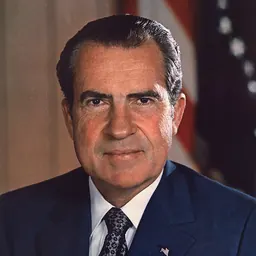
Western observers originally assumed that he had been sacked because of his hard line views on foreign policy. Reputedly, he vehemently opposed the visit of U.S. President Richard Nixon, who arrived in Moscow on 22 May 1972. But in April 1973, he was publicly attacked by Shcherbytsky, while an unsigned article in the Ukrainian press denounced a book by Shelest, O Ukraine, Our Soviet Land, published in 1970, as containing 'ideological errors', 'factual errors' and 'editorial blunders' that were likely to encourage Ukrainian nationalism.
Shelest himself blamed his downfall on 'intrigues' by Shcherbytsky and Brezhnev. In his memoirs, he criticized their style of government as "autocratic" and "non-communist".
From 1973 to 1985, Shelest worked as a manager of an aircraft design bureau near Moscow. After the collapse of the Soviet Union, he was able to revisit Ukraine, after an absence of nearly 20 years. He visited Ukraine several times and delivered lectures about his tenure as leader of Ukraine. He died in Moscow in 1996.
Don’t just read it —
keep it.
Full-length biographies made to live with: read them, listen on the way to work, watch them tonight.
- E-book
- Audio
- Video
Instant download · yours to keep · every purchase keeps this site free
Important facts
People in Petro Shelest's life
Named in this biography and alive at the same time


Related people
Same field, nearest in time



Contemporaries
People whose lives overlapped Petro Shelest's


Frequently asked questions
Who was Petro Shelest?
Ukrainian politician (1908-1996)
When was Petro Shelest born?
Petro Shelest was born on 1 February 1908 in Andriivka, Balakliia Raion.
When did Petro Shelest die?
Petro Shelest died on 22 January 1996 in Moscow.
What was Petro Shelest's occupation?
Petro Shelest was a statesperson and politician.
What nationality was Petro Shelest?
Petro Shelest was Russian and Ukrainian.
Sources & further reading
Cite this page
APA: Biography.guide. (2026). Petro Shelest. https://biography.guide/petro-shelest/
MLA: "Petro Shelest." Biography.guide, https://biography.guide/petro-shelest/.
Chicago: "Petro Shelest." Biography.guide. https://biography.guide/petro-shelest/.
Data last updated: 2026-09-20 · Spot an error? Report a correction.
Page generated 2026-09-27 05:23 UTC