
About Petre Dulfu
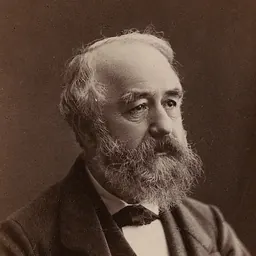
Lived 1856 – 1953 (aged 97). Petre Dulfu was an Austrian translator, poet, philosopher and writer.
Petre Dulfu (10 March 1856 – 31 October 1953) was an Imperial Austrian-born Romanian poet, translator and playwright.
Born in Tohat, Sălaj County, his parents were Nichifor Dulfu and his wife Agapia (née Bran),both members of the rural intellectual class. He attended Franz Joseph University in the latter city, earning a doctorate in philosophy in 1881. After graduation, he moved to the Romanian Old Kingdom and worked as a teacher. After a brief stint in the capital Bucharest, he directed and taught at a school in Turnu Severin for the 1881-1882 year. Beginning in 1882, he again taught philosophy and later Romanian in Bucharest; one of the two schools where he worked was a girls' school. He came to know faculty colleague Ioan Slavici, as well as Mihail Eminescu, Alexandru Vlahuță and Bogdan Petriceicu Hasdeu. In 1886, he married Elena Mateescu, with whom he had four children and who encouraged his work as a writer. He obtained Romanian citizenship in 1891. During World War I, he worked as a postal censor in the temporary capital of Iași, where an illness claimed one of his daughters. Although normally a disciplined teacher, he lost his composure on 1 December 1918, the day the union of Transylvania with Romania was proclaimed; cutting short the lesson and visibly moved, he explained the significance of the event to his pupils. In 1921, he retired from the girls' school, as the pupils daily reminded him of his deceased daughter.
His first published work consisted of verses that appeared in Familia in 1874. His contributions appeared in magazines both pedagogical (Educatorul, Lumina pentru toți, Revista pedagogică) and literary (Amicul familiei, Șezătoarea, Tribuna). In 1911, he joined the Romanian Writers' Society. In 1903, he was awarded the Romanian Academy's Adamachi Prize for his translations of Euripides (Ifigenia în Aulida, 1879; Ifigenia în Taurida, 1880) and for the 1894 Isprăvile lui Păcală, the volume that secured his reputation as a writer. In January 1939, Dulfu joined King Carol II's National Renaissance Front, as part of a mass recruitment among Romanian Writers' Society members. A gifted teacher and a cultural figure concerned with educating the peasantry, his poetic renditions of folklore were deemed "good writings for the common people" by George Călinescu. He died in Bucharest.
The Maramureș County library in Baia Mare has borne his name since 1992.
Don’t just read it —
keep it.
Full-length biographies made to live with: read them, listen on the way to work, watch them tonight.
- E-book
- Audio
- Video
Instant download · yours to keep · every purchase keeps this site free
Important facts
People in Petre Dulfu's life
Named in this biography and alive at the same time

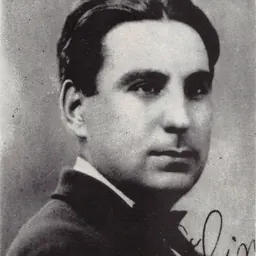
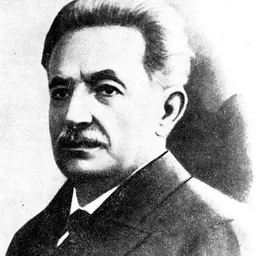


Related people
Same field, nearest in time


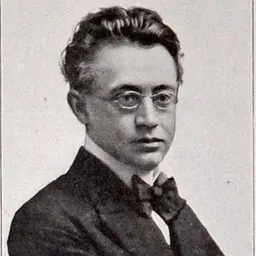
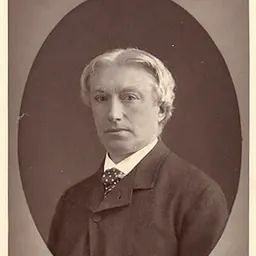
Contemporaries
People whose lives overlapped Petre Dulfu's



Frequently asked questions
Who was Petre Dulfu?
Romanian author (1856-1953)
When was Petre Dulfu born?
Petre Dulfu was born on 10 March 1856 in Tohat.
When did Petre Dulfu die?
Petre Dulfu died on 31 October 1953 in Bucharest.
What was Petre Dulfu's occupation?
Petre Dulfu was a translator, poet, philosopher and writer.
What nationality was Petre Dulfu?
Petre Dulfu was Austrian.
Sources & further reading
Cite this page
APA: Biography.guide. (2026). Petre Dulfu. https://biography.guide/petre-dulfu/
MLA: "Petre Dulfu." Biography.guide, https://biography.guide/petre-dulfu/.
Chicago: "Petre Dulfu." Biography.guide. https://biography.guide/petre-dulfu/.
Data last updated: 2026-09-20 · Spot an error? Report a correction.
Page generated 2026-09-27 05:27 UTC