
About Peter Wehner
Born 2000. Peter Wehner is an American writer.
Peter Hermann Wehner (born February 10, 1961) is an American writer and former speechwriter for the administrations of three Republican U.S. presidents. He is a senior fellow at the Trinity Forum. Wehner is a contributing opinion writer for The New York Times, a contributing editor at The Atlantic, and the author of The Death of Politics.
Early life and education Wehner was born on February 10, 1961, in Dallas, Texas, to Ingeborg and Alfred Wehner. He is the youngest of his siblings. Wehner grew up in Richland, Washington, and attended Hanford High School. Wehner earned a degree from the University of Washington. He was a speechwriter for Secretary of Education William Bennett before becoming special assistant to the director at the Office of National Drug Control Policy. Wehner served George W. Bush as deputy director of speechwriting in 2001, and became the head of the White House Office of Strategic Initiatives in 2002. City of Man: Religion and Politics in a New Era (with Michael J. Gerson), and Wealth and Justice: The Morality of Democratic Capitalism (with Arthur C. Brooks).
During his career, Wehner's work appeared in The Atlantic, Christianity Today, Commentary, the Financial Times, National Affairs, The New York Times, Politico, Time, The Wall Street Journal, The Washington Post, and The Weekly Standard. Wehner also appeared on many cable news channels, C-SPAN, and talk radio.
Wehner opposes abortion. He called the President's Emergency Plan for AIDS Relief (PEPFAR)—which allocated $15 billion to promote prevention and treatment of HIV/AIDS and malaria in Africa—as "one of the great achievements of the [George W.] Bush administration." Wehner blames Palestinian leadership for what he sees as its betrayal of its own people and for making "anti-Semitism a central, organizing principle of Palestine life—more central, even, than Palestinian statehood."
Donald Trump Wehner is a staunch critic of Trump. He joined many Republican figures who announced that they would not vote for him when Trump announced that he would seek the Republican nomination. In a January 2016 column in The New York Times titled "Why I Will Never Vote for Donald Trump", Wehner wrote that, if Trump was the Republican nominee and Hillary Clinton the Democratic nominee, "I would prefer to vote for a responsible third-party alternative; absent that option, I would simply not cast a ballot for President. A lot of Republicans, I suspect, would do the same." In another Times op-ed in July 2016, Wehner wrote that Trump "embodies a Nietzschean morality rather than a Christian one", writing that Trump is "characterized by indifference to objective truth (there are no facts, only interpretations), the repudiation of Christian concern for the poor and the weak, and disdain for the powerless". He also wrote:
it is fair to say that there existed in the Republican Party repulsive elements, people who were attracted to racial and ethnic politics and moved by resentment and intolerance rather than a vision of the good. This group was larger than I ever imagined, and at important moments the Republican Party either overlooked them or played to them. Some may have been hoping to appeal to these elements while also containing and moderating them, to sand off the rough edges, to keep them within the coalition but not allow them to become dominant. But the opposite happened. The party guests took over the party.
A day after Trump was inaugurated as president, Wehner wrote a column in The New York Times in which he expressed doubt that Trump would govern well. In a column appearing a day after the dismissal of James Comey as FBI Director, which Trump did when Comey asked for additional resources to investigate Russian interference in the 2016 U.S. elections, Wehner wrote that his prediction had been accurate. In July 2017, Wehner wrote, "Republican voters and politicians rallied around Mr. Trump in 2016, believing he was anti-establishment when in fact he was anti-order. He turns out to be an institutional arsonist. It is an irony of American history that the Republican Party, which has historically valued order and institutions, has become the conduit of chaos." By February 2019, Wehner lamented that the Republican Party is "now Donald Trump's party, through and through".
After Trump's defeat in the 2020 U.S. presidential election, Wehner wrote that "Trump's most enduring legacy [may be] a nihilistic political culture, one that is tribalistic, distrustful, and sometimes delusional, swimming in conspiracy theories." After reports emerged that Trump was considering imposing martial law to overturn the election and that he might appoint conspiracy theorist Sidney Powell as a special counsel, Wehner wrote that Trump had "begun to lose his mind" and had "become even more destabilizing and dangerous"; he lamented that much of the Republican Party followed Trump's lead and been "radicalized". After the removal of Liz Cheney from the House leadership, Wehner was quoted in The Atlantic electronic newsletter of May 12, 2021, in a section headed "The new GOP is a threat to American democracy", as having said, "The Trump presidency might have been the first act in a longer and even darker political drama, in which the Republican Party is becoming more radicalized."
Personal life Wehner and his wife Cindy live in McLean, Virginia; they have three children.
Works (with Michael J. Gerson) City of Man: Religion and Politics in a New Era Chicago : Moody Publishers, 2010.. (with Arthur C. Brooks) Wealth and Justice: The Morality of Democratic Capitalism Washington, DC AEI Press, 2010.. The Death of Politics: How to Heal Our Frayed Republic After Trump, New York, NY : HarperOne, 2019.. The Deepening Crisis in Evangelical Christianity; Support for Trump comes at a high cost for Christian witness. July 5, 2019, The Atlantic.
Don’t just read it —
keep it.
Full-length biographies made to live with: read them, listen on the way to work, watch them tonight.
- E-book
- Audio
- Video
Instant download · yours to keep · every purchase keeps this site free
Important facts
People in Peter Wehner's life
Named in this biography and alive at the same time


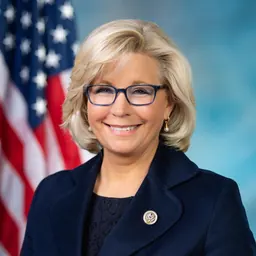



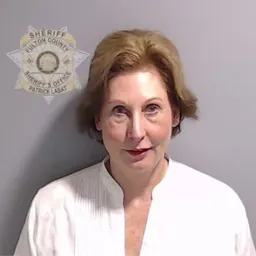

Related people
Same field, nearest in time
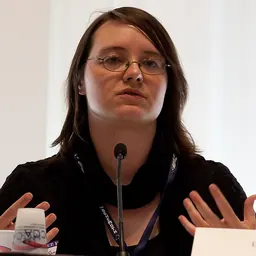
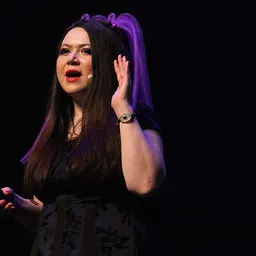


Contemporaries
People whose lives overlapped Peter Wehner's

Frequently asked questions
Who is Peter Wehner?
American writer
When was Peter Wehner born?
Peter Wehner was born in 2000 in Dallas.
What is Peter Wehner's occupation?
Peter Wehner is a writer.
What nationality is Peter Wehner?
Peter Wehner is American.
Sources & further reading
Cite this page
APA: Biography.guide. (2026). Peter Wehner. https://biography.guide/peter-wehner/
MLA: "Peter Wehner." Biography.guide, https://biography.guide/peter-wehner/.
Chicago: "Peter Wehner." Biography.guide. https://biography.guide/peter-wehner/.
Data last updated: 2026-09-20 · Spot an error? Report a correction.
Page generated 2026-09-27 05:14 UTC