
About Peter Watson
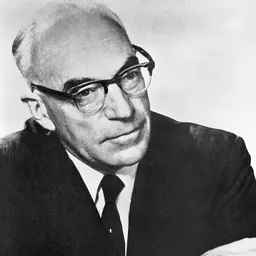
Born 1943. Peter Watson is a British art historian, historian, journalist and writer.
Peter Frank Patrick Watson (born 23 April 1943) now perhaps best known for his work in the history of ideas. His journalistic work includes detailed investigations of auction houses and the international market in stolen antiquities.
Early life
Watson attended Cheltenham Grammar School. He graduated in Psychology from Durham in 1964. He subsequently earned a scholarship to study for a diploma in music at La Sapienza and then completed a doctorate at the University of London. Having given up psychology he settled into a career in journalism and edited the first incarnation of Race Today, a journal launched in 1969 by the Institute of Race Relations think-tank. As part of his research Watson visited the Fort Bragg army base in North Carolina, which convinced him that military psychology was more advanced than he had previously imagined. Watson conceived the idea for a book on stolen antiquities in 1979, while the printers of The Sunday Times were on strike and the owners suspended publication for 11 months, giving himself and other writers time to pursue personal projects. He concluded the Nativity with St. Francis and St. Lawrence was most likely stolen by members of Cosa Nostra. Although unsuccessful in recovering the painting that was the focus of the book, he did manage to obtain six other stolen works. In an interview with Noah Charney for The Daily Beast, he related that the investigation had so damaged Sotheby's reputation that people he knew in the London art world would not speak to him for years afterwards. In a 2000 article for the New Statesman he argued that forgeries in the antiquities trade remained a serious problem, with fake ancient artefacts even making their way into major museums, aided by curators who knew little of archaeology and were liable to be hoodwinked by corrupt dealers.
A third exposé of the art world, The Medici Conspiracy: The Illicit Journey of Looted Antiquities, from Italy's Tomb Raiders to the World's Greatest Museums, which he co-wrote with Cecilia Todeschini, was published in 2006. The book detailed the criminal career of Italian art dealer, Giacomo Medici, and his several decades spent supplying museum with illegally excavated and smuggled antiquities. Watson had given evidence at the trial of Medici. He has published some twenty books, including The German Genius, published by Simon & Schuster in 2010.
Personal
Watson is an atheist, and is particularly critical of monotheism. He has argued that psychotherapy has become a substitute for religion, and that people more often seek therapy as a way to find meaning in their lives than to treat mental illness. He is a member of the Reform Club and describes himself as a Social Democrat politically.
Don’t just read it —
keep it.
Full-length biographies made to live with: read them, listen on the way to work, watch them tonight.
- E-book
- Audio
- Video
Instant download · yours to keep · every purchase keeps this site free
Important facts
People in Peter Watson's life
Named in this biography and alive at the same time




Related people
Same field, nearest in time

Contemporaries
People whose lives overlapped Peter Watson's


Frequently asked questions
Who is Peter Watson?
art historian
When was Peter Watson born?
Peter Watson was born on 23 April 1943 in Birmingham.
What is Peter Watson's occupation?
Peter Watson is an art historian, historian, journalist and writer.
What nationality is Peter Watson?
Peter Watson is British.
Sources & further reading
· DBpedia: Peter Watson (intellectual historian)
Cite this page
APA: Biography.guide. (2026). Peter Watson. https://biography.guide/peter-watson-art-historian/
MLA: "Peter Watson." Biography.guide, https://biography.guide/peter-watson-art-historian/.
Chicago: "Peter Watson." Biography.guide. https://biography.guide/peter-watson-art-historian/.
Data last updated: 2026-09-26 · Spot an error? Report a correction.
Page generated 2026-09-27 05:15 UTC