
Peter Kerley
Irish doctor
About Peter Kerley
Lived 1900 – 1979 (aged 78). Peter Kerley was an Irish radiologist, known for Kerley lines and King George VI.
Sir Peter James Kerley KCVO CBE (27 October 1900 – 14 May 1979) was an Irish radiologist famous for his role in the lung surgery of King George VI and the naming of the radiological sign in heart failure, Kerley lines.
Kerley had his initial radiological training in Vienna at a time when it was the new science. On his return, he completed his studies in Cambridge and took up a post in Westminster Hospital. Here, he worked closely with Sir Clement Price Thomas and also edited a major radiology textbook.
Following his early return from India and Singapore during World War II, Kerley continued his work in radiology of the heart and lungs and became radiology advisor to the Ministry of Health.
Throughout his working career, he received numerous awards, honours and directorships, going on to achieve royal recognition and worldwide acclaim.
Early life Born in 1900 in Dundalk, a town between Belfast and Dublin, Peter James Kerley was second-youngest of 14 children. His father was a low income grocer and could not afford Kerley's education. However, his uncle, Augustine Henry, a talented arboriculturalist, took charge over this.
Medical career
A graduate of University College Dublin (1923), Kerley spent a year training in radiology in Vienna. His interest in radiology of the heart and lungs stemmed from this new specialty which was still somewhat novel and Vienna at this time was its epicenter.
Then travelling to the UK, he achieved the D.M.R.E from Cambridge University and obtained his M.D. from the University of Ireland in 1932.
Kerley assisted Seymour Cochrane Shanks to edit a major radiology textbook, ' A Textbook of X-ray Diagnosis by British Authors''' in 1939. The first two editions of Recent Advances in Radiology was another later book, Kerley had spent time to organise.
Personal and family Olivia MacNamee was one of the London School of Economics first female students when she met Kerley. They married in 1929. Their two daughters, Barbara and Jocelyn, both became doctors. Olivia died in 1973, 6 years before Kerley. He particularly enjoyed fishing and would travel to the River Dee to catch salmon. Other pastimes included golf and shooting.
He discovered several of the medical signs used in interpreting radiographs. Famous for his 'B' lines, Kerley B lines are a finding of congestive heart failure. These are short parallel lines perpendicular to the lateral lung surface, indicative of increased opacity in the pulmonary septa. Kerley A lines and Kerley C lines are related findings. Correspondence: civilian mass radiography. Co-authored with Hart P, Thompson B. BMJ 1945; 1:885 Correspondence: modern trends in radiology. BMJ 1949; 2:870 A Text-Book Of X-Ray Diagnosis'': Vol II. Co-edited with Shanks EW. W. B. Saunders. 1951. pp. 403–415
Don’t just read it —
keep it.
Full-length biographies made to live with: read them, listen on the way to work, watch them tonight.
- E-book
- Audio
- Video
Instant download · yours to keep · every purchase keeps this site free
Important facts
People in Peter Kerley's life
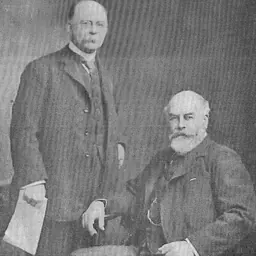
Named in this biography and alive at the same time




Related people
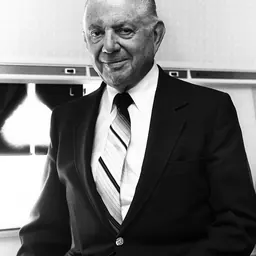
Same field, nearest in time




Contemporaries
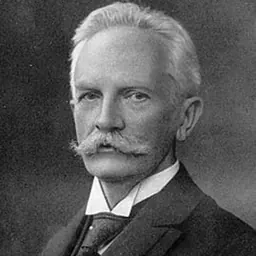
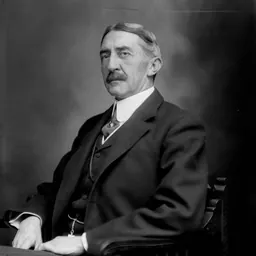
People whose lives overlapped Peter Kerley's




Frequently asked questions
Who was Peter Kerley?
Irish doctor (1900-1979)
When was Peter Kerley born?
Peter Kerley was born on 27 October 1900 in Dundalk.
When did Peter Kerley die?
Peter Kerley died on 15 March 1979.
What was Peter Kerley's occupation?
Peter Kerley was a radiologist.
What was Peter Kerley known for?
Peter Kerley was known for Kerley lines and King George VI.
What nationality was Peter Kerley?
Peter Kerley was Irish.
Sources & further reading
Cite this page
APA: Biography.guide. (2026). Peter Kerley. https://biography.guide/peter-kerley/
MLA: "Peter Kerley." Biography.guide, https://biography.guide/peter-kerley/.
Chicago: "Peter Kerley." Biography.guide. https://biography.guide/peter-kerley/.
Data last updated: 2026-09-22 · Spot an error? Report a correction.
Page generated 2026-09-27 05:04 UTC