
About Peter Hopkirk
Lived 1930 – 2014 (aged 83). Peter Hopkirk was a British journalist, essayist, historian, writer and non-fiction writer.
Peter Stuart Hopkirk (15 December 1930 – 22 August 2014) was a British journalist, author and historian who wrote six books about the British Empire, Russia and Central Asia.
Biography Peter Hopkirk was born in Nottingham, the son of Frank Stuart Hopkirk, an Anglican priest, and Mary Hopkirk ( Perkins). The family hailed originally from Roxburghshire in the borders of Scotland. He grew up at Danbury, Essex and was educated at the Dragon School in Oxford and at Marlborough College in Wiltshire. From an early age he was interested in spy novels carrying around John Buchan's Greenmantle and Ruyard Kipling's Kim. While at the Dragon School he played rugby and shot at Bisley.
During his national service, he was commissioned in the Royal Hampshire Regiment in January 1950 and served as a subaltern in the King's African Rifles, in the same battalion as Lance-Corporal Idi Amin.
Before becoming a full-time author, he was an ITN reporter and newscaster for two years, the New York City correspondent of Lord Beaverbrook's The Sunday Express, and then, for nearly twenty years, with The Times, five as its chief reporter, and later as a Middle East and Far East specialist. In the 1950s, he edited the West African news magazine Drum, sister paper to the South African Drum.
Hopkirk travelled widely over many years in the regions where his six books are set – Russia, Central Asia, the Caucasus, China, India, Pakistan, Iran, and eastern Turkey.
As a journalist, he sought a life in dangerous situations, being sent to Algeria to cover the revolutionary crisis in the French colonial administration. Inspired by Fitzroy Maclean's Eastern Approaches, he began to think about the Far East. He was based in New York during the Bay of Pigs fiasco in 1961, covering the events for the Daily Express.
Hopkirk was twice arrested and held in secret police cells. In Cuba, he was accused of spying for the US government and his contacts in Mexico obtained his release. In the Middle East, he was hijacked by Arab terrorists in Beirut, which led to his expulsion. At the height of the economic oil crises in 1974, Palestine Liberation Organization (PLO) personnel hijacked his plane, a KLM jet bound for Amsterdam. Hopkirk confronted the armed gang and persuaded them to surrender their weapons.
His works have been officially translated into fourteen languages, and unofficial versions in local languages are apt to appear in the bazaars of Central Asia. In 1999, he was awarded the Sir Percy Sykes Memorial Medal for his writing and travels by the Royal Society for Asian Affairs. Much of his research came from the India Office archives in the British Library (in London's St Pancras).
Hopkirk's wife, Kathleen Hopkirk, wrote A Traveller's Companion to Central Asia, published by John Murray in 1994 .
Hopkirk died on 22 August 2014 at the age of 83.
Awards Sir Percy Sykes Memorial Prize (1999)
Works Foreign Devils on the Silk Road: The Search for the Lost Cities and Treasures of Chinese Central Asia, 1980 on early European explorations of the Taklamakan Desert Trespassers on the Roof of the World: The Race for Lhasa, 1982 Setting the East Ablaze: Lenin's Dream of an Empire in Asia, 1984 The Great Game: On Secret Service in High Asia, John Murray, 1990, The Great Game: The Struggle for Empire in Central Asia, Kodansha International, 1992, On Secret Service East of Constantinople: The Great Game and the Great War, 1994 published in the US as: Like Hidden Fire: The Plot to Bring Down the British Empire, 1995 on plots by the Germans to raise Central Asia against the British during World War I Quest for Kim: in Search of Kipling's Great Game, 1996; a travelogue to the locations of Kipling's novel Kim
Testimonials Patrick Leigh Fermor in The Daily Telegraph nominated The Great Game for the Book of the Year. Edward Said in Punch magazine called it a "superb account" and the FT declared it to be "immensely readable and magisterial". Hopkirk, wrote Lord Longford, displayed "astonishing erudition."
Don’t just read it —
keep it.
Full-length biographies made to live with: read them, listen on the way to work, watch them tonight.
- E-book
- Audio
- Video
Instant download · yours to keep · every purchase keeps this site free
Important facts
People in Peter Hopkirk's life
Named in this biography and alive at the same time


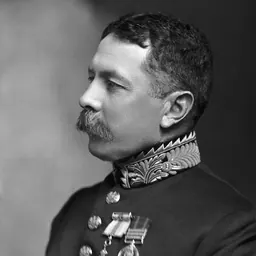

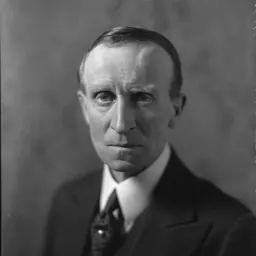


Related people
Same field, nearest in time


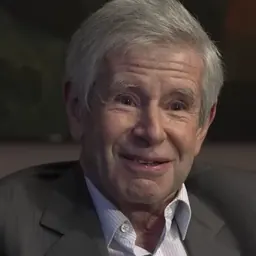
Contemporaries
People whose lives overlapped Peter Hopkirk's
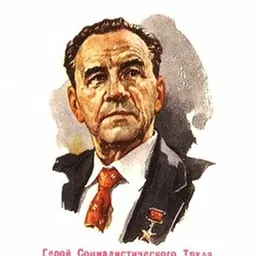
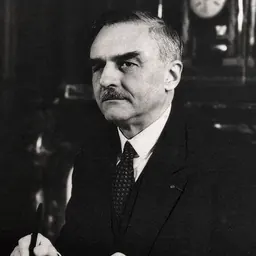
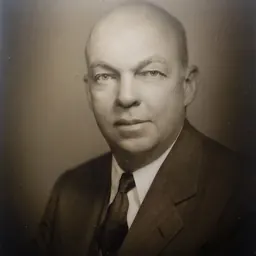

Frequently asked questions
Who was Peter Hopkirk?
British author (1930–2014)
When was Peter Hopkirk born?
Peter Hopkirk was born on 15 December 1930 in Nottingham.
When did Peter Hopkirk die?
Peter Hopkirk died on 22 August 2014 in London.
What was Peter Hopkirk's occupation?
Peter Hopkirk was a journalist, essayist, historian, writer and non-fiction writer.
What nationality was Peter Hopkirk?
Peter Hopkirk was British.
Sources & further reading
Cite this page
APA: Biography.guide. (2026). Peter Hopkirk. https://biography.guide/peter-hopkirk/
MLA: "Peter Hopkirk." Biography.guide, https://biography.guide/peter-hopkirk/.
Chicago: "Peter Hopkirk." Biography.guide. https://biography.guide/peter-hopkirk/.
Data last updated: 2026-09-20 · Spot an error? Report a correction.
Page generated 2026-09-27 05:07 UTC