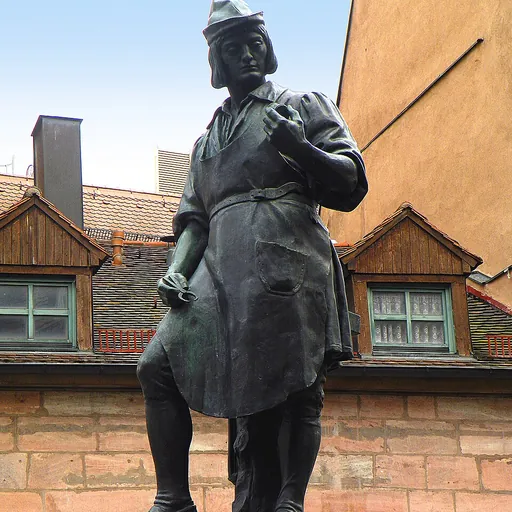
About Peter Henlein
Lived 1485 – 1510 (aged 24–25). Peter Henlein was a watchmaker, inventor and metalworker, known for Watch.
Peter Henlein (also spelled Henle or Hele) He was among the first craftsmen to make small portable spring-driven clocks, worn as pendants, or attached to clothing, that are regarded as the earliest watches. Some popular accounts also credit Henlein with inventing the mainspring, although this fact is disputed.
Life Henlein grew up in Nuremberg. His parents were Peter, a brass forger and citizen of Nuremberg since 1461, and Barbara Henlein. He had one older brother, Herman Henlein, who became also a master cutler in 1496. In his life he was married to three women: Kunigunde Ernst, his first wife, and Margarethe, his second, and Walburga Schreyer, his third wife.
On September 7, 1504, he was involved in a brawl in which a fellow locksmith, Georg Glaser, was killed. As one of the accused he asked for and received asylum in the of Nuremberg, where he lived until 1508. This monastery had a history as a center of scientific and astronomical knowledge. During his asylum he may have gained deeper knowledge of the craft of clockmaking there.
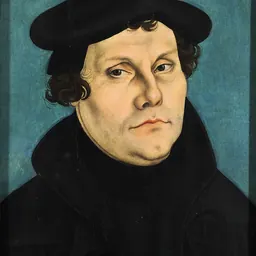
“Every day they (the craftsmen of Nuremberg) invent finer things. For example, Peter Hele (Henlein), still a young man, fashions works that even the most learned mathematicians admire: for from only a little bit of iron he makes clocks with many wheels, which, no matter how one might turn them, show and chime the hours for forty hours without any weight, even when carried at the breast or in a handbag (purse).”Johann Neudörfers wrote in 1547 that Henlein invented the portable pomander watches (die bisam Köpf zu machen erfunden). A paper from 1524 records that Heinlein was paid 15 florins (one florin is approximately between 140 and 1000 modern US dollars) for a gilt pomander watch. His customers included the high society of the 16th century, f. e. Martin Luther, Kaspar von Schöneich (chancellor of Mecklenburg), Frederick III, Elector of Saxony, Kardinal Albrecht from Brandenburg, Philip Melanchthon, Mercurino di Gattinara as well as gifts which were given by the Nuremberg Council.
The Peter Henlein Fountain was unveiled on the occasion of the opening of the watch exhibition in. The fountain was donated by the City of Nuremberg and the watchmakers’ association. Inscription: ‘IN MEMORY OF THE INVENTOR OF THE POCKET WATCH PETER HENLEIN FROM THE CITY OF NUREMBERG AND THE GERMAN WATCHMAKERS ASSOCIATION’.
Much earlier, the Walhalla in Donaustauf, which is a memorial for "politicians, sovereigns, scientists and artists of the German tongue", honors Peter Henlein in 1842, at its inauguration with the words inventor of the pocket watch. By coincidence, it was the 300th anniversary of his death.Original words (Walhalla memorial): Erfinder der Sackuhren, Adalbert Müller wrote additionally 1884: Seines Zeichens ein Schlosser, wohnhaft in der seit Jahrhunderten durch Bewerbsamkeit und Erfindungsgeist sich hervortuhenden Stadt Nürnberg
Mainspring The mainspring which made portable clocks possible, often attributed to him, actually appeared in the early 15th century, almost a century before his work.
Pomander watch and Nuremberg eggs Pomander Watch 1530 created by Peter Henlein. It once belonged to Philip Melanchthon and is now in the Walters Art Museum, Baltimore. Henlein did not create the typical Nuremberg eggs - he crafted mainly portable pomander watches. Although they are associated with Henlein, and are a development of the watch-making tradition of Henlein's time, they thus become popular only several decades after his death.
The German word Eierlein "little egg" is a corruption of a diminutive of Uhr (Middle Low German ûr, from Latin hora) "clock", Aeurlein or Ueurlein (Modern German Ührlein). The association with "eggs" may arise with a 1571 translation of Rabelais by Johann Fischart in 1571; Fischart translated as Eierlein an instance of Ueurlein in Rabelais. This form of the name may have played a part in inspiring the oval shape becoming popular in the 1580s.
The former watchmaker and art collector Jürgen Abeler from the Wuppertaler Watch Museum concludes about pomander watches in his book: "So if any one of the preserved watches at all should be linked with the person of Peter Henlein, it can only be this watch in the pomander."
As a citizen of Nuremberg, Peter Henlein had the privilege of living in the midst of this intellectual atmosphere. The development of his work craftsmanship was based on the development of metalwork and mechanics in Nuremberg.The atmosphere of the European Renaissance and the Renaissance city of Nuremberg was shaped by the many cultural influences affecting it
Peter Henlein most likely procured this Oriental pomander in the monastery. The plague had descended on Nuremberg in 1505 and the pomander as status symbol had returned to the awareness of many of his high-ranking contemporaries. In an age of new perspectives, it must have been very tempting to place the essence or spirit of time in the container of a fragrance dispenser.
Don’t just read it —
keep it.
Full-length biographies made to live with: read them, listen on the way to work, watch them tonight.
- E-book
- Audio
- Video
Instant download · yours to keep · every purchase keeps this site free
Important facts
People in Peter Henlein's life
Named in this biography and alive at the same time
Related people
Same field, nearest in time





Contemporaries
People whose lives overlapped Peter Henlein's

Frequently asked questions
Who was Peter Henlein?
German inventor and watchmaker (1485–1510)
When was Peter Henlein born?
Peter Henlein was born in 1485 in Nuremberg.
When did Peter Henlein die?
Peter Henlein died in 1510 in Nuremberg.
What was Peter Henlein's occupation?
Peter Henlein was a watchmaker, inventor and metalworker.
What was Peter Henlein known for?
Peter Henlein was known for Watch.
What nationality was Peter Henlein?
Peter Henlein's recorded nationality: Nuremberg.
Sources & further reading
Cite this page
APA: Biography.guide. (2026). Peter Henlein. https://biography.guide/peter-henlein/
MLA: "Peter Henlein." Biography.guide, https://biography.guide/peter-henlein/.
Chicago: "Peter Henlein." Biography.guide. https://biography.guide/peter-henlein/.
Data last updated: 2026-09-22 · Spot an error? Report a correction.
Portrait: Wikimedia Commons · author & licence
Page generated 2026-09-27 05:03 UTC