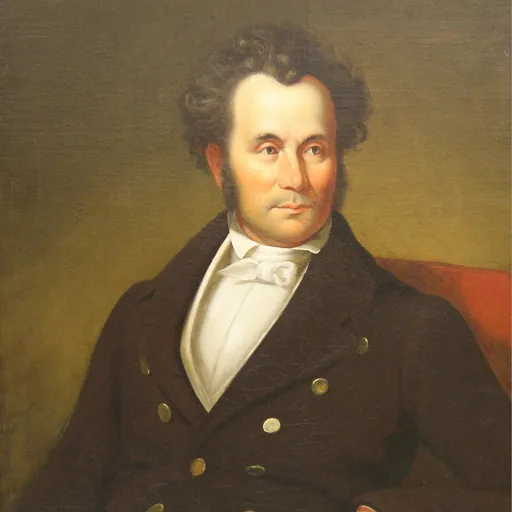
About Peter Force
Lived 1790 – 1868 (aged 77). Peter Force was an American librarian, politician, writer, historian and archivist.
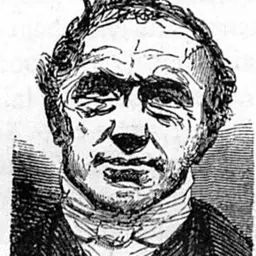
Peter Force (November 26, 1790 – January 23, 1868) was an American politician, newspaper editor, printer, archivist, and early American historian. He served as Mayor of the city of Washington from 1836 to 1840.
Born in New Jersey, Force served in the Washington militia as a lieutenant during the War of 1812 and afterward was a printer. Politically, he belonged to the Whig Party and supported John Quincy Adams, leading to several government appointments in the 1820s. Later, during the international political unrest caused by the American Civil War, Force was sent to Europe by the Lincoln Administration to stabilize diplomatic relations with France and England. He is also noted for editing and publishing a massive collection of historical documents, books and maps in several volumes relating to colonial and revolutionary American history which were ultimately purchased by the Library of Congress for a large sum.
Life and career Peter Force was born near the Passaic Falls in New Jersey, the son of William Force and Sarah Ferguson. William was a soldier in the Revolutionary War and a descendant of French Huguenots who arrived on America's shores in the 17th century. His father's participation in the war largely inspired Peter's interest in history. Force grew up in New Paltz, Ulster County, New York, and afterward moved to New York City, where he was schooled in the printing trade. Force married Hannah Evans; together they had ten children, including sons William Quereau Force (1820–1880), (William became an editor and clerk in the Smithsonian Institution.)
In 1812 Force became a member of the New York Typographical Society, which was the city's printer trade union at the time. He was initiated at its general meeting on February 1, 1812. He was elected a director on December 5, 1812, and at age twenty-two was chosen president on July 3, 1813, with his re-election following in 1814 and 1815. In 1815, Force's employer secured a contract for the printing of Congress, and moved to Washington, D.C., and Peter Force, at age twenty-five, followed and also became a resident and a printer in that city. Soon he formed a partnership with Davis working as the foreman and public printer in the congressional printing plant, which at the time was quite small, having only four single-pull, wooden hand presses, which were sufficient to do all the work of the Government in 1816. In that same year he joined the Columbia Typographical Society and in 1826 became its first "free member". When Davis withdrew from the partnership Force formed other partnerships, of which he was the master mind.
Early in his career in Washington Force attracted the attention of distinguished statesmen, and he was a leading character in the city throughout his life. From 1820 to 1836, with a three-year interval involved in politics, he published the National Calendar, which later became the National Calendar and Annals of the United States.
During the 1820s, Force was a member of the prestigious society, Columbian Institute for the Promotion of Arts and Sciences and served as the president.
During his lifetime he was also a member of the Smithsonian Institution and the United States Naval Observatory, and played a major role in organizing the American Historical Society, in Washington in 1836. On August 22, 1822, Force was granted US Patent 3573X for a method of color printing. He also founded, published, and wrote in the National Journal (1823–1830) and would later donate a stone to the Washington Monument. After vigorously supporting John Quincy Adams' election to the presidency in 1824,
Up until the early 1850s, the Library of Congress lacked a geographical department and an adequate collection of maps for an institution of its size and station. Lieutenant Edward B. Hunt of the U.S. Army formulated a plan and proposed a resolution for such a department and appointed a committee to review the proposal. Force was on the committee that passed that resolution in 1856. and Force were co-publishers of Force's American Archives. Force's lifelong desire to contribute to the Library of Congress finally came to fruition in 1867 when through an act of Congress it purchased his collection of original documents for $100,000,
During his years of pursuing and buying archival material Force carried off prizes at auctions which the other competitors were not knowledgeable of. Force traveled about the eastern seaboard of the United States "ransacking" the book-shops and attending book auctions from Boston to Charleston in his tireless search for rare volumes. On one such occasion he was a bidder against the Library of Congress for a sizable and valuable library of bound pamphlets, the property of an early collector, who had consigned them to an auction house in Philadelphia. On another occasion while in Boston Force acquired from an antiquarian bookseller the only collection of Boston Revolutionary newspapers which were offered for sale in the last twenty-five years. He was soon reproached by some visitors from New England and admonished for depriving New England of its archival treasure. He rebuffed them replying, "Why didn't you buy them yourselves, then?" Force was relentless in his efforts to acquire complete and unbroken collections of all the Washington newspapers he could lay his hands on. After some thirty years he had amassed a collection which nearly filled the basement in his home. Into his elder years Force often visited the War Department, approaching various Army officers he knew in his quest for archival material. His collection of the printed "Army orders" from the War Department was considered "a miracle of completeness".
In 1867 the Library of Congress and a joint Committee of Congress was formed for the purpose of examining the extensive assortment of archival material in the Peter Force library. Because of its enormous size, totaling approximately 150,000 items, it was necessary for the committee to enter closely into details, and to devote much time and assiduous effort to the task of assessing Force's library. The committee spent at least two to three hours per day, for a two month period, in the examination of every document, manuscript, book, map, etc, that passed through their hands. To help simplify matters the contents of the Force library were categorized into seven basic classes. (Archivial categories: 1.) Printed books relating to America. 2. Early American newspapers. 3. Pamphlets relating to America. 4. Maps. 5. Incunabula; or books printed during the infancy of the art. 6. Manuscripts and autographs. 7. MS. materials for the American Archives, or Documentary History of America.
Among the items in Force's collection, and considered the most valuable, are a series of original military maps and plans in manuscript, from the French and Indian War and the American Revolutionary War. Claimed by some historians to be of exceeding interest, many of them are the actual work of officers in the American and British armies. The collection of some 300 hand-drawn maps covers the entire United States from Canada to the Gulf of Mexico. Among the manuscript items in Force's library are 48 folio volumes containing historical autographs of great rarity. In 1867 Ainsworth R. Spofford edited an eight-page report of the Committee's findings and assessments. In 1875, Peter Force's son, William Q. Force, donated various personal papers he had discovered to the Library of Congress.
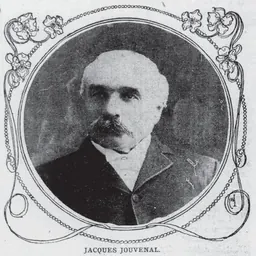
Final days Force maintained his ardent pursuit of collecting books, newspapers, manuscripts and other documents up until the week before he died, on January 23, 1868, at the age of 77. He is buried alongside his wife in Rock Creek Cemetery in Washington D.C. Force's grave marker was designed by German sculptor Jacques Jouvenal. It is a marble obelisk that stands 16 feet high and rests on top of a square base. A relief is carved into the obelisk of a bookshelf filled with books. The District opened the Peter Force School in 1879 on the south side of Massachusetts Avenue between 17th and 18th Streets. It was razed in 1962.
Selected works American archives: consisting of a collection of authentick records, state papers, debates, and letters and other notices of publick affairs, the whole forming a documentary history of the origin and progress of the North American colonies; of the causes and accomplishment of the American revolution; and of the Constitution of government for the United States, to the final ratification thereof. Prepared and published under authority of an act of Congress. Volumes 1, 2, 3, 4, 5, 6 Tracts and other papers relating principally to the origin, settlement, and progress of the colonies in North America : from the discovery of the country to the year 1776. Volumes 1, 2 The Declaration of Independence, or, Notes on Lord Mahon's History of the American Declaration of Independence
Don’t just read it —
keep it.
Full-length biographies made to live with: read them, listen on the way to work, watch them tonight.
- E-book
- Audio
- Video
Instant download · yours to keep · every purchase keeps this site free
Important facts
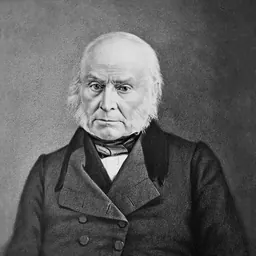
People in Peter Force's life
Named in this biography and alive at the same time
Related people
Same field, nearest in time





Contemporaries
People whose lives overlapped Peter Force's


Frequently asked questions
Who was Peter Force?
American mayor, newspaper editor and historian (1790-1868)
When was Peter Force born?
Peter Force was born on 26 November 1790 in Passaic County.
When did Peter Force die?
Peter Force died on 23 January 1868 in Washington, D.C..
What was Peter Force's occupation?
Peter Force was a librarian, politician, writer, historian and archivist.
What nationality was Peter Force?
Peter Force was American.
Sources & further reading
Cite this page
APA: Biography.guide. (2026). Peter Force. https://biography.guide/peter-force/
MLA: "Peter Force." Biography.guide, https://biography.guide/peter-force/.
Chicago: "Peter Force." Biography.guide. https://biography.guide/peter-force/.
Data last updated: 2026-09-24 · Spot an error? Report a correction.
Portrait: Wikimedia Commons · author & licence
Page generated 2026-09-27 05:08 UTC