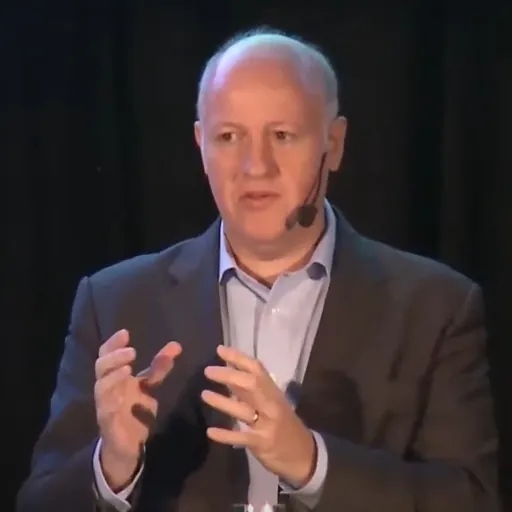
About Peter Daszak
Born 2000. Peter Daszak is a British and American ecologist, scientist, zoologist and zoology.
Peter Daszak (born ) is a British zoologist, consultant and public expert on disease ecology, in particular on zoonosis. He is a member of the Center for Infection and Immunity at the Columbia University Mailman School of Public Health. Daszak was the president of EcoHealth Alliance, a nonprofit non-governmental organization that supports various programs on global health and pandemic prevention, until January 2025.
Daszak and other virologists long warned of the potential of SARS-like coronaviruses to cause epidemics like those seen in the 2002–2004 SARS outbreak or the 2012 MERS outbreak, and Daszak collaborated with the Wuhan Institute of Virology (WIV) to study coronaviruses in China. After the outbreak of the COVID-19 pandemic, Daszak became a member of the World Health Organization team sent to investigate the origins of the COVID-19 pandemic in China. Daszak became a frequent target of criticism, accusations, and threats, obscuring research into the origin of SARS-CoV-2. In 2025, the United States Department of Health and Human Services debarred Daszak for five years, alleging reporting irregularities and criticizing Daszak's research in China.
Education Daszak earned a B.Sc. in zoology in 1987, at Bangor University and a Ph.D. in parasitic infectious diseases in 1994 at University of East London. He has adjunct positions at two universities in the U.K. and three universities in the U.S., including the Columbia University Mailman School of Public Health.
He was one of the early adopters of conservation medicine. The Society for Conservation Biology symposium in 2000, had focused on the "complex problem of emerging diseases".
Coronaviruses in southeast Asia Starting in 2014, Daszak was Principal Investigator of a six-year NIH project which was awarded to the EcoHealth Alliance and which focused on the emergence of novel zoonotic coronaviruses with a bat origin. The six 1-year projects received $3.75 million in funding from the National Institute of Allergy and Infectious Diseases (NIAID), part of the U.S. National Institutes of Health agency.
Daszak has served on committees of the International Union for Conservation of Nature, World Health Organization (WHO), National Academy of Sciences, and United States Department of the Interior.
During times of large virus outbreaks Daszak has been invited to speak as an expert on epidemics involving diseases moving across the species barrier from animals to humans. At the time of the Ebola outbreak in West Africa in 2014, Daszak said "Our research shows that new approaches to reducing emerging pandemic threats at the source would be more cost-effective than trying to mobilize a global response after a disease has emerged".
In October 2019, when the U.S. federal government "quietly" ended the ten-year old program called PREDICT, operated by United States Agency for International Development (USAID)'s emerging threats division, Daszak said that, compared to the $5 billion the U.S. spent fighting Ebola in West Africa, PREDICT—which cost $250 million—was much less expensive. Daszak further stated, "PREDICT was an approach to heading off pandemics, instead of sitting there waiting for them to emerge, and then mobilizing." While Daszak led EcoHealth Alliance, the organization administered more than $100 million in U.S. federal grants to fund overseas laboratory experiments.
COVID-19 pandemic
Early warning After the outbreak of the COVID-19 pandemic, Daszak noted in The New York Times that he and other disease ecologists had warned the WHO in 2018 that the next pandemic "would be caused by an unknown, novel pathogen that hadn't yet entered the human population", probably in a region with significant human-animal interaction. The group included this hypothetical "Disease X" pathogen on a list of eight diseases which they recommended should be given highest priority in regard to research and development efforts, such as finding better diagnostic methods and developing vaccines. He said, "As the world stands today on the edge of the pandemic precipice, it's worth taking a moment to consider whether Covid-19 is the disease our group was warning about." The University of California announced that the extension would support "detection of SARS-CoV-2 cases in Africa, Asia and the Middle East to inform the public health response" as well as investigation of "the animal source or sources of SARS-CoV-2 using data and samples collected over the past 10 years in Asia and Southeast Asia." In June 2021, The Lancet published an addendum in which Daszak listed his cooperation with researchers in China, and he also recused himself from The Lancets inquiry commission focused on COVID-19 origins.
EcoHealth Alliance's project funding was "abruptly terminated" on 24 April 2020, by the National Institutes of Health. The move met with criticism, including by a group of 77 Nobel Prize laureates who wrote to NIH Director Francis Collins that they "are gravely concerned" by the decision and called the funding cut "counterintuitive, given the urgent need to better understand the virus that causes COVID-19 and identify drugs that will save lives." An article on 8 May 2020 in the journal Science stated that the unusual 24 April decision to cut EcoHealth's funding had occurred shortly after "President Donald Trump allegedwithout providing evidencethat the pandemic virus had escaped from a Chinese laboratory supported by the NIH grant, and vowed to end the funding."
In May 2020, Daszak "said there was 'zero evidence' that the virus" was created in the Wuhan Institute of Virology during an appearance on "60 Minutes."
WHO investigation
In 2020 Daszak was named by the World Health Organization as the sole U.S.-based representative on a team sent to investigate the origins of the COVID-19 pandemic, a team that also included Marion Koopmans, Hung Nguyen, and Fabian Leendertz. on efforts to trace SARSr-CoV viruses to bats after the 2002–2004 SARS outbreak.
Some critics, including journalist Nicholas Wade and biologist Richard H. Ebright, alleged that Daszak had a conflict of interest investigating the virus' origins in China. In 2021, a complaint was issued by a few Republican representatives asking for Daszak to be expelled from the National Academy of Medicine (NAM) based on conduct allegations. In 2022 this request was denied by the NAM, citing "no evidence" of the alleged breach in conduct. The conduct probe by NAM to exonerate Daszak drew wider circles as the Republican minority staff of a bipartisan Senate committee led by Senator Richard Burr stated "that the pandemic most likely began when the virus somehow escaped from WIV". Some NAM members called the probe into Daszak "frivolous and political", and wrote that such accusations against China are detrimental to pandemic preparedness, and hinder international collaboration to confront pandemics effectively.
Response of US Government In May 2024, members of a U.S. House panel questioned Daszak regarding EcoHealth Alliance's federally funded coronavirus research and its collaboration with the Wuhan Institute of Virology.
After the questioning, professor Lawrence Gostin warned the episode might imperil needed international collaborations, while virologist Angela Rasmussen called it "an attack on science" and "dangerous" to scientific inquiry. On January 17, 2025, HHS formally debarred both Daszak and EcoHealth Alliance for five years.
Daszak, Linfa Wang, and Shi Zhengli are three scientists featured in a 2025 documentary by Swiss filmmaker Christian Frei called Blame. The film focuses on how misinformation and conspiracy theories spread about the COVID-19 pandemic.
In August 2026, former NIAID official David Morens pleaded guilty to conspiracy to evade federal public-records laws over communications concerning coronavirus research grants. Politico reported that court filings identified Daszak as one of Morens's uncharged co-conspirators and said that Daszak, Morens, and another researcher had agreed to use Morens's personal Gmail account instead of his government email because they anticipated Freedom of Information Act requests. Daszak has not been charged with any crime in the case. In 2018, he was elected to the National Academy of Medicine. He is commemorated in the names of the centipede Cryptops daszaki, as well as the apicomplexan parasite Isospora daszaki.
Don’t just read it —
keep it.
Full-length biographies made to live with: read them, listen on the way to work, watch them tonight.
- E-book
- Audio
- Video
Instant download · yours to keep · every purchase keeps this site free
Important facts
People in Peter Daszak's life
Named in this biography and alive at the same time






Related people
Same field, nearest in time




Contemporaries
People whose lives overlapped Peter Daszak's


Frequently asked questions
Who is Peter Daszak?
zoologist, disease ecologist
When was Peter Daszak born?
Peter Daszak was born in 2000.
What is Peter Daszak's occupation?
Peter Daszak is an ecologist, scientist, zoologist and zoology.
What nationality is Peter Daszak?
Peter Daszak is British and American.
Sources & further reading
Cite this page
APA: Biography.guide. (2026). Peter Daszak. https://biography.guide/peter-daszak/
MLA: "Peter Daszak." Biography.guide, https://biography.guide/peter-daszak/.
Chicago: "Peter Daszak." Biography.guide. https://biography.guide/peter-daszak/.
Data last updated: 2026-09-22 · Spot an error? Report a correction.
Portrait: Wikimedia Commons · author & licence
Page generated 2026-09-27 04:59 UTC