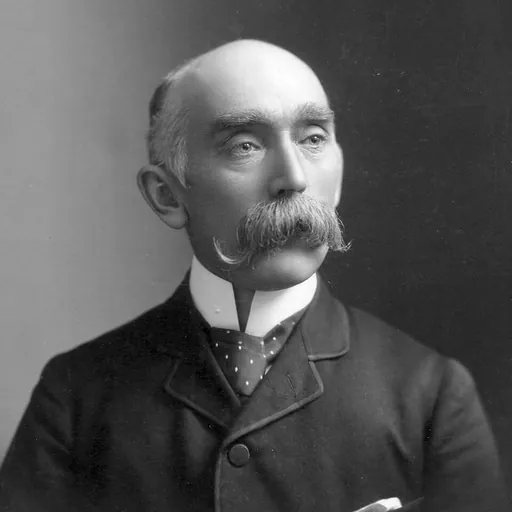
About Peter Bryce
Lived 1853 – 1932 (aged 78). Peter Bryce was a Canadian physician and writer.
Peter Henderson Bryce (August 17, 1853 – January 15, 1932) was a public health physician for the Ontario provincial and Canadian federal governments. As a public official he submitted reports that highlighted the mistreatment of Indigenous students in the Canadian Indian residential school system and advocated for the improvement of environmental conditions at the schools. He also worked on the health of immigrant populations in Canada.
Biography Peter Bryce was born in Mount Pleasant, Ontario, on August 17, 1853. He obtained his medical degree from the University of Toronto, where he studied natural science geology, and went on to study neurology in Paris. He lectured in 1878-79 at the Ontario Agricultural College in Guelph, Ontario, in science and applied chemistry. Bryce served as the first secretary of the Ontario Board of Health from 1882 to 1904, and was also named as Ontario's first Chief Officer of Health in 1887 and Ontario Deputy Registrar General (in charge of Vital Statistics) in 1892. He was a member of the Canadian Association for the Prevention of Tuberculosis, and in 1900 became the first Canadian president of the American Public Health Association. His 1905 and 1906 annual reports emphasized the abnormally high death rates for Indigenous peoples in Canada. In 1907 he wrote a "Report on the Indian Schools of Manitoba and the Northwest Territories" describing the health conditions of the Canadian residential school system in western Canada and British Columbia. This report was published without its recommendations, as Bryce discussed in his 1922 book The Story of a National Crime: Being a Record of the Health Conditions of the Indians of Canada from 1904 to 1921.
Bryce wrote that Indigenous children enrolled in residential schools were deprived of adequate medical attention and sanitary living conditions. He suggested improvements to national policies regarding the care and education of Indigenous peoples. In a 1907 report Bryce cited an average mortality rate of between 15% and 24% among the schools' children and 42% in Aboriginal homes, where sick children were sometimes sent to die. Bryce noted that the lack of certainty about the exact number of deaths was, in part, due to the official reports submitted by school principals and "defective way in which the returns had been made." thumb Bryce's grave site in OttawaHe appealed his forced retirement from the Civil Service in 1921 and was denied, subsequently publishing his suppressed report condemning the treatment of the Indigenous at the hands of the Department of Indian Affairs that had been given the responsibility under the British North America Act. Bryce died on January 15, 1932, while travelling in the West Indies. Dr. Bryce is buried and honoured at Beechwood Cemetery in Ottawa, the same location as Nicholas Flood Davin, author of the 1879 Davin Report that called for the establishment of a residential school system in Canada and Duncan Campbell Scott who served as deputy superintendent of the Department of Indian Affairs from 1913-1932.
Legacy
To assist reconciliation while also addressing historical and societal injustices, Beechwood Cemetery has a Reconciling History program, where “school children of all backgrounds...place paper hearts of gratitude and remembrance at Dr. Bryce’s grave site, as they do their own part for reconciliation."
There are multiple plaques commemorating Bryce's efforts in improving public health and his outspoken views on residential schools. The first was erected in 2015 near Bryce's grave by the First Nations Child and Family Caring Society.
Publications
"Report on the Indian schools of Manitoba and the Northwest Territories". Internet Archive. Ottawa : Government Printing Bureau, 1907. Retrieved 5 June 2021. "Insanity in immigrants: a paper read before the American Public Health Association, at Richmond, Va., October, 1909". Internet Archive. Ottawa: Government Printing Bureau, 1910. Retrieved 5 June 2021. "The illumination of Joseph Keeler, Esq., or, On, to the land!". Internet Archive. Boston, Mass.: The American Journal of Public Health, 1915. Retrieved 5 June 2021.
Don’t just read it —
keep it.
Full-length biographies made to live with: read them, listen on the way to work, watch them tonight.
- E-book
- Audio
- Video
Instant download · yours to keep · every purchase keeps this site free
Important facts
People in Peter Bryce's life
Named in this biography and alive at the same time

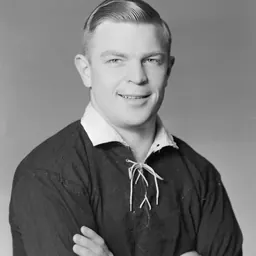
Related people
Same field, nearest in time
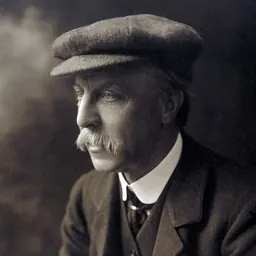




Contemporaries
People whose lives overlapped Peter Bryce's



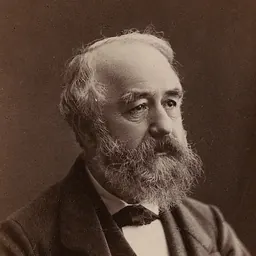


Frequently asked questions
Who was Peter Bryce?
Canadian health official (1853-1932)
When was Peter Bryce born?
Peter Bryce was born on 17 August 1853 in County of Brant, Mount Pleasant.
When did Peter Bryce die?
Peter Bryce died on 15 January 1932 in West Indies.
What was Peter Bryce's occupation?
Peter Bryce was a physician and writer.
What nationality was Peter Bryce?
Peter Bryce was Canadian.
Sources & further reading
Cite this page
APA: Biography.guide. (2026). Peter Bryce. https://biography.guide/peter-bryce/
MLA: "Peter Bryce." Biography.guide, https://biography.guide/peter-bryce/.
Chicago: "Peter Bryce." Biography.guide. https://biography.guide/peter-bryce/.
Data last updated: 2026-09-22 · Spot an error? Report a correction.
Portrait: Wikimedia Commons · author & licence
Page generated 2026-09-27 05:02 UTC