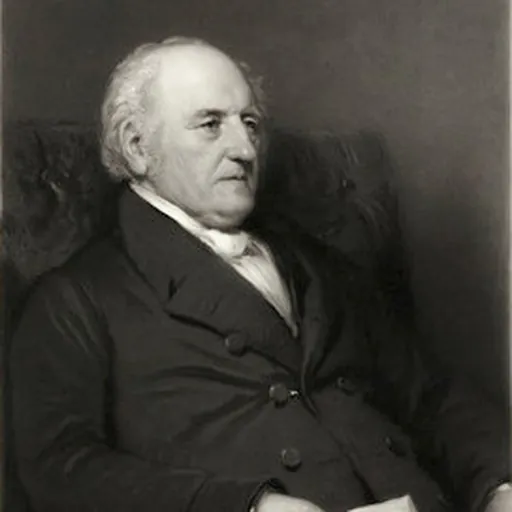
Peter Barlow
British mathematician and physicist
About Peter Barlow
Lived 1776 – 1862 (aged 85). Peter Barlow was a British mathematician, physicist and university teacher, known for Barlow lens, Barlow's formula and Barlow's wheel.
Peter Barlow (13 October 1776 – 1 March 1862) was an English mathematician and physicist.
Work in mathematics
In 1801, Barlow was appointed assistant mathematics master at the Royal Military Academy, Woolwich, and retained this post until 1847. He is credited with Barlow's wheel (an early homopolar electric motor) and with Barlow's law (an incorrect formula of electrical conductance).
Barlow investigated a suggestion made by André-Marie Ampère in 1820 that an electromagnetic telegraph could be made by deflecting a compass needle with an electric current. In 1824 Barlow proclaimed the idea impractical after he found that the effect on the compass seriously diminished "with only 200 feet of wire". Barlow, and other eminent scientists of the time who agreed with him, have subsequently been criticised for retarding the development of the telegraph. A decade passed between Ampère's paper being read at the Paris Academy of Sciences and William Ritchie building the first demonstration electromagnetic telegraph. In Barlow's defence, Ampère's design did not enclose the compass in a multiplying coil, as Ritchie's demonstrator did, so the effect would have been very weak at a distance.
Steam locomotion received much attention at Barlow's hands and he sat on the railway commissions of 1836, 1839, 1842 and 1845. He also conducted several investigations for the newly formed Railway Inspectorate in the early 1840s.
Barlow made several contributions to the theory of strength of materials, including Essay on the strength and stress of timber (1817) which contains experimental data collected at Woolwich. The sixth edition (1867) of this work was prepared by Barlow's two sons after his death and contains a biography of their father. Barlow also applied his knowledge of materials to the design of bridges.
Following his death in 1862 at his home in Charlton, he was buried in Charlton Cemetery.
Don’t just read it —
keep it.
Full-length biographies made to live with: read them, listen on the way to work, watch them tonight.
- E-book
- Audio
- Video
Instant download · yours to keep · every purchase keeps this site free
Important facts
People in Peter Barlow's life
Named in this biography and alive at the same time
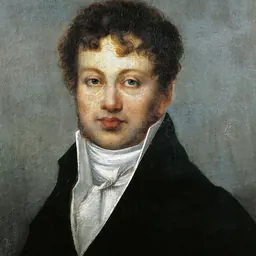

Related people
Same field, nearest in time



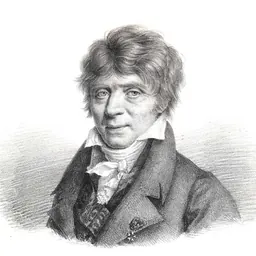

Contemporaries
People whose lives overlapped Peter Barlow's




Frequently asked questions
Who was Peter Barlow?
British mathematician and physicist
When was Peter Barlow born?
Peter Barlow was born on 13 October 1776 in Norwich.
When did Peter Barlow die?
Peter Barlow died on 1 March 1862 in Kent.
What was Peter Barlow's occupation?
Peter Barlow was a mathematician, physicist and university teacher.
What was Peter Barlow known for?
Peter Barlow was known for Barlow lens, Barlow's formula and Barlow's wheel.
What nationality was Peter Barlow?
Peter Barlow was British.
Sources & further reading
· DBpedia: Peter Barlow (mathematician)
Cite this page
APA: Biography.guide. (2026). Peter Barlow. https://biography.guide/peter-barlow/
MLA: "Peter Barlow." Biography.guide, https://biography.guide/peter-barlow/.
Chicago: "Peter Barlow." Biography.guide. https://biography.guide/peter-barlow/.
Data last updated: 2026-09-22 · Spot an error? Report a correction.
Portrait: Wikimedia Commons · author & licence
Page generated 2026-09-27 05:01 UTC