
About Pete Dye
Lived 1925 – 2020 (aged 94). Pete Dye was an American golfer, golf course designer and designer.
Paul Dye Jr. (December 29, 1925 – January 9, 2020), commonly referred to as Pete Dye, was an American golf course designer and a member of a family of course designers. As a youngster, he worked and played that course. While attending Urbana High School, he won the Ohio state high school golf championship, and medaled in the state amateur golf championship, all before entering the U.S. Army at age 18 in 1944 during World War II. Dye entered the Airborne School at Fort Benning in Georgia to be a paratrooper in the 82nd Airborne Division, but the war ended while he was in training. He was stationed at Fort Bragg in North Carolina where he served the rest of his hitch as greenskeeper on the base golf course. Dye explained,
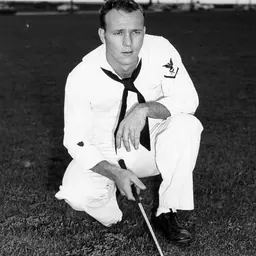
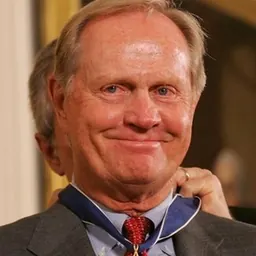
"I played the golf course at Pinehurst No. 2 for six solid months, and I got to know Mr. Donald Ross...(who) had built the Fort Bragg golf course. He would come over and watch us play golf, and most of the time the captain and colonel hauled me over there. They didn't know who Mr. Ross was, but the other fellow walking with him was JC Penney, and they all knew him." Within a few years, he distinguished himself as a million dollar salesman, and was also successful in amateur golf. Dye won the Indiana amateur championship in 1958, following runner-up finishes in 1954 and 1955 . At age 31, he qualified for the in 1957 at Inverness Club in Toledo, Ohio, but shot 152 (+12) to miss the cut by two strokes, as did Arnold Palmer; seventeen-year-old amateur Jack Nicklaus was eight strokes behind them at 160. Their first 18-hole course was created during 1962 in Indianapolis and named Heather Hills, now known as Maple Creek Golf & Country Club.
Dye designed the Radrick Farms Golf Course for the University of Michigan in 1962, but the course did not open until 1965. At the time, he was using the design style of Trent Jones, but after seeing the work of Alister MacKenzie, who designed the 1931 Michigan course, Dye decided to incorporate features from two greens into his next project. Nicklaus credits Dye with significant influence on his own approach to golf course design. Also in 1969, Dye designed his first course in Florida called Delray Dunes. In 1970, he designed Martingham Golf Course in St. Michaels, Maryland, now known as Harbourtowne Resort. The owners of the project went bankrupt and Dye went unpaid; the course was eventually finished, however, and had many of Dye's signature course characteristics such as deep bunkers, small greens, short challenging par fours, and railroad ties. In 2015, the property was purchased by Richard D. Cohen who has entered into an agreement with Dye to update and redesign the course. The new owner agreed to pay the funds that were not paid during the original design.
In 1986, Dye also designed a course in the Italian province of Brescia, near Lake Iseo, the Franciacorta Golf Club, recognized today as a wine golf course. Dye is considered to be one of the most influential course architects in the world. His designs are known for distinctive features, including small greens and the use of railroad ties to hold bunkers. His design for the Brickyard Crossing golf course at the Indianapolis Motor Speedway utilized the dismantled outer retaining wall from the race track. He is known for designing the "world's most terrifying tee shot," the par-3 17th hole of the Stadium Course at TPC at Sawgrass in Ponte Vedra Beach, Florida. Known as the "Island Green," it gained wide notice in 1982, during the first Players Championship at the new course. Dye's designs have been credited with returning short and medium length par fours to golf. Many of the best young golf architects have "pushed dirt" for Pete, including Bill Coore, Tom Doak, John Harbottle, Butch Laporte, Tim Liddy, Scott Poole, David Postlewaite, Lee Schmidt, Keith Sparkman, Jim Urbina, Bobby Weed, Rod Whitman, and Abe Wilson.
Death In the last years of his life, Dye suffered from Alzheimer's disease. Dye died on January 9, 2020.
Awards and honors
In 1995, the American Society of Golf Course Architects bestowed the Donald Ross Award on Dye In 2003, Dye received the Old Tom Morris Award from the Golf Course Superintendents Association of America, their highest honor In 2004, he was the recipient of the PGA Distinguished Service Award, the highest annual honor of the PGA of America, which recognizes individuals who display leadership and humanitarian qualities, including integrity, sportsmanship and enthusiasm for the game of golf In 2005, Dye became the sixth recipient of the PGA Tour Lifetime Achievement Award Dye was named Architect of the Year by Golf World magazine Dye was awarded a Doctor of Landscape Architecture degree from Purdue University Dye received Indiana's Sagamore of the Wabash award Late in his career, he became an honorary member of the Indiana PGA. It was the 11th award honor he had received over the course of his career
Courses designed
Dye is credited with designing more than 200 courses internationally during his lifetime.
Don’t just read it —
keep it.
Full-length biographies made to live with: read them, listen on the way to work, watch them tonight.
- E-book
- Audio
- Video
Instant download · yours to keep · every purchase keeps this site free
Important facts
Family & relationships
People in Pete Dye's life
Named in this biography and alive at the same time




Related people
Same field, nearest in time

Contemporaries
People whose lives overlapped Pete Dye's



Frequently asked questions
Who was Pete Dye?
Golf course architect, amateur golfer (1925–2020)
When was Pete Dye born?
Pete Dye was born on 29 December 1925 in Urbana.
When did Pete Dye die?
Pete Dye died on 9 January 2020 in Gulf Stream.
What was Pete Dye's occupation?
Pete Dye was a golfer, golf course designer and designer.
What nationality was Pete Dye?
Pete Dye was American.
Sources & further reading
Cite this page
APA: Biography.guide. (2026). Pete Dye. https://biography.guide/pete-dye/
MLA: "Pete Dye." Biography.guide, https://biography.guide/pete-dye/.
Chicago: "Pete Dye." Biography.guide. https://biography.guide/pete-dye/.
Data last updated: 2026-09-22 · Spot an error? Report a correction.
Page generated 2026-09-27 05:24 UTC