
About Peregrine Bertie
Lived 1584 – 1639 (aged 54–55). Peregrine Bertie was an English politician.
Sir Peregrine Bertie (c. 1584–1639) was a Jacobean soldier and landowner from Lincolnshire. He represented that county in Parliament in 1614, attended to local land improvements, and took part in several wars on the continent. He and his elder brother Lord Willoughby were frequently at odds with Lord Norreys.
Peregrine was the second son of the famous Elizabethan soldier Peregrine Bertie, 13th Baron Willoughby de Eresby. He was admitted to Corpus Christi College, Cambridge in 1594. He travelled to France in 1599. When his father died in 1601, Peregrine inherited a manor in Norfolk and the reversion of Willoughby House in London. He was admitted to the Middle Temple in 1605.
In 1610, Bertie obtained a place as a gentleman of the privy chamber to Prince Henry, and was created a Knight of the Bath on 2 June, when Henry was invested as Prince of Wales. Later that year, he fought a duel with Lord Norreys, an inveterate enemy of Peregrine's brother Lord Willoughby, and in consequence was seriously wounded in the shoulder. By 1611, both brothers had become officers in the Dutch Army.
By this time, Peregrine had married Margaret (d. 1642), the daughter of Sir Nicholas Saunderson, 1st Baronet, by whom he had three sons, Robert, Peregrine, and Nicholas, and three daughters, Mildred (married Robert Levinz (d. 1650)), Sophia, and Elizabeth (married Francis Barnard). In 1619, he became a member of the Amazon Company (an attempt to colonize Guyana), and was appointed a gamekeeper of Ancaster heath. He volunteered to join the relief of the Palatinate led by Sir Horace Vere in 1620, but did not actually go abroad; in the following year, he was made a justice of the peace for the Parts of Lindsey.
Bertie was appointed a commissioner for recusants in Lincolnshire in 1624. He and Lord Willoughby again went abroad that year to fight the Spanish in the Netherlands. In the following year, he was commissioned a major of foot, and was appointed to various commissions for land improvement in Lincolnshire (Deeping Fen and the River Glen) while abroad. He was subsequently recalled and appointed a colonel of foot, commanding a regiment in the disastrous Île de Ré expedition. This was his last campaign; he afterwards returned to work on fen drainage, which would bring him into conflict with the Bishop of Ely. Made a freeman of Boston, Lincolnshire in 1634, he was appointed a commissioner of swans in 1635, and died of gout in 1639. He was buried on 13 November at St Giles in the Fields.
Don’t just read it —
keep it.
Full-length biographies made to live with: read them, listen on the way to work, watch them tonight.
- E-book
- Audio
- Video
Instant download · yours to keep · every purchase keeps this site free
Important facts
People in Peregrine Bertie's life
Named in this biography and alive at the same time

Related people
Same field, nearest in time
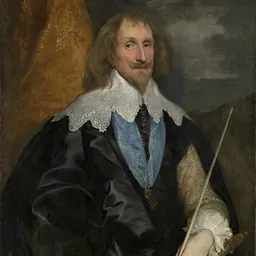

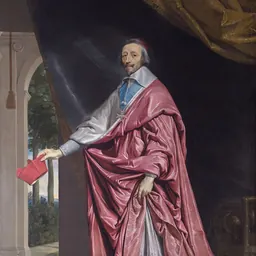
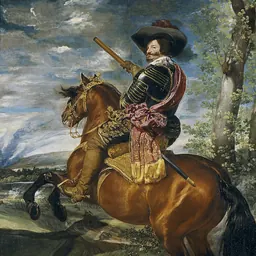
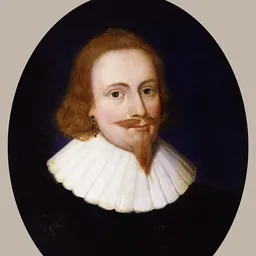
Contemporaries
People whose lives overlapped Peregrine Bertie's




Frequently asked questions
Who was Peregrine Bertie?
English politician (c.1584-1639)
When was Peregrine Bertie born?
Peregrine Bertie was born in 1584.
When did Peregrine Bertie die?
Peregrine Bertie died in 1639.
What was Peregrine Bertie's occupation?
Peregrine Bertie was a politician.
What nationality was Peregrine Bertie?
Peregrine Bertie was English.
Sources & further reading
· DBpedia: Peregrine Bertie (MP for Lincolnshire)
Cite this page
APA: Biography.guide. (2026). Peregrine Bertie. https://biography.guide/peregrine-bertie-politician-1584/
MLA: "Peregrine Bertie." Biography.guide, https://biography.guide/peregrine-bertie-politician-1584/.
Chicago: "Peregrine Bertie." Biography.guide. https://biography.guide/peregrine-bertie-politician-1584/.
Data last updated: 2026-09-20 · Spot an error? Report a correction.
Page generated 2026-09-27 05:02 UTC