
About Pere-Enric de Ferran i de Rocabruna
Lived 1865 – 1919 (aged 54). Pere-Enric de Ferran i de Rocabruna was a Spanish composer.
Pere-Enric de Ferran i de Rocabruna (, Barcelona, 1865 – Brussels, 1919) was a Catalan-Spanish music composer.
He received his first composition lessons from in Barcelona, completing his studies with Enric Morera. He was considered one of the budding young musician of the modernist period. In the works he produced, he distinguished himself in his handling of instrumentation.
Among his works are an Andante premiered in Barcelona by the orchestra Crikboom; the stage works La Bodas de Camacho (libretto by Jacint Grau and Adrià Gual) and La Cegueta (libretto by Modest Urgell); the symphonic poem Le Soir (lyrics by the Belgian painter and poet Jean Delville); and Primavera, a work premiered in Brussels in 1914.
His published songs include Primavera, Berceuse, Au Rosignol; Ofrena, and Praeterita. Few remained unfinished after his death: Les amantes de Palerme, opera in three acts; Barnum, operetta and El Silfo, symphonic poem. His documentary collection, with scores of more than 80 works, is archived and cataloged in the Library of Catalonia.
Biography
Personal life Pere-Enric de Ferran i de Rocabruna (Spanish: Pedro-Enrique, French: Pierre-Henri) was born in Barcelona on June 2, 1865 into a wealthy, influential family with noble roots.
His paternal grandfather was Andrés de Ferran y Dumont, a lawyer, founder of the Institut Agrícola Català de Sant Isidre. His father, Ignacio Maria de Ferran y de Ribes was also doctor of law, as well as professor of law and political economy. His mother, Petra de Rocabruna y Jordà, was the daughter of the Baron of Albi. When Pere-Enric was five years old, his mother Petra died, and when he was fifteen, his father Ignacio died, leaving Pere-Enric under the tutelage of his grandfather Andrés, who had a great influence on Pere-Enric, particularly in directing and boosting his education.
As a child he already showed interest and admiration for music, becoming a hobby that the family repressed, considering that music was an inappropriate dedication for the social position they held. The grandfather-guardian insisted that Pere-Enric study law and become a lawyer like his father and grandfather had been. Thus, Pere-Enric followed family plans and pursued a law degree, restraining and postponing his musical vocation.
By the end of the 19th century he married Francesca Finet i Pansas, who died shortly after and with whom he had no children. In 1901 he married Camila Sardà i Ballester, from a family from Reus, with whom he had six children.
In his private and family life, Pere-Enric de Ferran adopted options considered avant-garde or extravagant for the time, such as following a vegetarian diet, or having his children sunbathe naked on the rooftop of their house.
He lived in Barcelona, Brussels, Reus and Madrid, and died in Brussels in 1919.
Musical career in Barcelona When he was 30 years old he abandoned the legal profession (it seems that he never practiced), and passionately devoted himself to studying music under the mastery of and Enric Morera.
In 1903 the lyrical work Las Bodas de Camacho premiered at the Tivoli theater in Barcelona, with music by Pere-Enric de Ferran and libretto by Jacint Grau and Adrià Gual, based on an episode of Don Quixote. The reviews in the press highlight very favorably the quality and workmanship of the music, particularly spotlighting the prelude.
Between 1902 and 1910, Pere-Enric de Ferran set music to several lyrical plays, some of them framed in the Teatre Líric Català by Enric Morera, such as La Núvia, lyrics by Adrià Gual, and L' Eterna Lluita, lyrics by Enric de Fuentes. Furthermore, in 1909 he premiered at the Apolo theater in Barcelona the work La Canción de la Ninfa, with lyrics by Emilio Roig (pseudonym of Baldomer Gili i Roig).
He also composed choral pieces and songs for voice and piano. In all these pieces we find texts by relevant authors of the time, such as Apel·les Mestres, Modest Urgell, Jacint Grau, Emili Guanyavents, Jaume Massó, Enric de Fuentes, Paul Bourget and notably, the author and theater entrepreneur Adrià Gual, with whom Pere-Enric collaborated many times and had a friendship. He also began a collaboration with the poet Maurice Boné de Villiers, with a libretto from which he began the composition of the opera Les amantes de Palerme.
Simultaneously, while he was in Brussels he served as correspondent in Belgium for the Barcelona newspaper La Vanguardia.
Back to Spain At the beginning of August 1914, the first world war broke out, the German army entered Belgium and marched towards Brussels. Pere-Enric de Ferran decided to hastily flee with his family back to Spain, before the communication routes were cut off, taking with him the maximum of musical work that he could transport.
He composed some solo piano pieces, such as Abril, dedicated to Andrés Segovia, he began the composition of the operetta Barnum with a libretto by Marc-Jesús Bertran Tintorer, started collaborations with Enrique García Álvarez and Alfonso Hernández-Catá for some operettas, he worked on a symphonic poem based on the poem Le Sylphe by Victor Hugo, and continued developing the opera Les amantes de Palerme that he had started in Belgium. He did not get to know his youngest daughter Genoveva, who was born just 8 days after the death of his father. Premiered at the Novedades Theater in Barcelona on June 22, 1902. Orchestra of the Barcelona Philharmonic Society. Conductor: Domènec Mas y Serracant. Violin: Mathieu Crickboom.
Berceuse Published in 1910 by Imprenta y Litografía Blasi, Barcelona.
Violin and Piano
Primavera Dedicated to Mathieu Crickboom. Premiered in 1914 at the Théatre Royal de la Monnaie in Brussels, in 1915 at the Palau de la Música Catalana in Barcelona, and in 1917 in the Hotel Ritz in Madrid. Published in 1913 by Breitkopf & Härtel, Brussels.
Vocal and piano
Au Rossignol Lyrics by Emili Guanyavents. Published in 1902 by Universo Musical, Barcelona.
Ofrena Lyrics by Enric de Fuentes. Published in 1912 by Sociedad Anónima Casa Dotesio, Barcelona.
Praeterita Lyrics by Paul Bourget. Published in 1912 by Sociedad Anónima Casa Dotesio, Barcelona.
Et veig per tot Lyrics by Adrià Gual.
Amor! Lyrics by Adrià Gual.
Primaveral Lyrics by Jaume Terri.
Tu pupila es azul Lyrics by Gustavo Adolfo Bécquer. Dedicated to .
Choral music
Cançó d'Agost Lyrics by Apel·les Mestres.
Celístia Lyrics by Emili Guanyavents.
Muntanyes Lyrics by Jaume Massó.
Muntanyes del Canigó
Piano solo
Abril Dedicated to Andrés Segovia.
Tendre Aveu Waltz.
Don’t just read it —
keep it.
Full-length biographies made to live with: read them, listen on the way to work, watch them tonight.
- E-book
- Audio
- Video
Instant download · yours to keep · every purchase keeps this site free
Important facts
People in Pere-Enric de Ferran i de Rocabruna's life
Named in this biography and alive at the same time
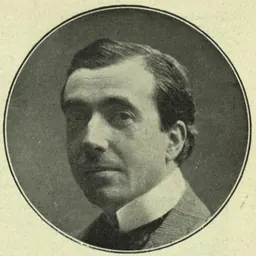
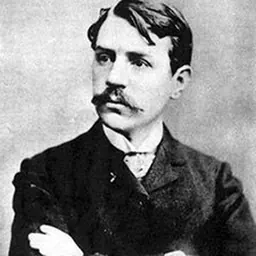


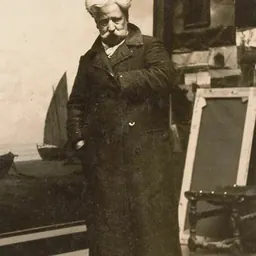
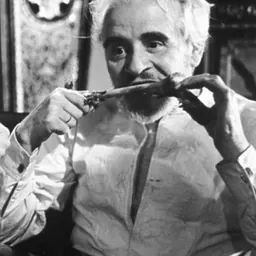

Related people
Same field, nearest in time



Contemporaries
People whose lives overlapped Pere-Enric de Ferran i de Rocabruna's



Frequently asked questions
Who was Pere-Enric de Ferran i de Rocabruna?
Catalan-Spanish music composer (1865-1919)
When was Pere-Enric de Ferran i de Rocabruna born?
Pere-Enric de Ferran i de Rocabruna was born on 2 June 1865 in Barcelona.
When did Pere-Enric de Ferran i de Rocabruna die?
Pere-Enric de Ferran i de Rocabruna died on 6 November 1919 in Brussels.
What was Pere-Enric de Ferran i de Rocabruna's occupation?
Pere-Enric de Ferran i de Rocabruna was a composer.
What nationality was Pere-Enric de Ferran i de Rocabruna?
Pere-Enric de Ferran i de Rocabruna was Spanish.
Sources & further reading
· Wikipedia: Pere-Enric de Ferran i de Rocabruna
· DBpedia: Pere-Enric de Ferran i de Rocabruna
Cite this page
APA: Biography.guide. (2026). Pere-Enric de Ferran i de Rocabruna. https://biography.guide/pere-enric-de-ferran-i-de-rocabruna/
MLA: "Pere-Enric de Ferran i de Rocabruna." Biography.guide, https://biography.guide/pere-enric-de-ferran-i-de-rocabruna/.
Chicago: "Pere-Enric de Ferran i de Rocabruna." Biography.guide. https://biography.guide/pere-enric-de-ferran-i-de-rocabruna/.
Data last updated: 2026-09-26 · Spot an error? Report a correction.
Page generated 2026-09-27 05:15 UTC