
About Percy Girouard
Lived 1867 – 1932 (aged 65). Percy Girouard was a Nigerian governor.
Sir Édouard Percy Cranwill Girouard, (26 January 1867 – 26 September 1932) was an Empire enthusiast, a Canadian railway builder, High Commissioner of Northern Nigeria and the East Africa Protectorate and British industrialist.
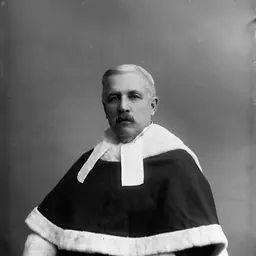
Education Born in Montreal, Quebec, the son of Désiré Girouard and Essie Cranwill, he attended Collège de Montréal (1877–1878) and College St. Joseph in Trois-Rivières (1879–1882) and graduated from the Royal Military College of Canada in Kingston, Ontario, in 1886. Girouard's father was a wealthy French-Canadian lawyer who went on to become a Conservative MP and Supreme Court justice while his mother was an Irish immigrant. Unlike most of the other members of the French-Canadian elite of Montreal, Girourad was not educated at Laval University, the traditional training ground of the Francophone elite, instead electing for an education in English at the Royal Military College. Girouard's family wanted him to stay in Canada, but Girouard wanted to see the world by building railroads all over the British Empire.
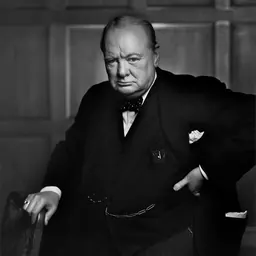
Building a railroad in the desert in the 19th century presented major challenges such as attacks from the Ansar, a workforce of about 800 Sudanese who knew nothing about building railroads and had to be taught everything, the occasional heavy rain that washed away the track, the need to import everything, and a cholera epidemic which killed off most of the workers in August 1896. Girouard had to establish two technical schools to train his Sudanese workers about how to work as station masters, yard shunters and signalers as none of those skills were known in the Sudan which had never known railroads. In his 1899 book The River War, Winston Churchill praised Girouard as an extraordinarily capable man who made the advance into the Sudan possible. After the British defeated the Ansar at the Battle of Hafir on 19 September 1896, Dongola was taken on 24 September 1896. Girouard frequently traveled up and down the railroad, supervising the work as he had little faith in the ability of his Sudanese workers to build a railroad on their own.
Girouard (seated right) in talks with a Kikuyu chief in Kenya c. 1910
South Africa, 1899–1904 In October 1899 Girouard was sent by the War Office to South Africa to advise on the railway situation of the Cape Colony. When the Boer War (1899–1902) broke out he became Director of Imperial Military Railways which included the lines in the Cape, as well as the lines taken over from the Boers in the Orange Free State and the Transvaal. His rapid reconstruction of the damaged lines and the innovative low level deviations around destroyed bridges, enabled the rapid movement of men and material to support the rapid advance of Lord Robert's forces in 1900 to capture Pretoria. He was mentioned in dispatches (31 March 1900 and 23 June 1902 ), received the South Africa Medal, and in November 1900 he was knighted as a Knight Commander of the Order of St Michael and St George (KCMG) for his service in the war. Lord Kitchener wrote in a despatch how Girouard had been his "principal adviser in all the numerous and intricate questions pertaining to railway administration in South Africa", and concluded that "he is an officer of brilliant ability." Girouard remained in South Africa as Commissioner of the Railways (with the local rank of lieutenant-colonel ) until pressure from the Johannesburg mine owners to reduce railway expenses forced his resignation in 1904.
High Commissioner, Nigeria and East Africa, 1906–1912 In 1906, Winston Churchill, then Under-Secretary of State at the Colonial Office, promoted Girouard as the successor to Sir Frederick Lugard as High Commissioner in Northern Nigeria. Girouard was also responsible for building a railway from Baro, on the Niger River, 366 miles north to the ancient city of Kano. As High Commissioner he also supported the work of the Northern Nigerian Lands Committee and the legislation which resulted from this work had the effect of preventing the establishment of private property in land. He then served as Commissioner of the British East Africa Protectorate (Kenya) from 1909 to 1912. His involvement in the controversial move of the Maasai led to a smoldering dispute with the Colonial Secretary, Lord Milner, who accepted his resignation in 1912. By then Girouard had been offered a position as the managing director of the Eslwick Works of the armaments and shipbuilding concern of Armstrong Whitworth and Co. Ltd.
Later career and life, 1912–1932 From 1912 until 1923 Girouard remained at Armstrong's except for a brief period in 1915 when the "Shell Crisis" forced the British Government to abandon its "business as usual" policy. Kitchener had asked Girouard for advice on the production of munitions and supported his appointment as Director General of Munitions in the newly formed Ministry of Munitions under Lloyd George. But Girouard could not work under a politician and six weeks later he returned to Armstrong's Elswick works in Newcastle where he remained a company director until his death.
Girouard died in London, England, in 1932. He is buried in Brookwood Cemetery in Surrey.
Family In 1903 he married Mary Gwendolen Solomon, the only child of Sir Richard Solomon, at Pretoria, Transvaal. Their only child was Richard Desire Girouard (1905–1989), who is the father of Mark Girouard, the writer and architectural historian.
Legacy
Mount Girouard, which is located in the Bow River Valley south of Lake Minnewanka, Fairholme Range, in Banff National Park, Alberta. was named in his honour in 1904. Latitude 51; 14; 15, longitude 115; 24; 05.
The Girouard Academic Building at the Royal Military College of Canada in Kingston, Ontario, was named in his honour in 1977. A plaque honouring Sir Edouard Percy Cranwill Girouard 1867–1932 was erected in 1985 by the Historic Sites and Monuments Board of Canada in a breezeway between the Girouard and Sawyer Buildings at the Royal Military College of Canada "Born in Montréal, Girouard was educated at Royal Military College, Kingston, commissioned in the Royal Engineers in 1888, and appointed to the Royal Arsenal Railways at Woolwich. Charged in 1896 with construction of the Wadi Halfa – Khartoum Railway, he was later director of railways in South Africa and as high commissioner in Northern Nigeria superintended the building of a line to Kano. Governor of Northern Nigeria (1908–9), of East Africa (1909–12), and director general of munitions supply in the British government (1915–16), he also wrote several books on the strategic importance of railways."
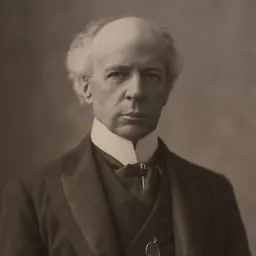
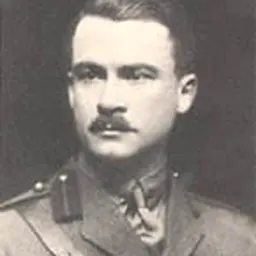
The Irish historian Donal Lowry used Girouard's career as an example of "French-Canadian loyalism" to the British Empire in the Victorian and Edwardian eras, using him together with men such as Sir Wilfrid Laurier, who served as Prime Minister between 1896 and 1911; Louis-Honoré Fréchette, considered to be the most talented French-Canadian poet of his generation; Sir Adolphe-Basile Routhier who wrote the national anthem O Canada in 1880; and Major Talbot Mercer Papineau, the politician and soldier who might had become Prime Minister had he not been killed at the battle of Passchendaele in 1917; who all identified with the British Empire.
Don’t just read it —
keep it.
Full-length biographies made to live with: read them, listen on the way to work, watch them tonight.
- E-book
- Audio
- Video
Instant download · yours to keep · every purchase keeps this site free
Important facts
more
Maj.-Gen. Sir Edward Percy Cranwell Girouard, Col. Sir [Édouard] Percy Cranwill GirouardPeople in Percy Girouard's life
Named in this biography and alive at the same time




Related people
Same field, nearest in time




Contemporaries
People whose lives overlapped Percy Girouard's



Frequently asked questions
Who was Percy Girouard?
Northern Nigerian governor and railway builder from Canada (1867-1932)
When was Percy Girouard born?
Percy Girouard was born on 26 January 1867 in Montreal.
When did Percy Girouard die?
Percy Girouard died on 26 September 1932 in London.
What was Percy Girouard's occupation?
Percy Girouard was a governor.
What nationality was Percy Girouard?
Percy Girouard was Nigerian.
Sources & further reading
Cite this page
APA: Biography.guide. (2026). Percy Girouard. https://biography.guide/percy-girouard/
MLA: "Percy Girouard." Biography.guide, https://biography.guide/percy-girouard/.
Chicago: "Percy Girouard." Biography.guide. https://biography.guide/percy-girouard/.
Data last updated: 2026-09-24 · Spot an error? Report a correction.
Page generated 2026-09-27 05:03 UTC